
Cortina d'Ampezzo
"La Dolce Vita never really left this valley, it just put on a ski jacket."
The 'Queen of the Dolomites,' where fur coats and hiking boots have shared the same cobblestones since the 1950s, and both still fit.
Cortina d’Ampezzo carries its glamour lightly, which is a strange thing to say about a town that hosted the 1956 Winter Olympics, appeared in For Your Eyes Only with Roger Moore skidding down a bobsled run, and is gearing up to host the Winter Games again in 2026. I came expecting something closer to a designer boutique with a chairlift attached. What I found was a genuinely small Alpine town — one main pedestrian street, the Corso Italia, lined with church bells and window boxes — that just happens to sit in the single most theatrical setting the Dolomites have to offer.
The Setting Does the Work
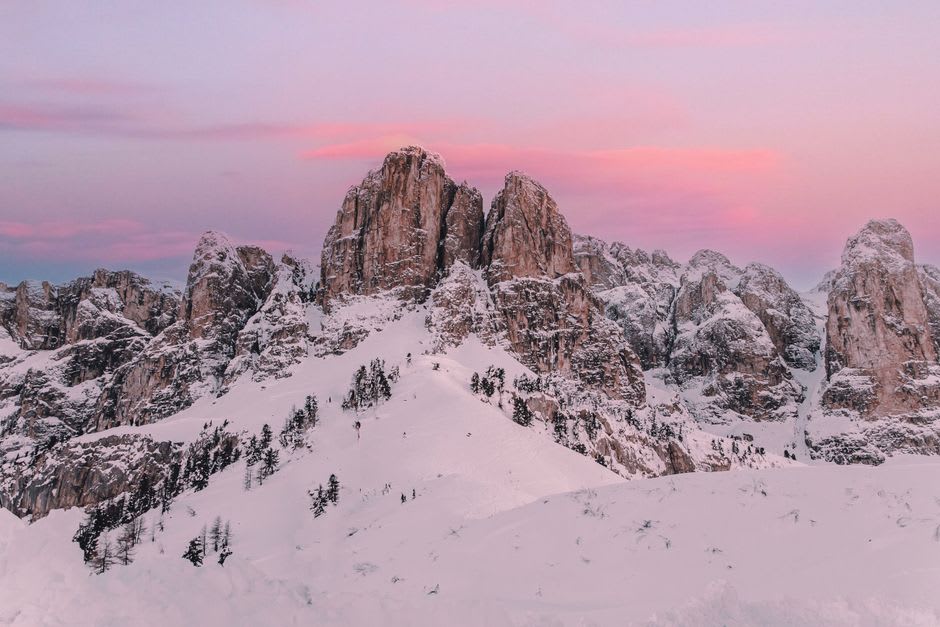
The town is ringed by peaks that don’t so much rise as loom: Tofana di Mezzo to the west, the Cinque Torri and Cristallo massif to the east, and the sweep of the Ampezzo valley connecting them all under a sky that, on a clear evening, turns the pale dolomite rock a deep, saturated pink. This is the enrosadira, the alpenglow effect that gave the Dolomites their reputation — the mineral in the rock itself, dolomite, catches the low sun in a way granite and limestone don’t quite manage. I stood in the town square one evening with a coffee and watched the whole massif blush, and understood immediately why nineteenth-century British and Austrian climbers, the first wave of Dolomite tourism, wrote about this range like it had done something to them personally.
Cortina sits geographically in the Veneto — Venice is the regional capital — but linguistically and culturally it belongs to Ladin country, the same Rhaeto-Romance heritage found in Ortisei and Val Gardena, and locals will tell you, gently but firmly, that Ampezzano identity doesn’t map cleanly onto either Veneto or South Tyrol. The town changed hands between Austria and Italy multiple times before 1918, which is part of why it still feels caught between two worlds: chalets with deep alpine eaves standing next to Italian bars serving spritz at aperitivo hour, both entirely at home.
Cinque Torri and the War in the Rock
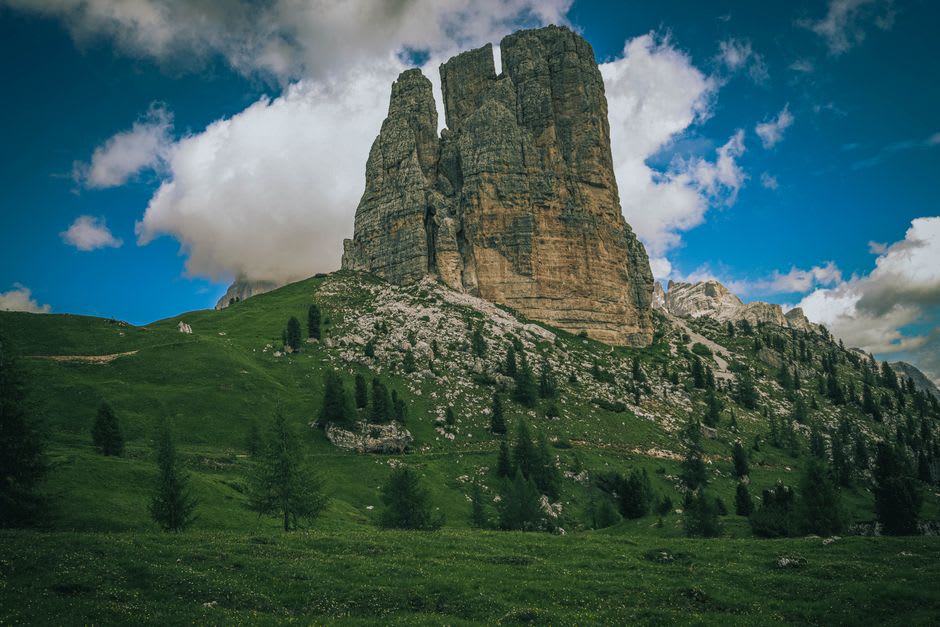
I took the chairlift up to the Cinque Torri, five limestone-dolomite towers standing apart from the main ridge, and found something I hadn’t expected: preserved World War I trenches and gun positions cut directly into the rock, part of the front line where Italian and Austro-Hungarian troops fought a brutal mountain war between 1915 and 1917, much of it at altitudes and temperatures that killed as many soldiers as combat did. Walking through those trenches with the same peaks in the background that appear in a hundred ski brochures was a genuinely disorienting experience — a reminder of how recently this beautiful valley was a battlefield.
Down in town, the Museo d’Arte Moderna e Contemporanea holds a surprisingly serious collection for a place this size, and the Corso still fills each evening with the same slow, well-dressed passeggiata that’s been happening since the Olympics put Cortina on the international map. It’s a small town performing a big role again in 2026, and from what I saw, it has plenty of practice.
When to go: July and August for hiking the via ferrata routes and the Cinque Torri trails without snow; December through March for skiing across the Dolomiti Superski network, though book far ahead given the town’s rising profile before the 2026 Winter Olympics.