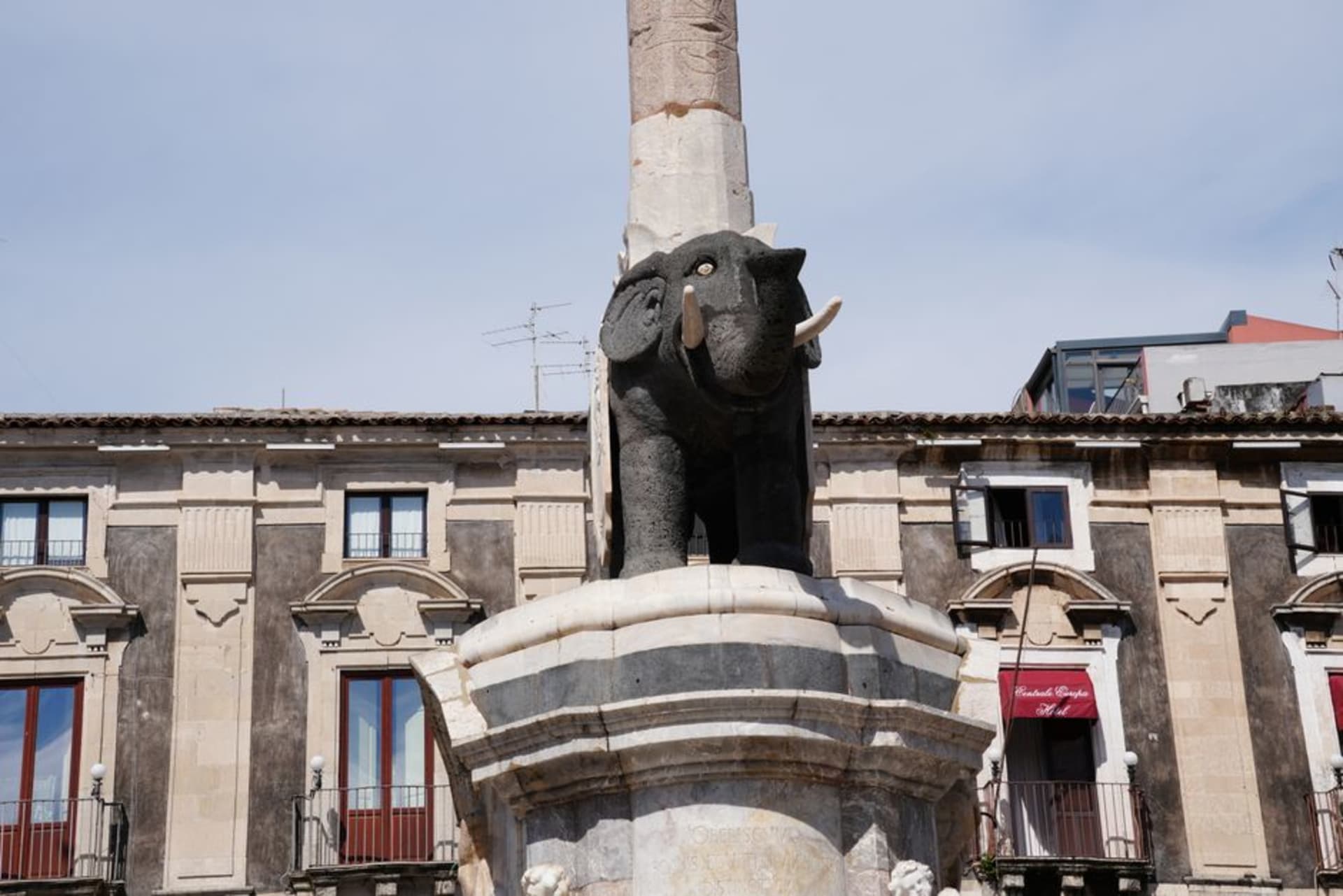
A city built from its own volcano's black lava stone, rowdy and unpolished in ways Taormina, just up the coast, decided long ago to outgrow.
Catania doesn’t try to charm you the way Taormina does, thirty minutes up the coast, and that’s precisely what I liked about it. This is Sicily’s second city, sprawling and unpretty in patches, loud with scooters and market vendors, and built — literally, structurally — out of the volcano looming behind it. Mount Etna has buried Catania in lava more than once, most catastrophically in 1669 when a flow reached the city walls and destroyed much of it, and again in the earthquake of 1693 that leveled what remained. The Catania I walked through is almost entirely an eighteenth-century reconstruction, and its architects made a defiant, slightly morbid decision: they rebuilt the city out of the very lava stone that had destroyed it.
A City in Black and White
That decision gives Catania its signature look — the Piazza del Duomo, the city’s Baroque heart, is a striking contrast of pale limestone trim against dark volcanic basalt, anchored by the Fontana dell’Elefante, a grinning lava-stone elephant that has been the city’s mascot and unofficial protector since Roman times, according to local legend. I stood in the square at dusk watching the last light catch the cathedral’s facade and thought about how strange it is to build your civic pride monument out of the thing that nearly erased you.
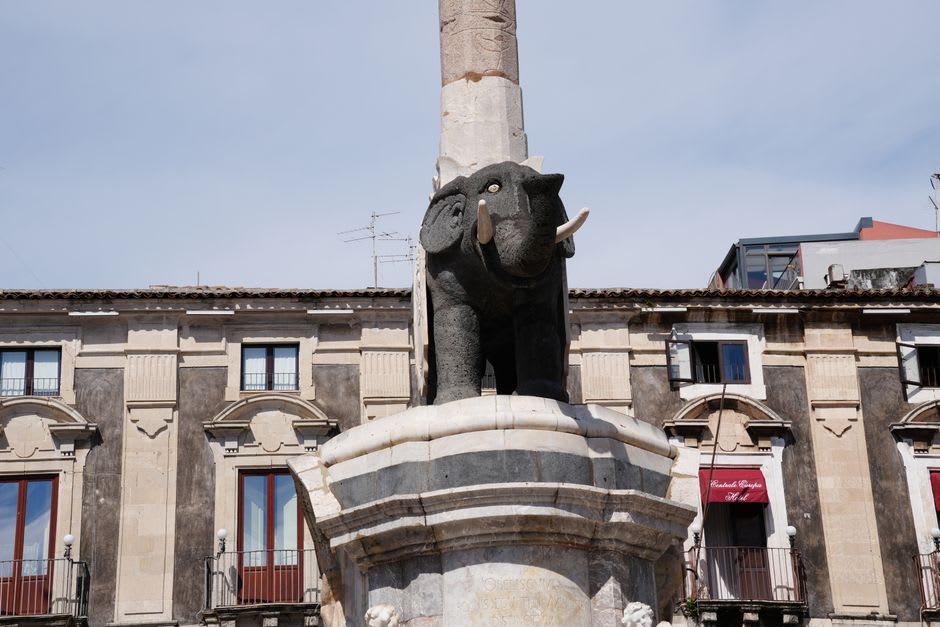
Via Etnea, the city’s main artery, runs arrow-straight from the Duomo directly toward the volcano — on clear days you can see Etna framed at the end of the street like the city was designed as a permanent reminder of who’s really in charge here. It usually is.
The Fish Market and the Bassa Città
The Pescheria, Catania’s fish market, is one of the loudest, most theatrical markets I encountered anywhere in Italy — vendors slapping swordfish onto tables, shouting over each other, hosing down cobblestones slick with ice melt, all of it tucked into the narrow streets just below the Piazza del Duomo. It smells exactly like you’d expect and I mean that as a compliment; this is not a market dressed up for tourists, it’s the actual daily engine of the city’s kitchens. I bought a paper cone of fried seafood from a stall with no sign and ate it standing in an alley, which felt like the correct way to experience it.

Catania is also, unavoidably, about food shaped by the volcano — the black, mineral-rich soil around Etna produces some of Sicily’s best wine, and the city’s street food runs on arancini (rice balls, and Catania will insist, loudly, that they’re shaped like little volcanic cones for a reason) and horse meat, a local specialty that dates back to postwar scarcity and has never really left the menu. It’s not a delicate city. It’s a working one, still very much alive under the mountain that keeps trying to kill it.
When to go: Late spring or early autumn for pleasant temperatures; if you want to see Etna’s summit craters, aim for a clear day between May and October when the upper trails are typically accessible.