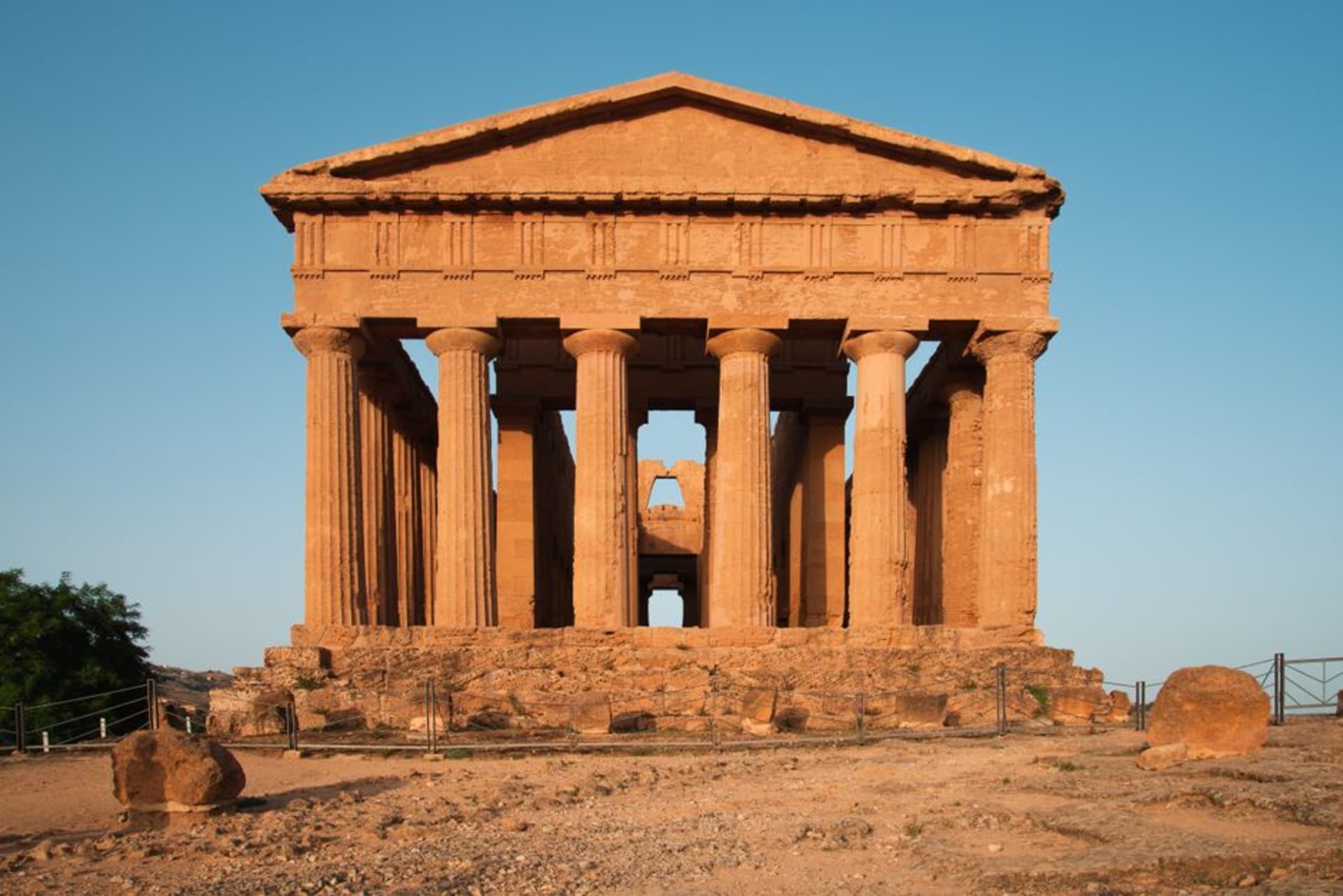
Ancient Greek temples standing in a row against the Sicilian sky, more intact and more moving than anything I saw in Greece itself.
I’ll admit a bias upfront: I’d already been to Athens, seen the Parthenon under its scaffolding and its crowds, and assumed I understood what Greek temples were supposed to feel like. Agrigento corrected me. On Sicily’s southern coast, the Valle dei Templi — the Valley of the Temples — holds the largest and best-preserved concentration of Greek Doric architecture anywhere outside Greece, a UNESCO World Heritage site since 1997, and walking its ridge at golden hour with almost nobody else around remains one of the most quietly overwhelming afternoons I’ve had in Italy.
A Row of Ghosts, Mostly Still Standing
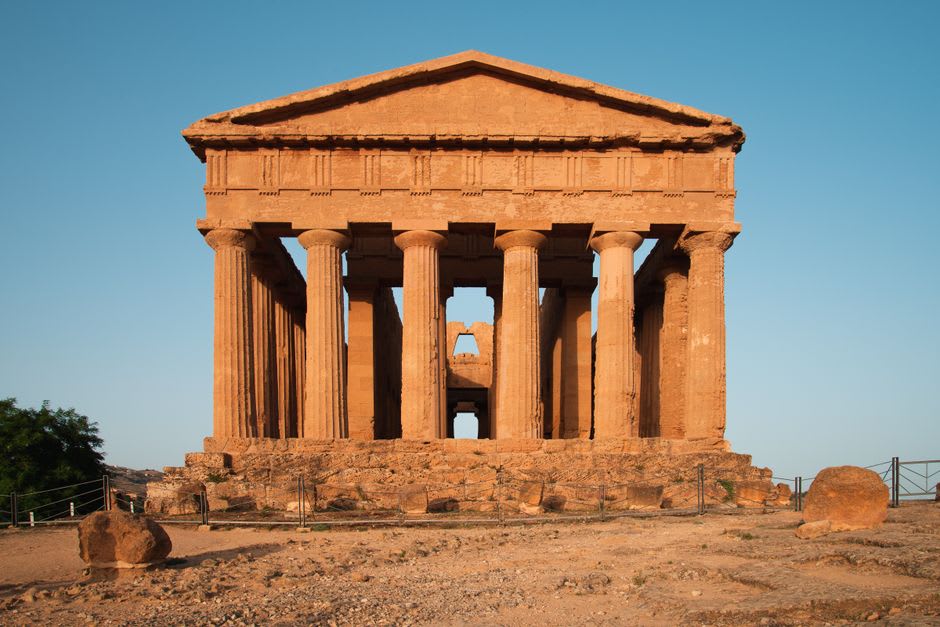
Akragas, as the Greeks called the city they founded here around 580 BC, grew wealthy enough to be described by the poet Pindar as “the most beautiful city of mortals.” The Temple of Concordia is the reason people come — it’s one of the best-preserved Doric temples in the entire ancient world, saved largely because it was converted into a Christian basilica in the sixth century AD, which spared it the systematic stone-robbing that reduced most of its neighbors to rubble. Its thirty-four honey-colored columns still stand nearly complete, and in the low evening light they turn a deep gold that makes the two-and-a-half-thousand-year gap between then and now feel suddenly very thin.
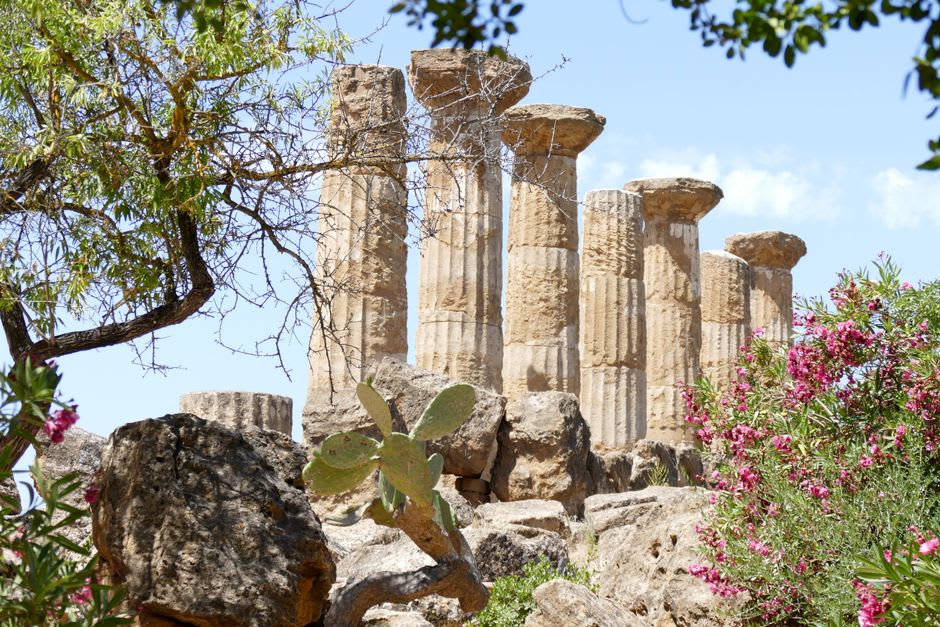
Further along the ridge, the Temple of Juno sits scorched and partly collapsed — burned, most likely, during the Carthaginian sack of the city in 406 BC — and the fallen drums of the unfinished Temple of Olympian Zeus lie scattered across a field nearby, including the remains of a colossal telamon, a stone giant that once helped hold up the roof, now lying on his back in the grass looking, oddly, peaceful. I spent longer than planned just tracing the layout in my head, trying to picture a working city of Zeus-worshippers and grain merchants where I was now standing among thistles and lizards.
The Almond Blossoms and the Modern Town
If you time it right — early February — the valley fills with blooming almond trees, and Agrigento holds the Sagra del Mandorlo in Fiore, a folklore festival celebrating the blossom that’s been running since the 1930s, with dancers and flag-throwers performing right beneath the temples. I wasn’t there for the festival itself, but I saw enough leftover almond blossom to understand why the pairing of ancient stone and spring flowering has become the valley’s signature image.
The modern town of Agrigento, up on its own hill above the valley, is more workaday than picturesque, but it’s worth a wander for the medieval quarter and for the sheer relief of a normal Sicilian town going about its business a few kilometers from one of the great archaeological sites on earth. I ate arancini from a bar with plastic tables and listened to old men argue about football, and it felt like the right way to come back down from several thousand years of temple-gazing.
When to go: Late winter into early spring (February-April) for almond blossoms and mild temperatures for walking the valley; avoid midsummer, when the exposed ridge offers zero shade and Sicilian heat turns the ruins into a furnace.