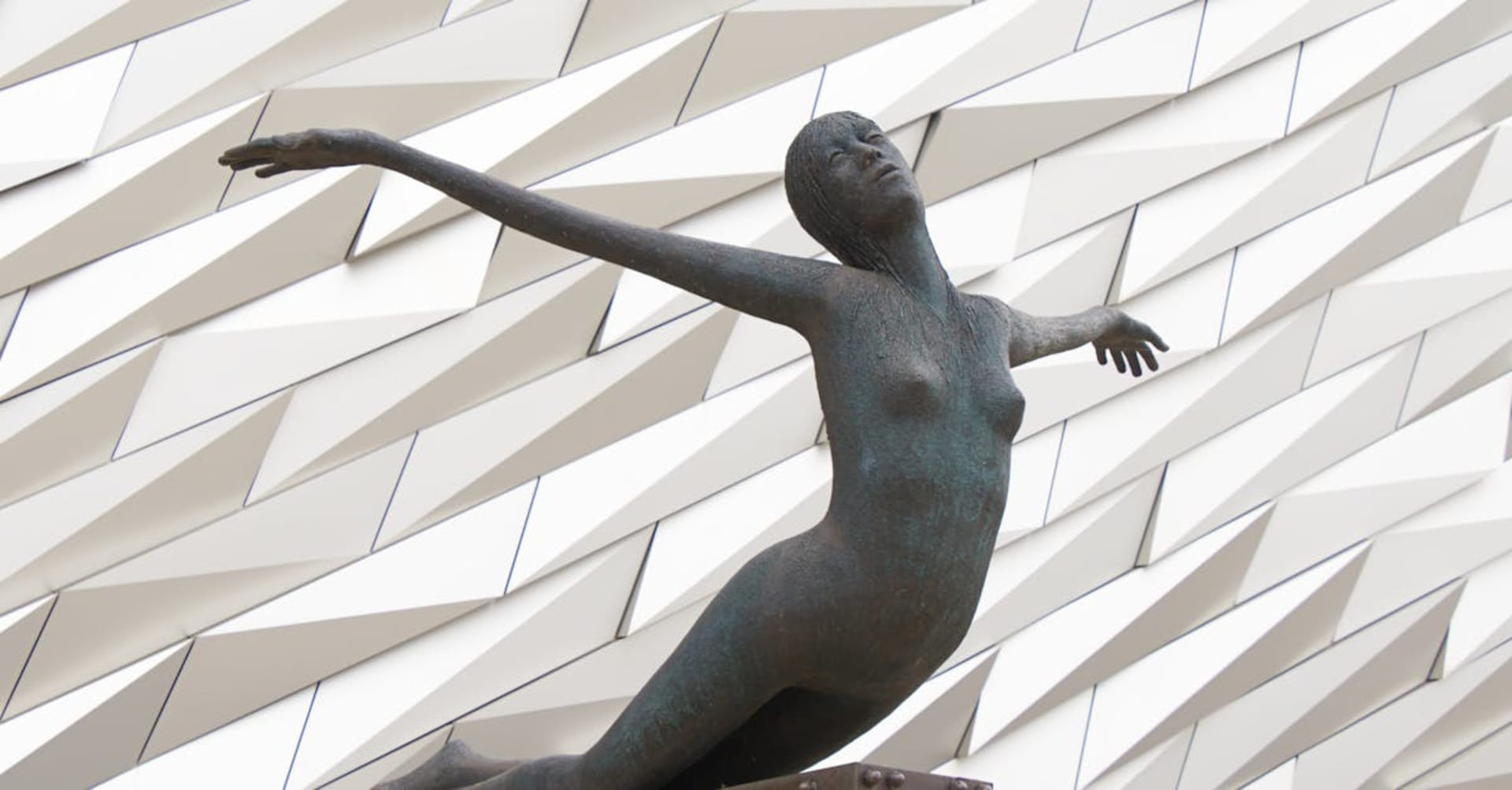
Belfast is a city that has earned its complexity. The Titanic Quarter — built on the very slipways where the ship was constructed — anchors the transformation with a museum whose angular aluminum facade has become the city’s new symbol. The exhibition inside traces the ship’s story with remarkable craft and restraint, from the optimism of construction to the horror of sinking, and I spent three hours there when I had planned for one. But Belfast’s reinvention extends far beyond a single museum. The Cathedral Quarter pulses with bars, galleries, and street art that would not look out of place in Berlin or Lisbon. St. George’s Market on Saturday morning is a riot of food, flowers, and local banter — I bought smoked salmon so good I ate it on the spot, standing between a flower stall and a woman selling homemade fudge.
The Murals and the Peace Walls
The political murals of the Falls and Shankill Roads remain powerful — guided tours by former participants on both sides offer perspectives available nowhere else. I took a tour led by a man who had been imprisoned during the Troubles and who now works in community reconciliation. His honesty was disarming and occasionally devastating. The peace walls still stand, gates still close at night in some areas, and the history is recent enough to feel present. But this tension coexists with a forward momentum that gives the city extraordinary energy. Having lived through France’s own complex relationship with its past, I recognized the difficult work of a society trying to hold its history and its future in the same hand.

Food, Music, and the Giant’s Causeway
The food scene has flourished — the restaurants along the Lisburn Road and around St. George’s Market serve modern Irish food with a confidence that would have been unimaginable a generation ago. The music venues draw acts that bypass Dublin, and the Victorian architecture — grand civic buildings, ornate pubs like the Crown Liquor Saloon with its carved wood and stained glass — provides a backdrop that rewards exploration. The Giant’s Causeway is an hour north for an unforgettable day trip: forty thousand interlocking basalt columns that look like they were designed by a mathematician with a sense of humor.

When to go: May through September for the best weather. August for Feile an Phobail, Europe’s largest community arts festival. Belfast is a year-round city — the pubs and restaurants do not close for winter.