The ceremonial capital of the Persian Empire — colossal stone carvings of tribute-bearers from every nation.
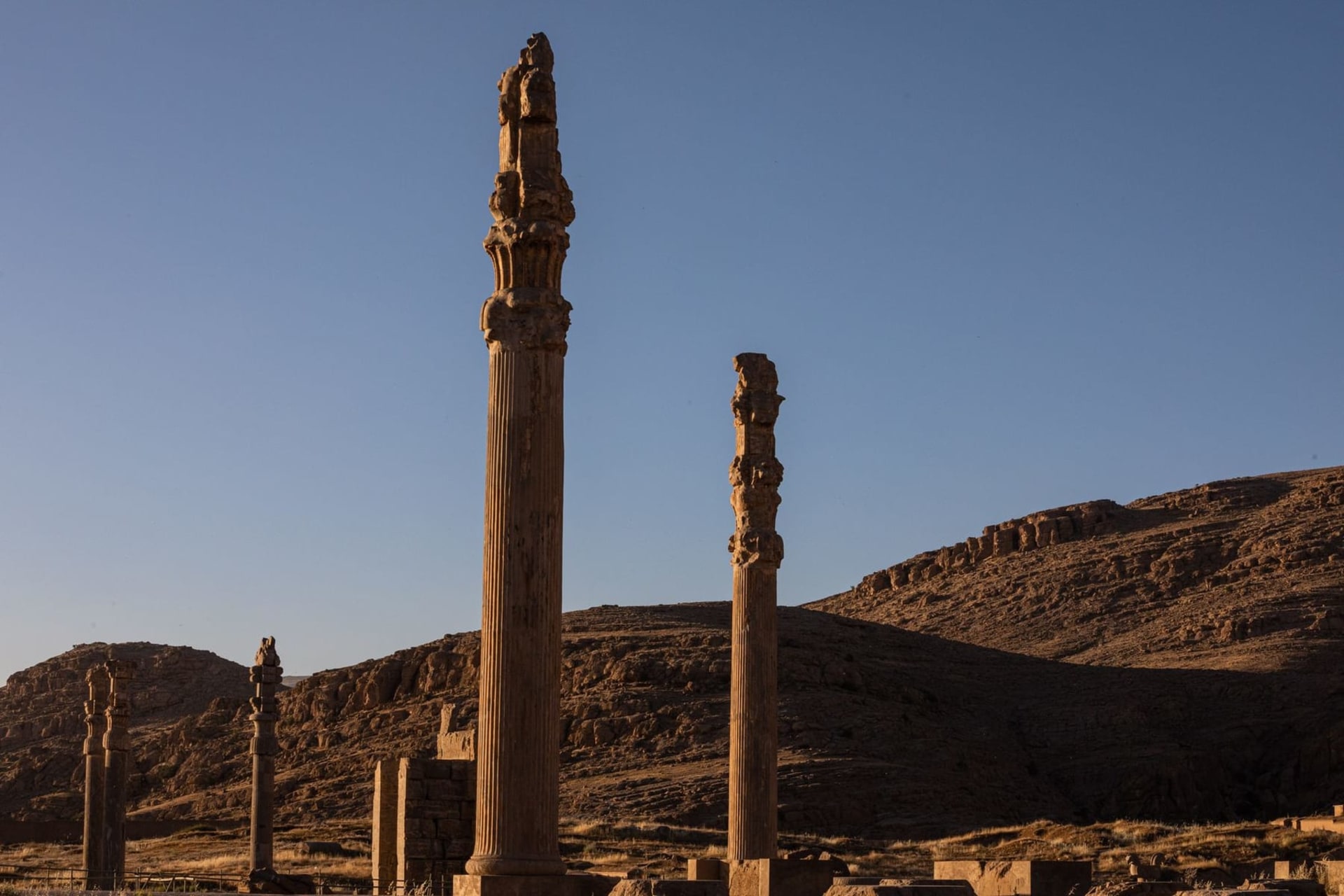
We drove south from Shiraz on the road toward Marvdasht, the plain stretching flat and tawny in every direction, and the first thing I noticed was the smell — dry grass baking in late-morning heat, a faint mineral sharpness rising off the stone as we climbed the steps of the Terrace. Nothing prepares you for the scale of it. The columns of the Apadana Audience Hall stand twenty meters tall, the ones still upright, and they hold the sky like they always have.
The Staircase That Teaches You to Look Slowly
The real entry to Persepolis is not through the Gate of All Nations — though you walk through it, past the enormous lamassu, the winged bull-men with human faces whose beards are carved in such obsessive parallel ridges you can almost feel the chisel still moving. The real entry is the Apadana Eastern Staircase, where delegations from twenty-three nations march in perpetual cortege: Medes in their rounded caps, Armenians bearing a rearing horse, Ethiopians leading an okapi. I spent nearly an hour there. Lia sat on the warm stone above me and said I was taking notes like a court scribe, which felt accurate.
What stopped me was the Cappadocians. They carry a folded garment and lead a horse, rendered in such unhurried confidence — the sculptor had clearly seen these people, or spoken to someone who had — and I realized I was looking at a diplomatic portrait gallery that had been carved into stone so it would outlast every treaty, every archive, every library. It had worked.
The Light at the End of the Afternoon
There is a specific quality to the light at Persepolis around four in the afternoon, when the sun drops behind the Rahmat mountain and the shadows deepen in the bas-reliefs. The figures emerge from the stone as if they are stepping forward. Darius I, whose inscription on the southern wall reads “I am Darius the Great King” without any apparent anxiety about the claim, seems almost credible at that hour. The stone is a warm ocher-grey, and the shadows pool in the carved draperies of robes like ink.
I had expected grandeur. I had not expected intimacy — the sense that the craftsmen who carved these figures were working with affection, not just command. One lion-and-bull combat relief near the Treasury shows the lion biting through the bull’s haunch, and the bull’s knee is buckling with an attention to anatomical fact that surprised me completely.
When to go: Late March through early May or late September through November — the heat on the open terrace is punishing in high summer, and the low-angle spring and autumn light deepens the bas-reliefs in a way that midday simply cannot.