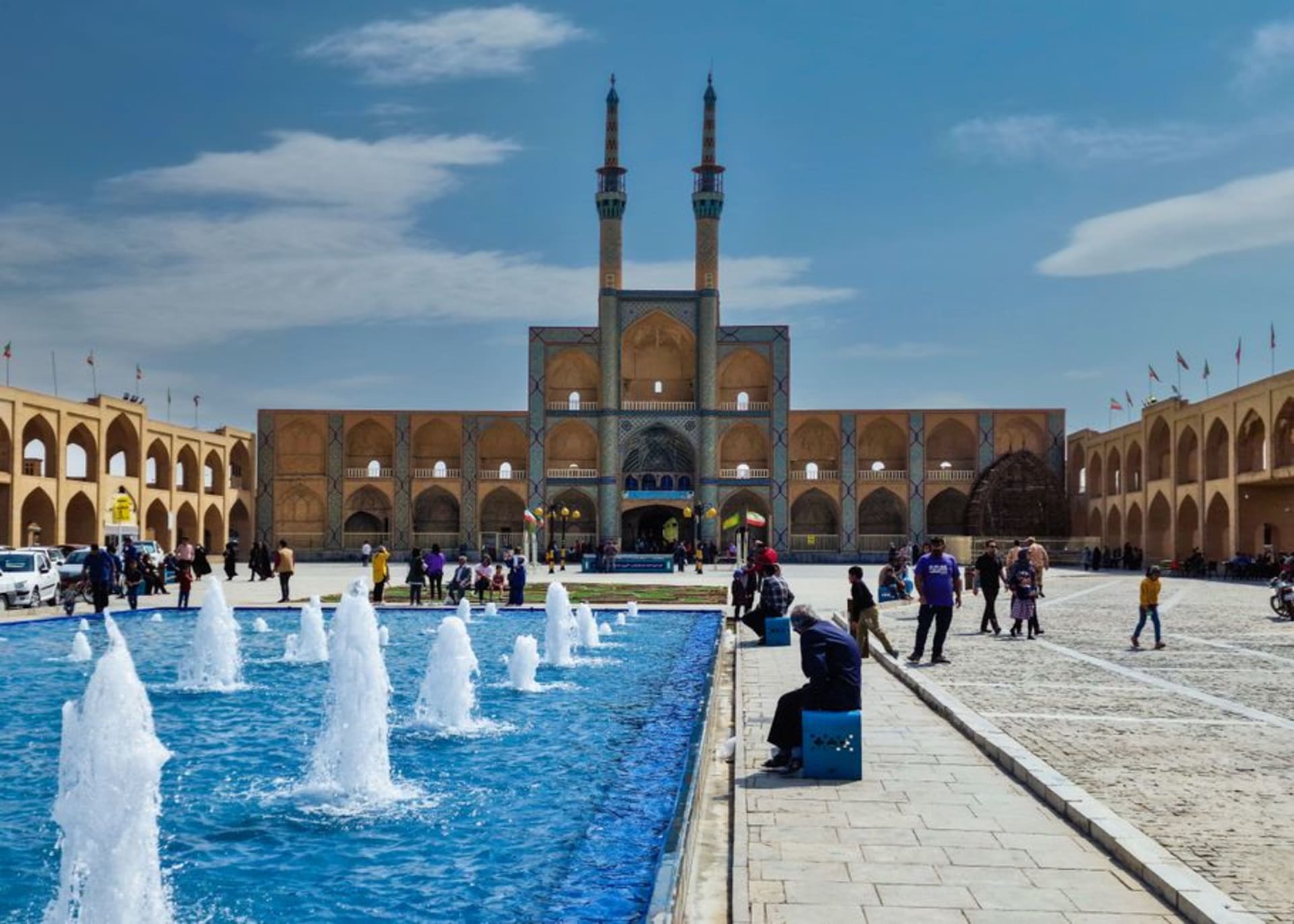
Amir Chakhmaq Complex
"By day it's architecture. By nine at night it's the whole city's living room."
A three-tiered facade of symmetrical sunken alcoves that turns into Yazd's evening living room the moment the sun goes down.
I’d seen photos of the Amir Chakhmaq facade before arriving — it’s the single most reproduced image of Yazd, rows of identical sunken arches stacked three stories high, symmetrical to the point of looking almost computer-generated. What the photos don’t convey is what happens to the square in front of it after dark, when half of Yazd seems to show up with ice cream and folding chairs.
The Facade Itself
The structure is technically a takieh, built in the fifteenth century for Muharram mourning ceremonies, though what survives now is mostly the ceremonial front rather than the full original complex. The tiered sunken niches, called shabestan-style alcoves here, create a rhythm that’s genuinely hypnotic in person — dozens of identical dark recesses across a pale facade, lit from below at night in warm amber that turns the whole thing gold. I climbed a set of external stairs on one side for a rooftop-level view over the square, which is unofficial but tolerated, and watched the light change for nearly an hour.
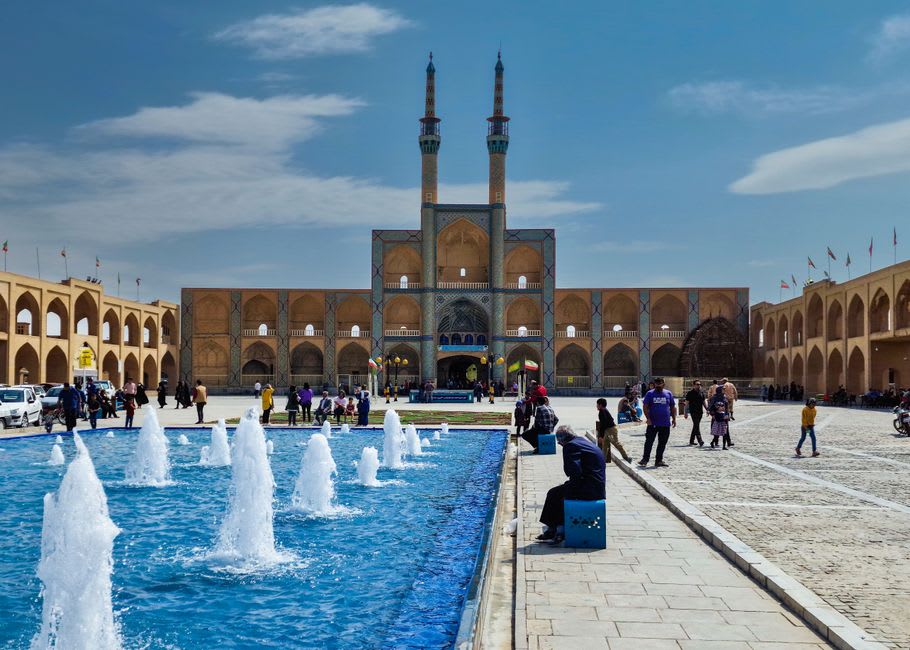
Where Yazd Actually Hangs Out
The square in front is where I understood something about Iranian public life that guidebooks undersell: this is genuinely where people relax, not a tourist backdrop with locals absent. Families spread blankets on the grass strips, teenagers on bicycles circled the fountain, and a man sold fresh-squeezed pomegranate juice from a cart with a hand-cranked press that looked older than the surrounding restoration work. Lia struck up a conversation with two university students practicing English who ended up walking with us for twenty minutes, recommending a saffron ice cream shop two streets over that we would never have found alone.
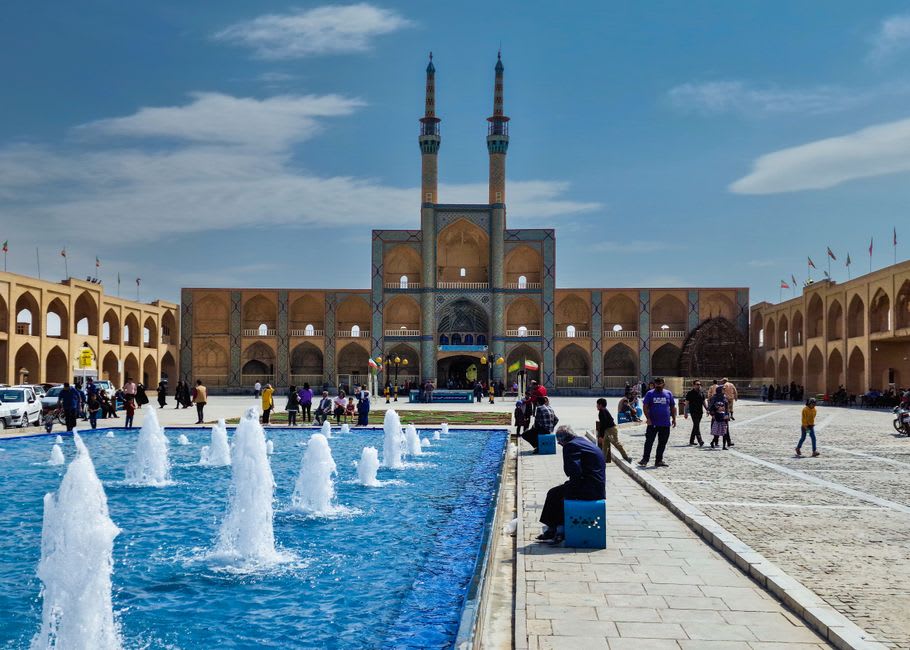
The Giant Alam
Beside the main facade stands one of the largest ceremonial alam structures in Iran — a huge steel standard covered in blades, mirrors, and metalwork, carried through the streets during Ashura mourning processions. Out of season it simply stands there, oddly futuristic against the historic facade, a reminder that this square is a working religious site with an annual calendar, not a museum piece frozen for visitors.
When to go: Visit at sunset and stay past dark — the facade lighting and the evening crowd are the actual experience, not the daytime architecture alone. Muharram (dates shift yearly on the lunar calendar) brings the complex to its most intense use, though also its most crowded.