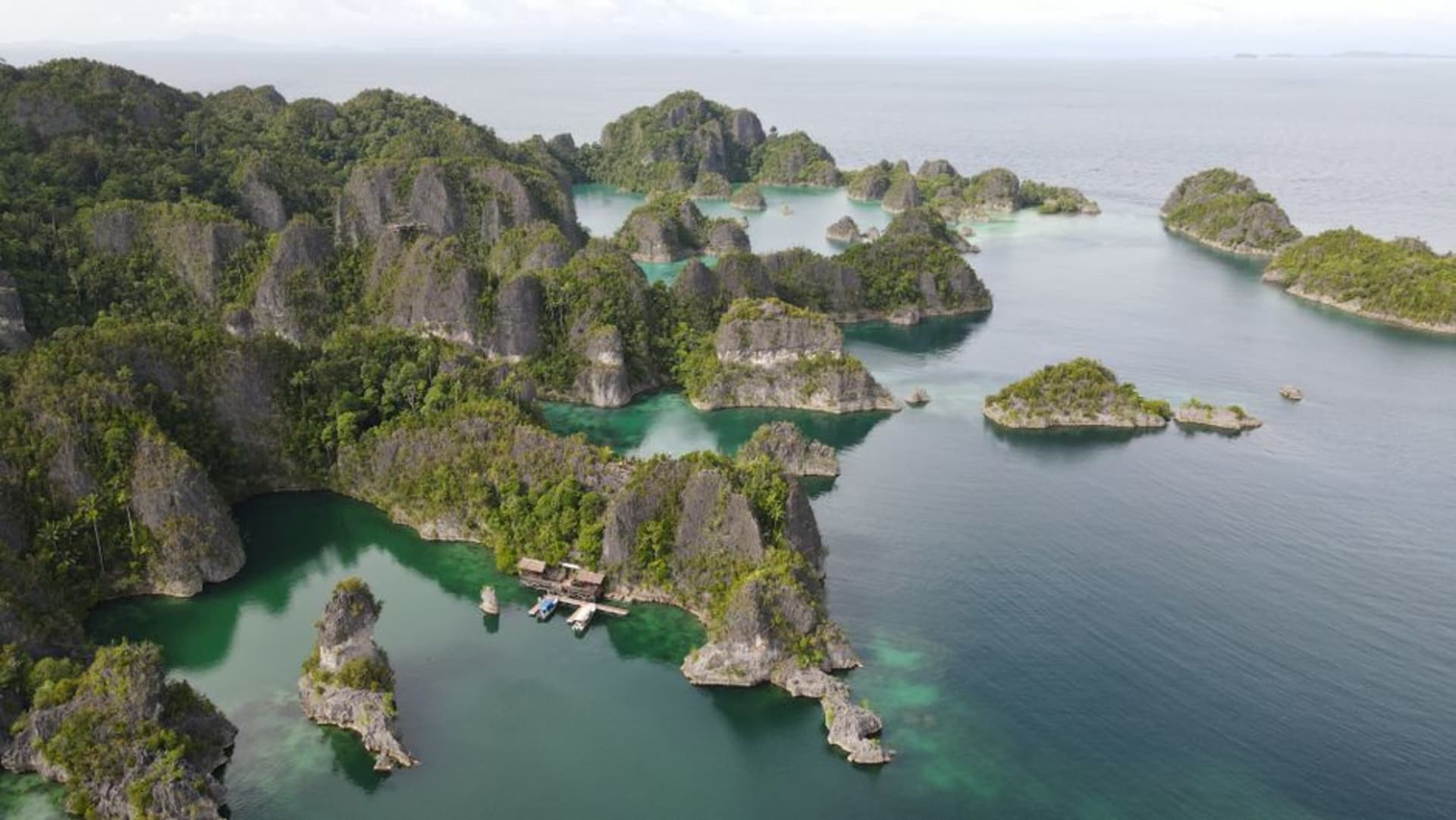
The unglamorous little capital that guards the door to Raja Ampat — and turned out to have its own quiet magic once the day-trip boats left.
Waisai only became the capital of Raja Ampat Regency in 2003, carved out of Waigeo Island’s jungle almost from nothing to serve as an administrative center once the regency split off from Sorong. You can still feel that newness — wide, half-empty roads, government buildings with a slightly improvised look, a town built faster than its own identity could catch up to it. Most people treat it exactly as they treat Sorong: a place to buy a permit and catch a boat. I did that too, on my first pass. But I came back and spent four nights on the edge of town, and Waisai turned out to be a decent place to actually sit still.
The Raja Ampat marine park entry permit — the one that funds the conservation program protecting what’s often called the most biodiverse reef system on Earth — is issued here, at an office near the harbor, and watching the steady trickle of divers and backpackers cycling through that process gave me a strange appreciation for how deliberately this whole region has been managed. Unlike so much of Indonesia’s coast, Raja Ampat’s reefs are still extraordinary specifically because of policies like this one, hammered out between local Papuan customary landowners and conservation groups starting in the early 2000s.
Waigeo’s edges, away from the boats
Waisai sits on Waigeo, the largest island in the Raja Ampat archipelago, and the town itself backs onto genuine rainforest within a short walk. I hiked up to the Waisai waterfall one humid morning — nothing dramatic, a modest cascade dropping into a swimming hole — and had it entirely to myself except for a family of local kids who’d clearly been coming there their whole lives and found my enthusiasm mildly amusing. The forest around Waigeo holds birds-of-paradise, and a pre-dawn walk with a local guide toward one of the known lekking trees, listening to a red bird-of-paradise call and display before the sun was properly up, was worth losing the sleep for.

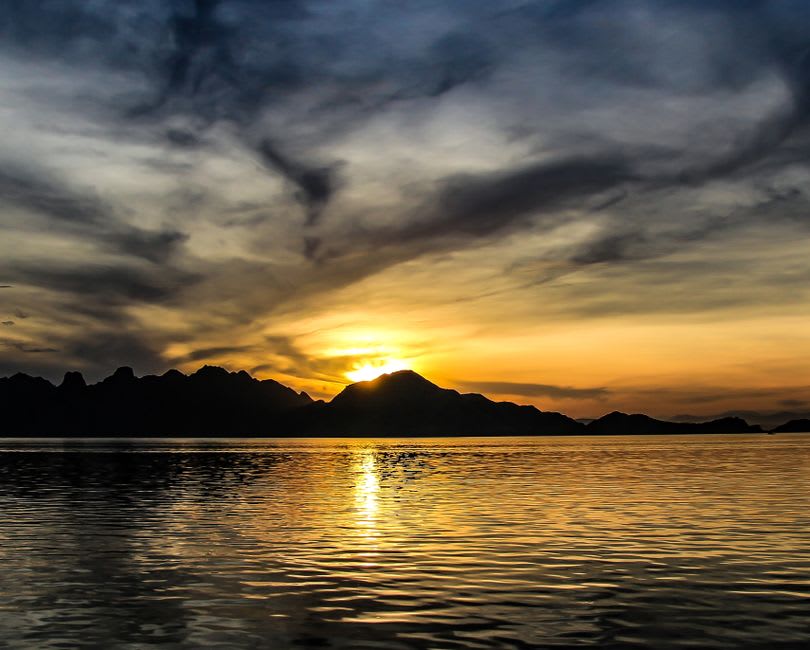
In town, the harbor at dusk is the real show. Longboats come back in from day trips to the karst islands further out, fishermen haul in reef fish and mangrove crab, and the call to prayer from Waisai’s mosque overlaps with hymn-singing drifting from a Papuan church a few streets over — a small, unbothered coexistence that says something about how this corner of Papua has absorbed migration and mission history without losing its own footing.
Waisai will never be the reason anyone books a flight to Raja Ampat. But treating it purely as a checkpoint, the way most guides do, sells short a town that’s quietly become the beating administrative and human heart of one of the most protected marine environments on the planet.
When to go: October through April, avoiding the strongest southeast trade winds of the mid-year dry season, gives calmer crossings to the outer islands and better underwater visibility around Waigeo itself.