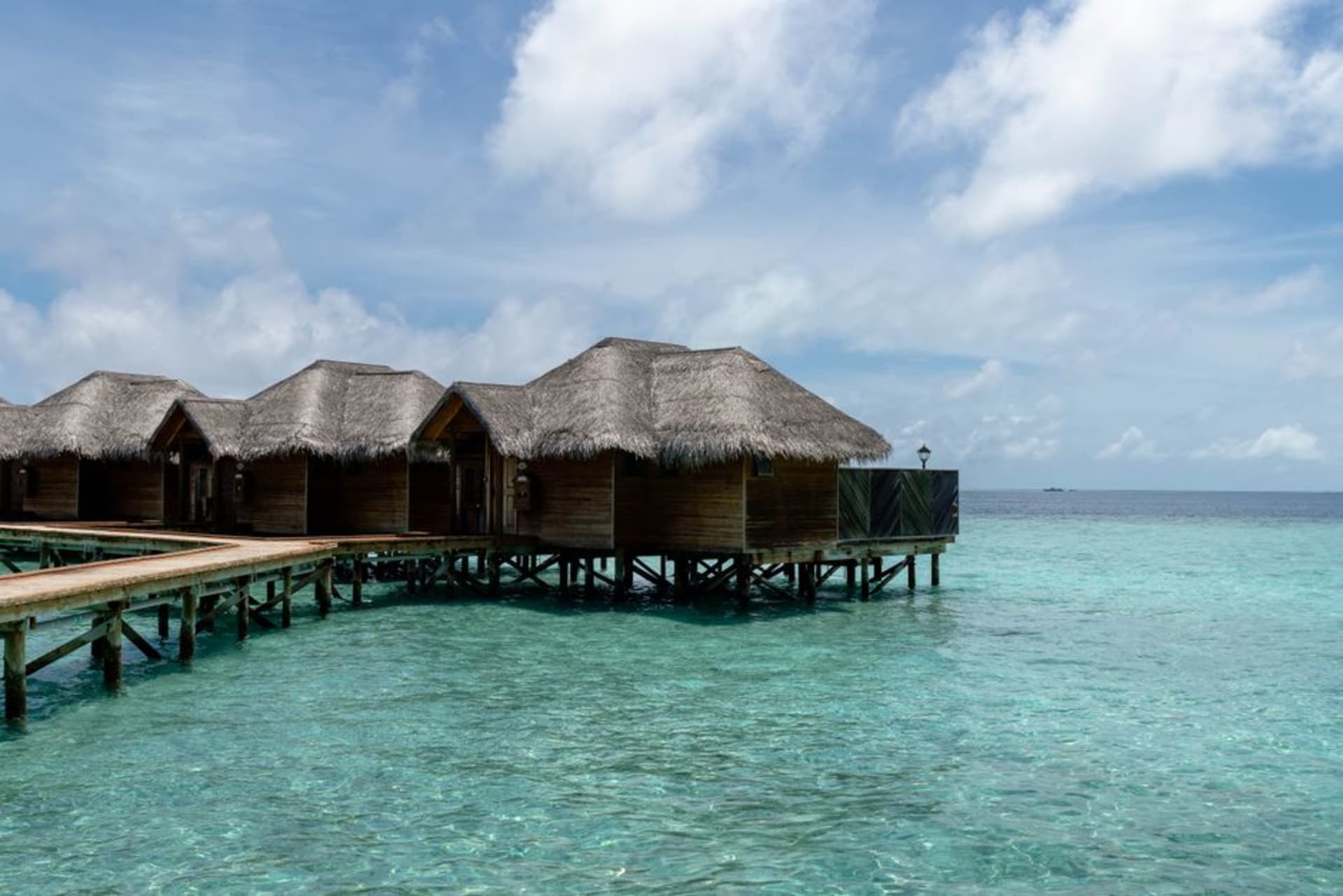
Togean Islands
"Everyone who talked me out of going to Togean had never actually been. That should have told me something sooner."
A scattered archipelago in the middle of Sulawesi's own gulf, hard enough to reach that half the people who plan to go there never do.
Getting to the Togean Islands is its own filter. There’s no airport on the islands themselves — you fly into Luwuk or Ampana on the Sulawesi mainland, then take a public ferry or a chartered boat out into the Gulf of Tomini, a body of water so large and so little photographed that most people outside Indonesia couldn’t place it on a map. The journey took me the better part of a day, door to door, and by the time the boat finally slid between the first low green islands I understood why so few travelers bother. It’s inconvenient in a way that Bali or even Bunaken simply isn’t. That inconvenience is precisely why the reefs down there still look the way reefs are supposed to look.
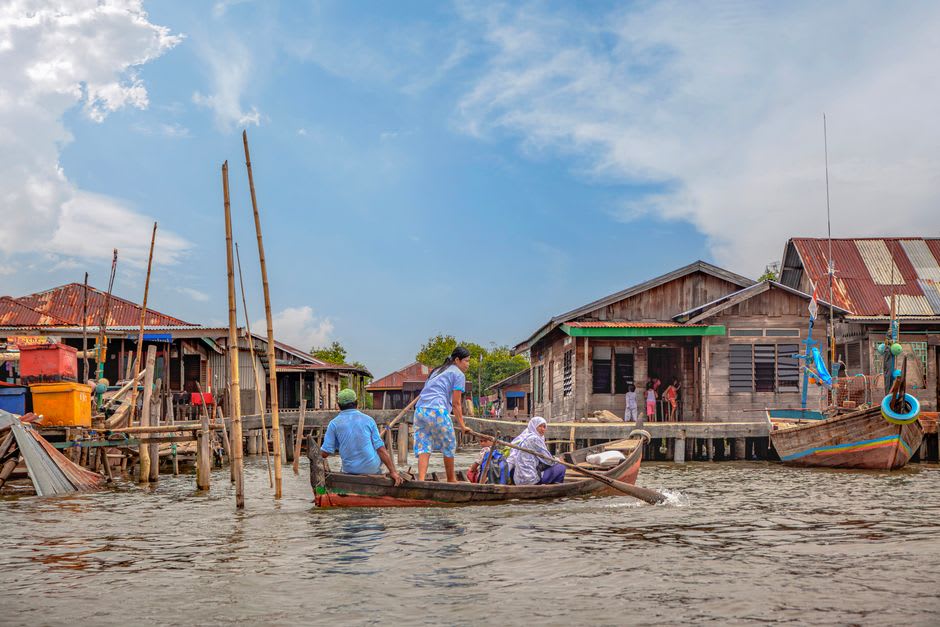
The Togean archipelago sits inside its own marine national park, gazetted in 2004, and it’s genuinely unusual among Indonesian dive destinations because it contains all three major reef types — fringing reefs, barrier reefs, and atolls — within a single, fairly compact area, a combination almost nowhere else on earth manages. I based myself on Kadidiri for most of my stay, one of the more developed islands in the group, which in Togean terms means it has a handful of simple bungalow resorts and reliable-ish generator power in the evenings. From there I did boat trips out to Una Una, a volcanic island with an active cone, and to Malenge, where a Bajau stilt village sits built entirely over the water, houses on wooden pylons connected by a maze of narrow plank walkways with no dry land underneath at all.
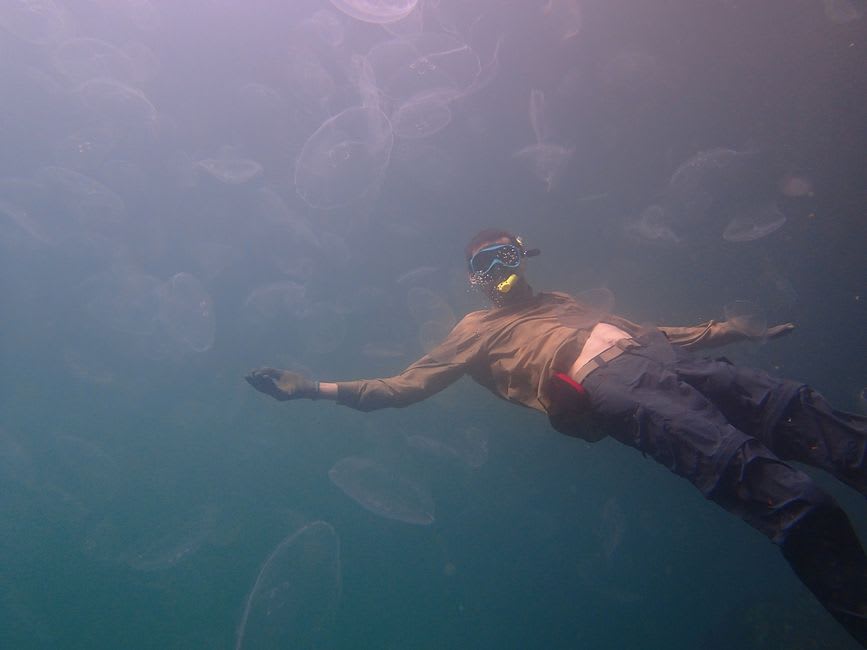
The jellyfish lake
The single strangest afternoon of my whole Sulawesi trip happened on a tiny island near Mairoto, where a landlocked saltwater lake holds a population of golden jellyfish that have lost their ability to sting — cut off from predators for long enough, geologically speaking, that the evolutionary pressure to maintain venom simply disappeared. I swam through hundreds of them, gently pulsing gold shapes bumping harmlessly against my arms and legs in water lit from above through a canopy of limestone and jungle. It’s a smaller, lesser-known cousin of Palau’s famous jellyfish lake, and having it almost entirely to myself, with maybe three other people in the water that whole afternoon, is not an experience Indonesia offers in many places anymore.
The Bajau and Bugis communities scattered across the archipelago live largely as they always have, fishing from small outrigger boats and building everything from houses to boat hulls from materials the sea and forest provide directly. Electricity is patchy, food options are limited to whatever the day’s boat brought in plus rice, and cell signal disappears entirely on some islands. I found all of that a relief rather than a hardship. Somewhere around day four, without a screen in reach and nothing scheduled, I actually stopped checking the time, which had not happened to me anywhere else on this trip.
When to go: April to June and October to November hit the best window — calm seas for the crossing and good visibility before or after the wetter months, which run roughly December through February and can complicate boat access entirely.