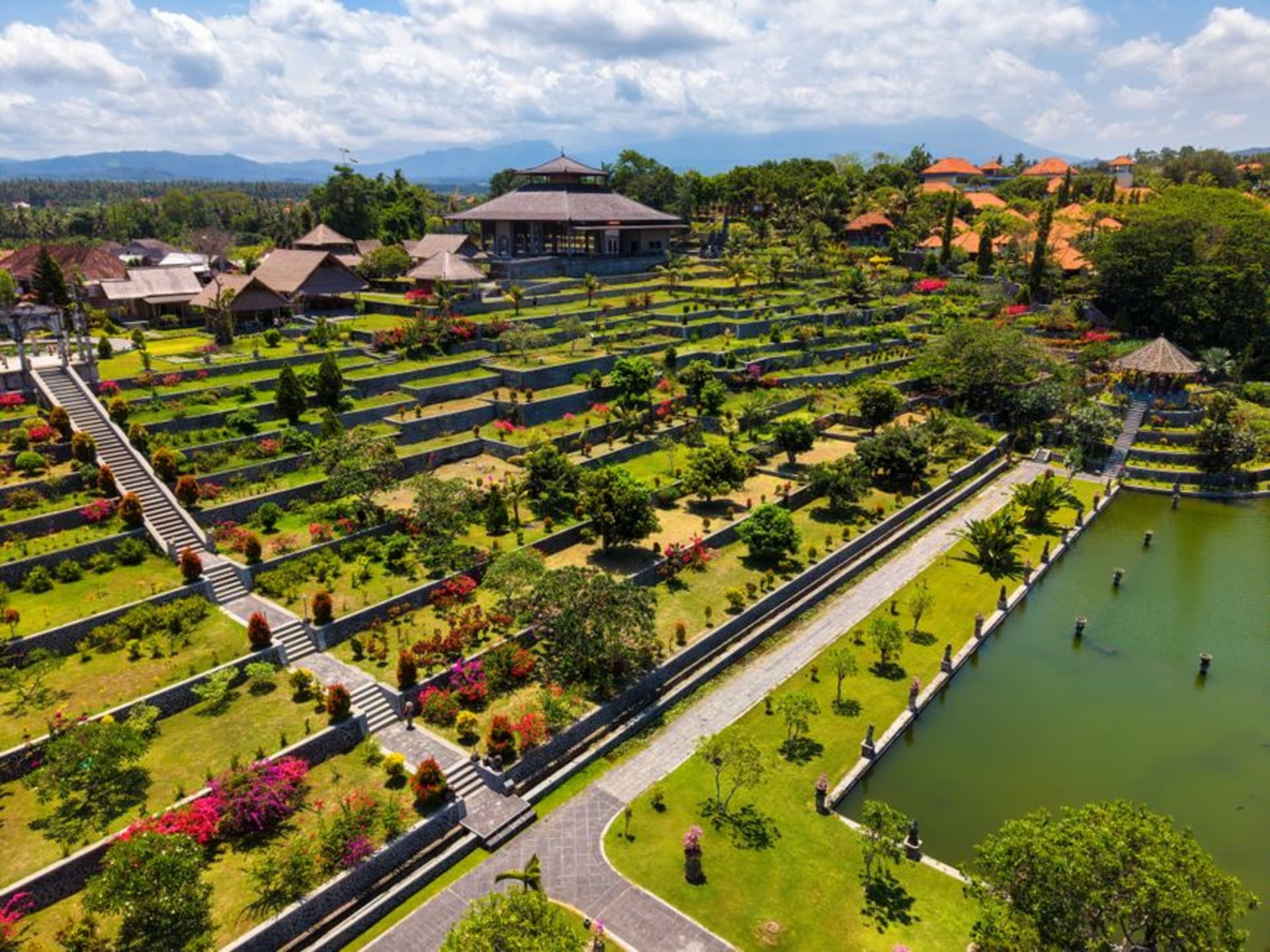
Tirta Gangga
"A palace built for a river god, destroyed by a volcano, and rebuilt by people who refused to let it stay ruined."
A king's water garden, rebuilt from the rubble of an eruption, where koi still circle stepping stones set in holy pools.
Tirta Gangga means “water of the Ganges,” and the name tells you exactly what kind of ambition built this place. The last king of Karangasem, Anak Agung Anglurah Ketut Karangasem, commissioned the water palace in 1946, drawing on a natural spring considered holy and channeling it into a complex of pools, fountains, and stone-carved statues arranged with the same layered symbolism you find in Balinese temples — a physical expression of the connection between mountain water, human life, and the divine that underlies the whole subak irrigation cosmology. It was meant as both a royal pleasure garden and a working source of holy water for temple ceremonies across the region, and it still functions as both today.
I’ve been to a lot of “palaces” in Southeast Asia that turned out to be modest compounds inflated by translation, but Tirta Gangga earns the word, even at a fraction of European scale. The main pond is crossed by a zigzag line of stone stepping stones set just above the waterline, each a slightly different height, so that walking across feels like a small deliberate test — one wrong step and you’re in with the koi. Eleven-tiered fountains rise from the water in the center pools, statues of mythical creatures line the paths, and everywhere there’s the sound of moving water, channeled from pool to pool through carved spouts shaped like nagas and demons.
Destroyed and rebuilt
What most visitors don’t realize is that almost none of what you’re walking through is original. In 1963, Gunung Agung — the volcano visible from the garden on a clear day — erupted catastrophically, one of the deadliest eruptions of the twentieth century, killing over a thousand people and burying much of eastern Bali under ash and lava. Tirta Gangga was largely destroyed. The royal family and local community rebuilt it in the decades after, working from photographs and memory, which is why the garden feels less like a museum piece and more like something still cared for by people who chose it, twice. The eruption is part of the place’s identity now, the way a scar becomes part of a face.
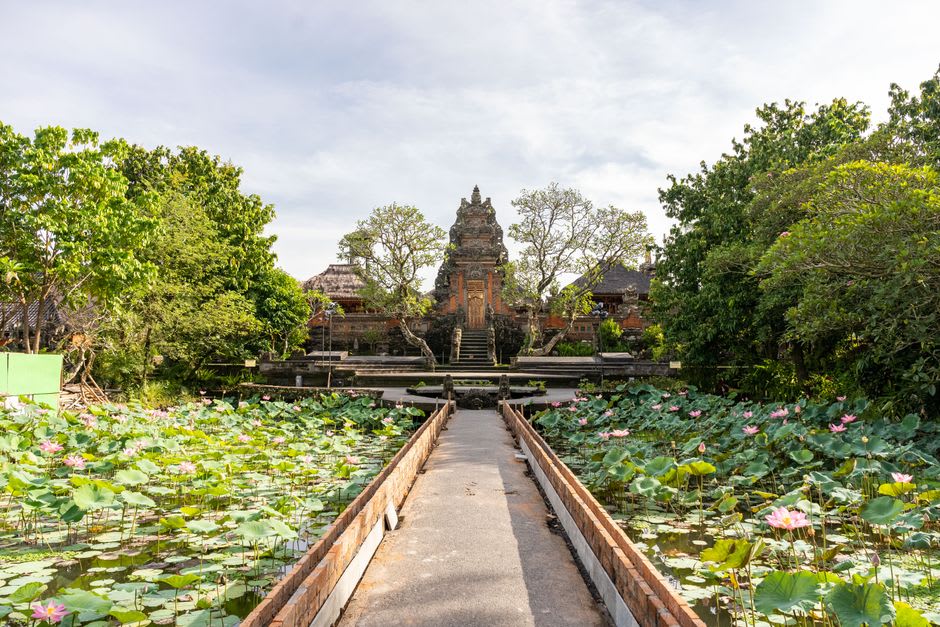
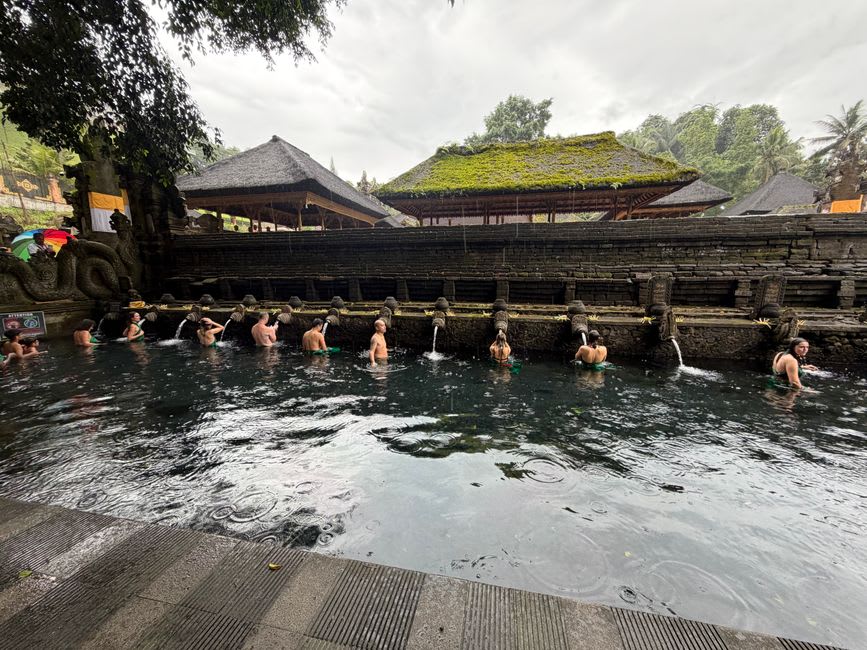
Around the palace, the surrounding hills of Karangasem regency roll out in rice terraces that get less foot traffic than Ubud’s, partly because most people treat Tirta Gangga as a quick stop en route to Amed’s dive sites or the Lempuyang temple gates, rather than a place to linger. That’s a mistake. I spent an hour just sitting at a warung overlooking the lower pools, watching local families come to bathe in the public spring-fed pools set apart from the ornamental ponds — because the water here isn’t just decorative, it’s genuinely considered pure enough for ritual use, and Balinese still come to collect it for ceremonies.
When to go: Early morning, before 9am, when the light is soft and the tour groups en route to Lempuyang haven’t yet arrived; the dry season from April to October keeps the surrounding rice-terrace paths easiest to walk.