Semarang
"A city that grew up as a warehouse for other people's empires and kept every scar to prove it."
A port city where Dutch colonial facades, a Chinese admiral's temple, and the best lumpia in Java all sit within walking distance of each other.
I went to Semarang expecting a stopover — a place to break the drive between Jakarta and points east on Java’s north coast — and ended up rearranging my schedule to stay two extra days. Semarang is Central Java’s capital and its busiest port, which has meant, for four centuries, that everyone with an interest in the spice trade passed through and left something behind. The result is a city with more layered history per square kilometer than almost anywhere I’ve been in Indonesia, and almost none of it packaged for visitors.
The old town, Kota Lama, is the clearest evidence. Dutch colonial Semarang built itself a miniature version of home here — Gereja Blenduk, the oldest church in Central Java, sits under a copper dome that’s gone green with age, ringed by former trading houses and warehouses in various states of restoration and collapse. Some buildings have been beautifully redone as cafes and galleries; others are still crumbling behind scaffolding, moss climbing the brickwork, which somehow makes the whole district feel more honest than if it had all been polished at once. I walked it at golden hour when the light hits the Dutch gables just right and the whole neighborhood looks like it’s still deciding what century it’s in.
Lawang Sewu and the ghosts everyone mentions
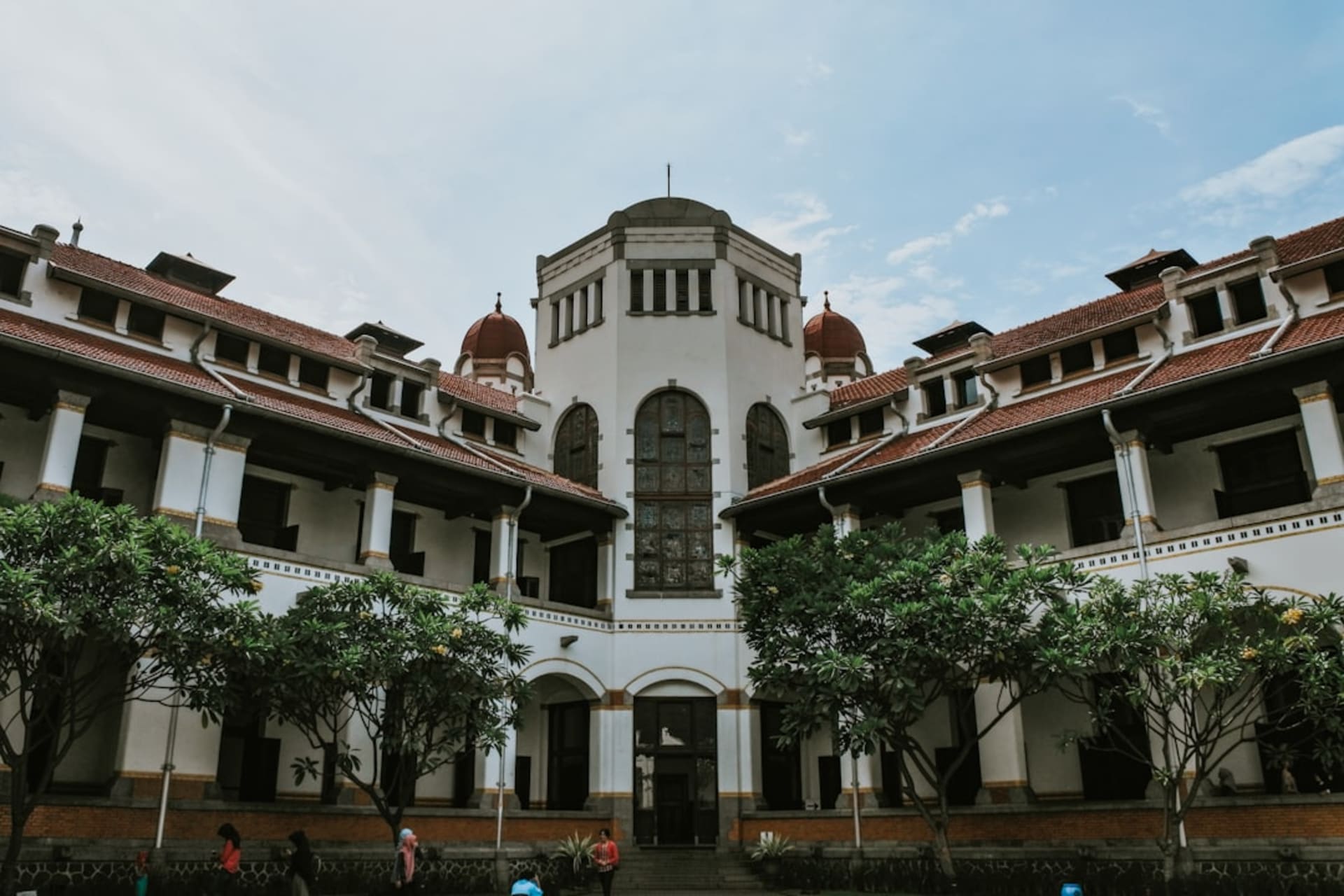
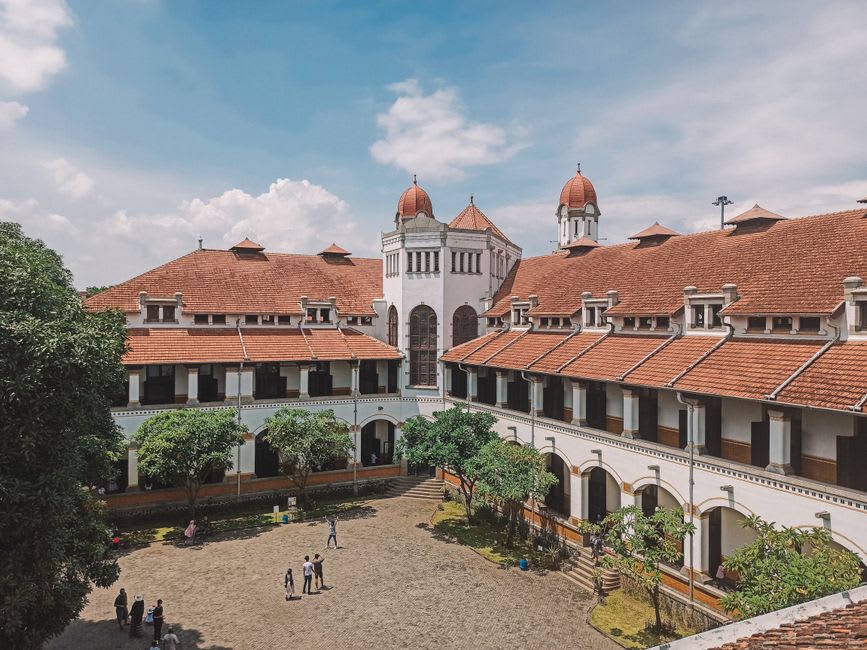
No one in Semarang lets you leave without bringing up Lawang Sewu — “Thousand Doors” — the former Dutch railway company headquarters near Tugu Muda, the city’s landmark roundabout monument. It doesn’t actually have a thousand doors, but it has enough tall shuttered windows and doors to make the count plausible, and enough dark history — it was used by occupying Japanese forces during World War II, with basement rooms locals will tell you were used for detention — that it’s become Indonesia’s most famous supposedly haunted building. I don’t put much stock in ghost stories, but standing in the empty central hall with light falling through the stained glass, I understood why the reputation stuck.
Sam Poo Kong and a plate of lumpia
The other pillar of Semarang’s identity is its Chinese heritage, anchored by Sam Poo Kong temple, built to honor Zheng He — the Muslim Chinese admiral whose fleet stopped here in the early 1400s during his famous voyages through Southeast Asia. The temple complex, with its deep-red pillars and curling roofline set against a backdrop of banyan trees, sits where Zheng He is said to have first landed, and it remains an active site of worship, not a relic — incense smoke drifting across courtyards where families come to pray on specific lunar dates. Semarang’s Chinatown, Pecinan, nearby, still runs its own rhythms, especially around Chinese New Year.
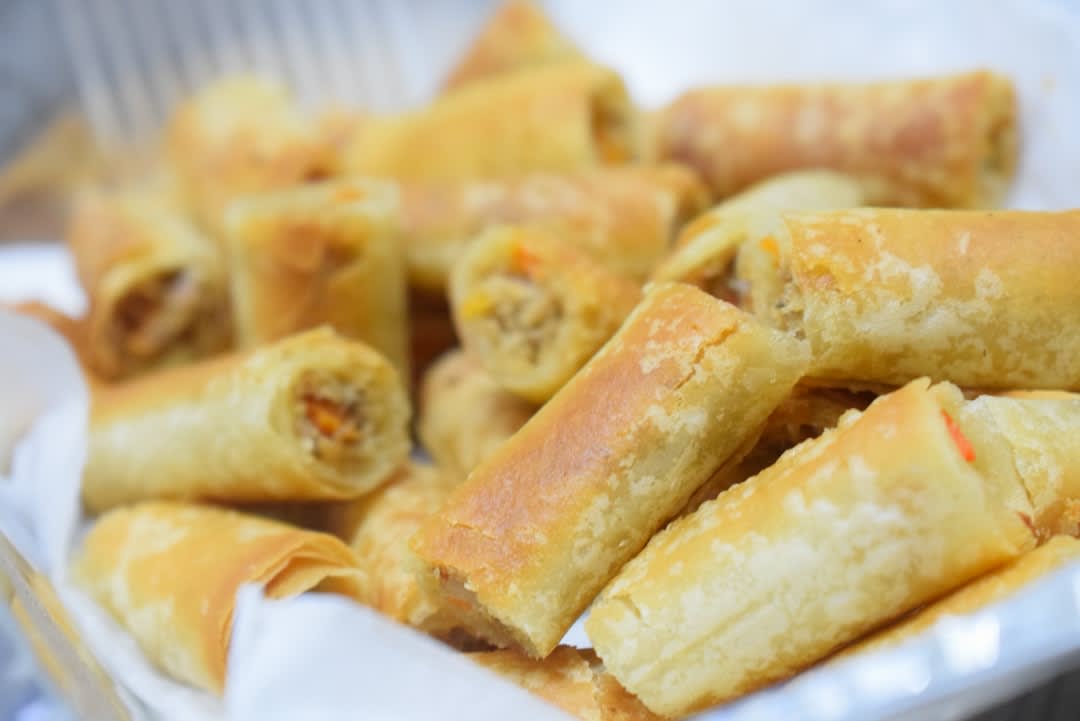
And then there’s lumpia, the spring roll Semarang claims as its own invention, filled with rebung — bamboo shoot — egg, and shrimp or chicken, fried until the wrapper shatters. I ate it standing up at a stall near Jalan Pemuda, the sauce dripping down my wrist, and understood immediately why people from Jakarta drive hours just to eat it fresh.
When to go: June to September for the driest, clearest weather to walk Kota Lama without dodging rain; avoid the worst of the coastal flooding that can hit the lower old-town streets during peak wet season in January and February.