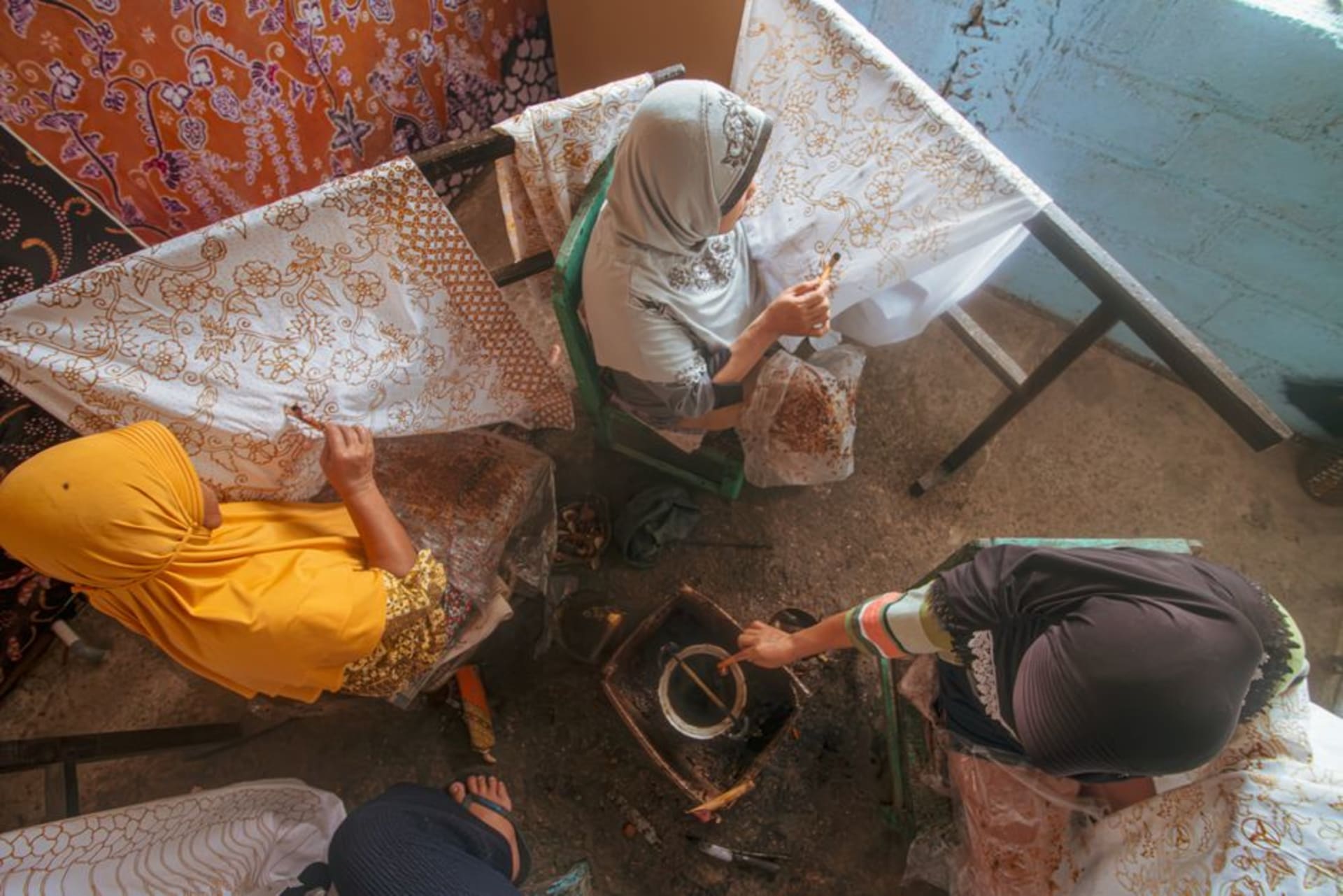
A north-coast batik city where the wax pen never stops moving and the canals still smell faintly of indigo.
I went to Pekalongan expecting a museum piece and found a working city instead. Everyone talks about batik as heritage — UNESCO agrees, it inscribed Indonesian batik onto its Intangible Cultural Heritage list in 2009 — but here on the north coast of Java, wedged between the Java Sea and a flat sprawl of fish ponds, batik is closer to a local industry than a relic. Walk down almost any side street in the Kauman or Pesindon quarters and you will hear the tock-tock of canting pens tapping against copper wax pots before you see anything at all.
What sets Pekalongan apart from the more famous batik centers of Yogyakarta and Solo is the coastline itself. Java’s north coast — the pasisir — has been a trading frontier for a thousand years, and its batik absorbed everyone who passed through: Chinese merchants brought phoenixes and peonies, Dutch colonists brought European florals, Arab traders left their own geometric imprint. The result is jlamprang and buketan motifs that riot with color in a way inland Javanese batik, with its restrained browns and indigos tied to royal courts, never allowed itself. Pekalongan batik is loud, coastal, cosmopolitan — it was made for merchants and their wives, not for palace protocol.
Following the wax
The batik museum near the old town gives you the theory — the distinction between batik tulis, hand-drawn with a canting, and batik cap, stamped with a copper block, and the hours each demands. But the real education happens in the kampung batik neighborhoods, where entire families work in open-air pavilions, women bent over stretched cotton with wax pots warming on charcoal braziers, moving the pen in unbroken lines that somehow never smudge. I sat and watched a woman finish a single sarong-length panel in an afternoon that she told me, matter-of-factly, would take her three more weeks.
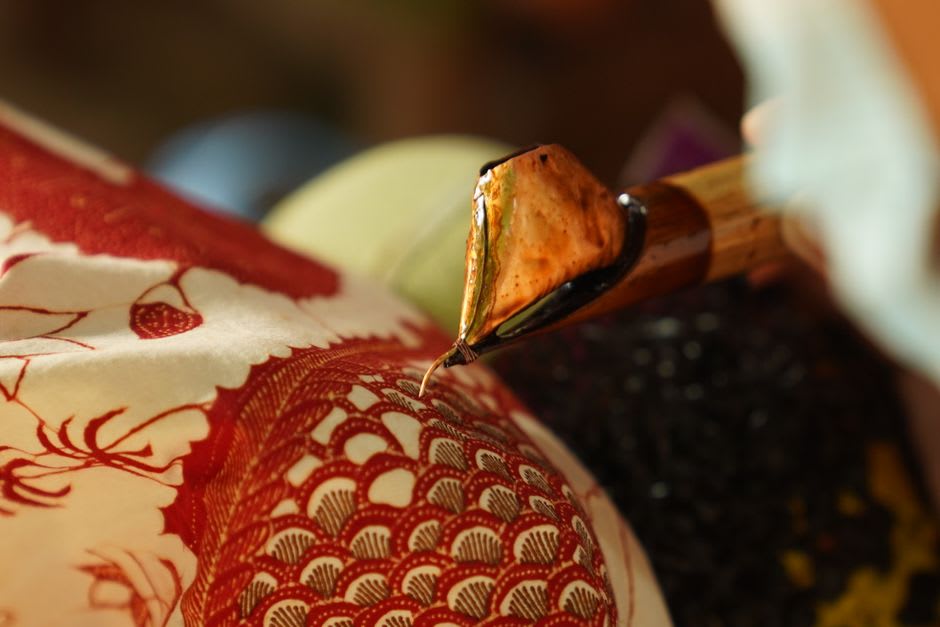
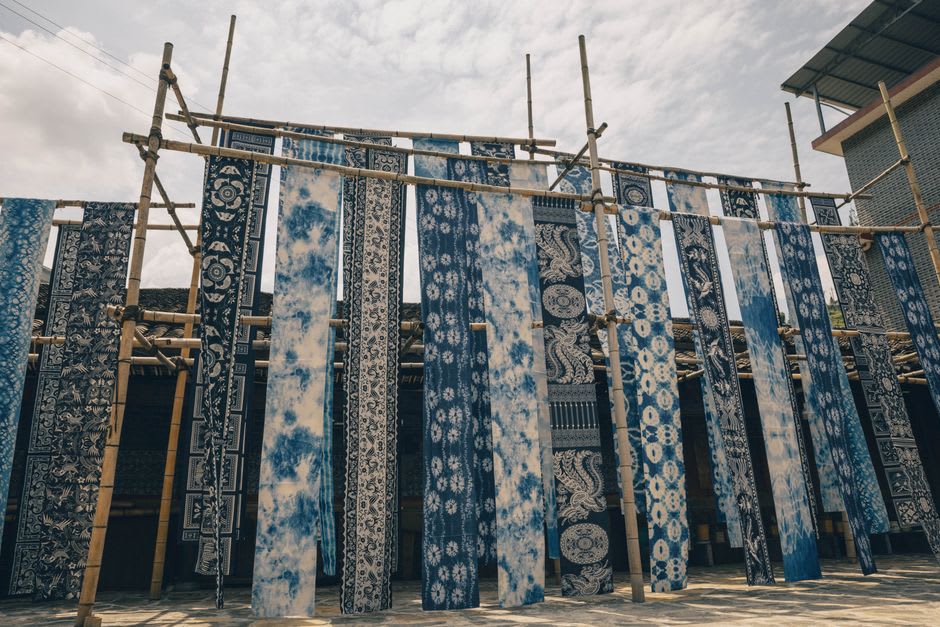
The dyeing happens elsewhere, in yards strung with bamboo poles where finished cloth dries in long, color-blocked rows — cobalt blue, chili red, the yellow the locals call kuning telur, egg-yolk yellow. Depending on the wind, you catch the mineral tang of dye vats before you turn the corner and see them. It’s an unglamorous process, vats of naphthol and indigo stirred with wooden paddles, but the cloth that comes out of it is some of the most vivid textile work in Southeast Asia.
Pekalongan is also, unavoidably, a fishing city, and the two industries share a rhythm — the harbor at Pelabuhan Pekalongan and the fish market by the Kupang and Pekalongan rivers wake before dawn, the batik workshops start mid-morning once the wax has had time to warm through the night’s cool. I ate grilled tengiri, Spanish mackerel, from a warung near the harbor that still had scales on the cutting board, and it was better than anything I’d find at a tourist restaurant three hours south. This is not a city performing itself for visitors. It just happens to make some of the most beautiful cloth in the archipelago while going about its business.
When to go: May through September, during the dry season, when the wax dries reliably and the dyed cloth can hang outside without rain ruining a week’s work — it’s also when workshops are busiest and most willing to let you watch.