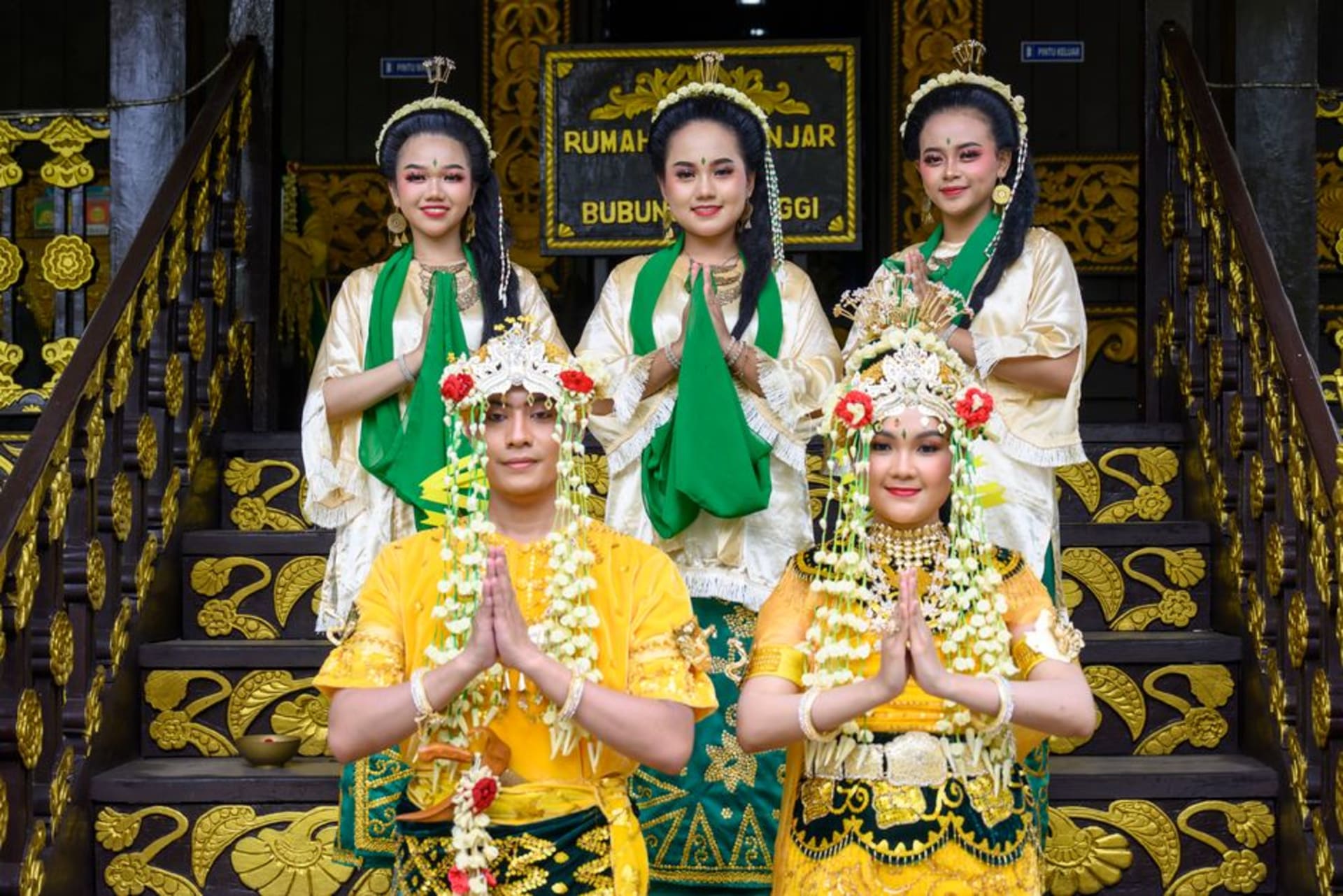
Pagaruyung
"A kingdom that burned down twice and got rebuilt anyway, because some things a culture refuses to let go of."
A rebuilt palace on a hill outside Batusangkar, standing in for a Minangkabau kingdom that mostly survives now in matrilineal custom and roof lines shaped like buffalo horns.
The Istano Basa Pagaruyung is not, strictly, old. The building standing on the hill outside Batusangkar today was completed in 2013, after a fire — caused by a lightning strike — destroyed the previous reconstruction in 2007. That one had replaced an earlier version burned during the Padri War in the 1800s. I mention this up front because it matters for how you should look at the place: this isn’t a preserved relic, it’s a living insistence. Three times now the Minangkabau people of West Sumatra have rebuilt this palace, each time in the same soaring, horn-gabled style, because the Istano Basa isn’t really a building so much as a claim — that the old Minangkabau kingdom of Pagaruyung, and the matrilineal culture it represents, is still here.
Pagaruyung as a kingdom dates back to at least the 14th century, and by tradition it’s considered the ancestral seat of Minangkabau identity across the whole of West Sumatra and beyond — the ethnic group is one of the largest matrilineal societies left in the world, property and clan name passing down through women even as religious and political authority traditionally sat with men, a division of power the Minangkabau summarize in the phrase adat basandi syarak, syarak basandi kitabullah — custom founded on Islamic law, Islamic law founded on the Quran. Standing in front of the palace, all eleven tiers of its roof curving upward like a row of buffalo horns caught mid-charge, you’re looking at the physical expression of that whole worldview: the horns reference the legendary origin story of the Minangkabau name itself, “victorious buffalo,” from a tale of a water-buffalo duel that supposedly settled a territorial dispute with a neighboring Javanese kingdom without a single soldier dying.
Inside the horns
Climb the narrow stairs into the palace and the scale changes completely — the interior is a warren of small rooms and steep wooden staircases, hung with hand-woven songket textiles in gold thread and lined with photographs of the royal lineage and old black-and-white shots of the pre-fire palace. A guide walked me through the layout, explaining how each room historically belonged to a different female relative of the ruling family, and how the roof’s height above a room signaled its occupant’s status. From the upper balcony you can see clear across the Batusangkar valley to the volcanic silhouette of Gunung Merapi, and it’s easy to understand why this particular hill was chosen for a seat of power — everything approaching from any direction would have been visible for miles.
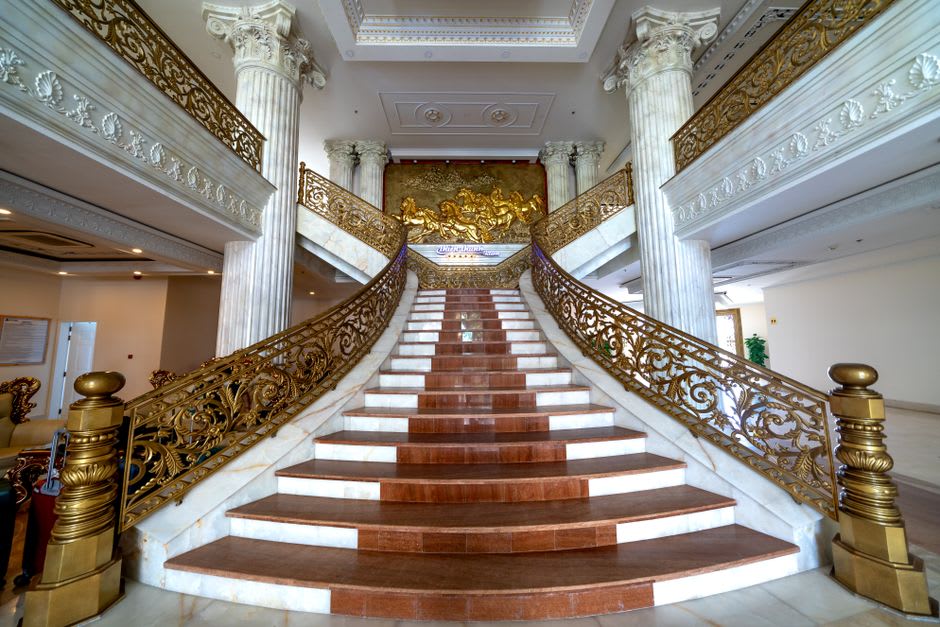
Outside, the palace grounds are dotted with smaller traditional houses — rumah gadang — in the same horn-roofed style but scaled down to the size they’d actually have been lived in, along with a rice barn and a small pavilion where cultural performances happen on weekends and during festivals. I got lucky and caught a rehearsal of tari piring, the plate dance, dancers moving in tight, fast patterns with lit candles and porcelain plates balanced in their palms, the plates occasionally clicked together in rhythm with the saluang flute and drums. Nobody seemed to be performing for tourists — there were maybe six of us watching, mostly domestic visitors — it just seemed to be what happened on a Saturday.
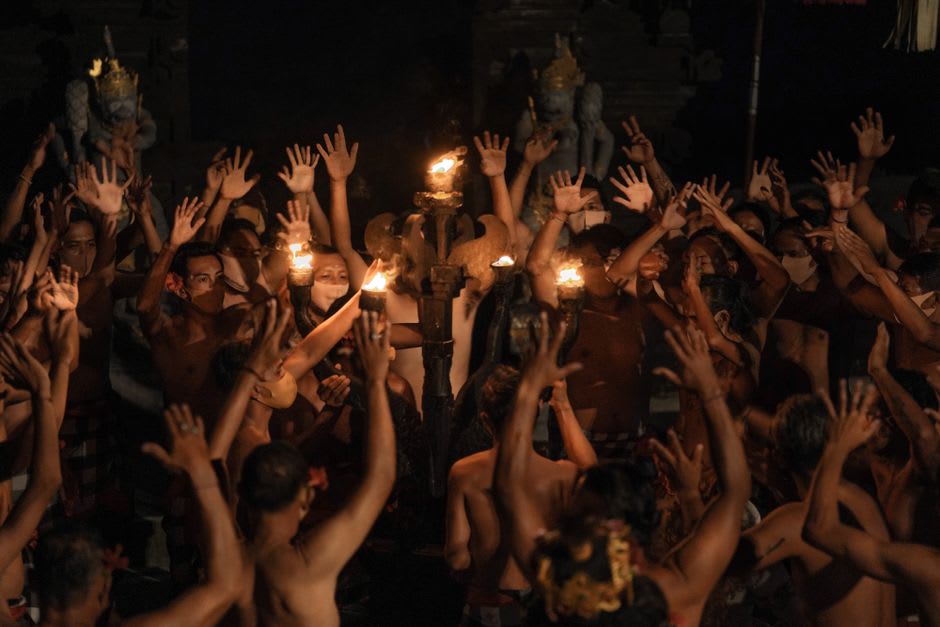
Batusangkar itself, the town below, is worth an extra hour — it’s dense with smaller rumah gadang still lived in by extended families, less polished than the palace but more honest about what daily life inside this architecture actually looks like. I ended the afternoon at a warung nearby eating rendang that had clearly been simmering since dawn, dark and dry and nothing like the wetter versions served elsewhere in Indonesia — a reminder that this valley didn’t just give West Sumatra its royal history, it gave the whole archipelago one of its defining dishes.
When to go: Dry season, May to September, for clear views of Gunung Merapi from the palace balcony; weekends bring the best chance of catching traditional dance performances on the grounds.