A limestone island south of Bali with dinosaur-shaped cliffs, manta ray cleaning stations, and roads that dissolve in the rain.
The ferry from Sanur takes forty-five minutes. By the time we docked at Toyapakeh and climbed into the back of a hired jeep, the driver — a young man named Ketut who had learned English from tourists and spoke it in bursts of concentrated cheerfulness — had already warned us twice about the roads. We laughed. Then we saw them: cracked coral asphalt that narrowed without warning, slick with morning rain, edged by nothing at all on the western side.
The Cliff That Looks Like a Dinosaur
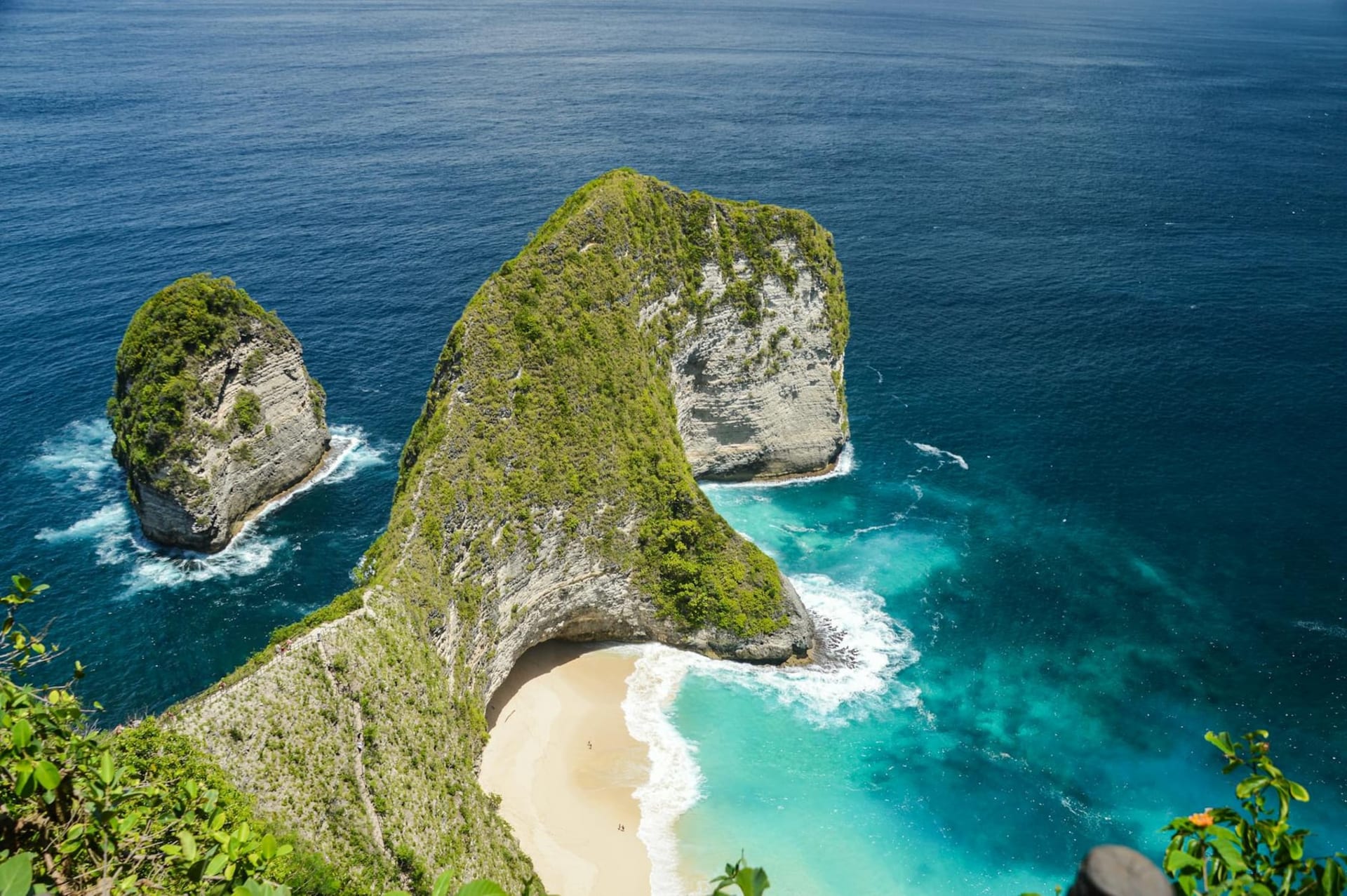
Kelingking is the image everyone comes for, and everyone is right to come. The viewpoint sits at the end of a road so pitted it feels less built than excavated — you park where the rocks allow and walk the last hundred metres on foot, through grass that smells of salt and dried mud, until the island simply stops. Below, the headland drops in the shape of a Tyrannosaurus leaning toward the sea, its neck a column of white limestone, its chest a tiny beach of sand so fine it looks powdered. I had seen the photograph a hundred times. I was still not ready for the scale.
Lia sat down on the edge of the viewpoint and didn’t speak for a while. That, I have learned, is her highest form of praise.
The descent to the beach takes about forty minutes down a rope-and-stone path that requires both hands and the willingness to accept that the rope is not new. The sand at the bottom is almost impossibly white. The sea is the colour that travel brochures try to describe and always fail. We swam in it for an hour and dried on a rock while frigate birds circled the headland above us.
The Mantas at Manta Point
The southwest tip of the island is a cleaning station. Manta rays — some with wingspans wider than I am tall — glide up from depth in slow spirals while small fish pick parasites from their underbellies. We snorkelled above them from a wooden jukung, lying flat in the water, trying not to kick. The mantas moved the way heavy things move when they are perfectly adapted to their element: unhurried, enormous, entirely unbothered by the seven humans floating above them breathing through plastic tubes.
What I hadn’t expected was the cold. At Manta Point, an upwelling pushes cold water from below, and when you swim through it the temperature drops suddenly, ten degrees in ten metres. The mantas prefer it. I understood why — the cold felt clarifying, alive, as if the ocean were paying attention.
The Roads, and What Happens to Them
The western road — the one connecting Crystal Bay to Kelingking to Broken Beach to Angel’s Billabong — is a genuine adventure in the afternoon once the rain arrives. Ketut drove with one hand on the wheel and one elbow out the window, navigating around sinkholes with the casual authority of someone who has simply decided not to worry about them. We lost a piece of the muffler on a section that had reverted to loose stone. He stopped, looked under the jeep, shrugged with great dignity, and kept driving.
Broken Beach — Pasih Uug in Balinese — is a sea arch so large that fishing boats pass through it at high tide. The water inside is a contained lagoon of impossible green. Adjacent, Angel’s Billabong is a natural infinity pool in the rocks, tidal and treacherous at high water, miraculous at low. We arrived at exactly the right moment, which is to say by accident.
When to go: April to October, during Bali’s dry season. The roads become genuinely impassable in heavy rain, and the manta ray sightings at Manta Point are most reliable from July through September when plankton concentrations peak.