Lake Maninjau
"Forty-four numbered turns down the crater wall, and I counted every single one."
A volcanic crater lake ringed by 44 hairpin turns, where the descent is half the point and the water at the bottom is worth every switchback.
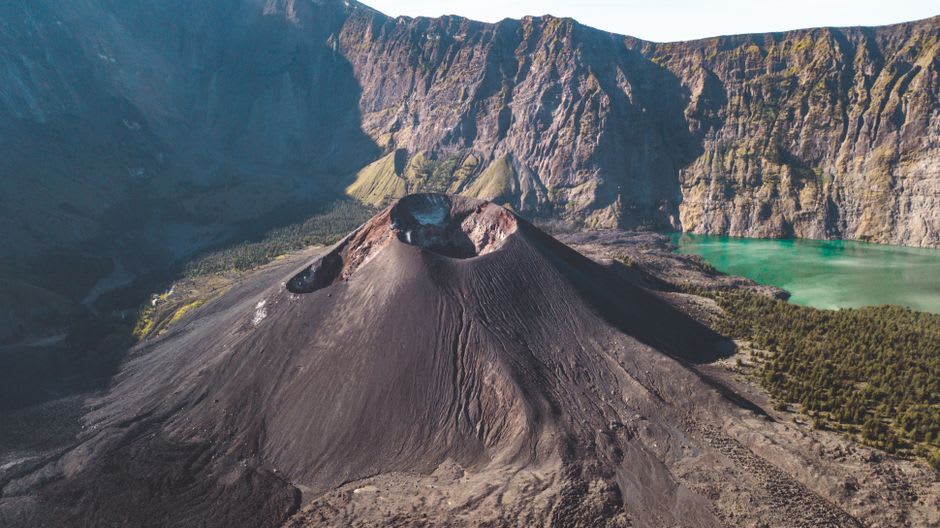
Lake Maninjau is a caldera — the collapsed remnant of a massive volcanic eruption roughly 52,000 years ago, one violent enough to leave behind a basin nearly 100 square kilometers wide and, in places, over 160 meters deep. You don’t arrive at it so much as descend into it. The road down from the Bukittinggi side switches back on itself forty-four times, each hairpin marked with a small numbered sign — Kelok 44, “the 44 turns” — a piece of engineering from the Dutch colonial period that remains one of the most-photographed roads in West Sumatra. I rode down on the back of a rented motorbike, brakes smoking a little by the halfway point, watching the lake widen and flatten below with each switchback until the whole crater finally opened up at once.
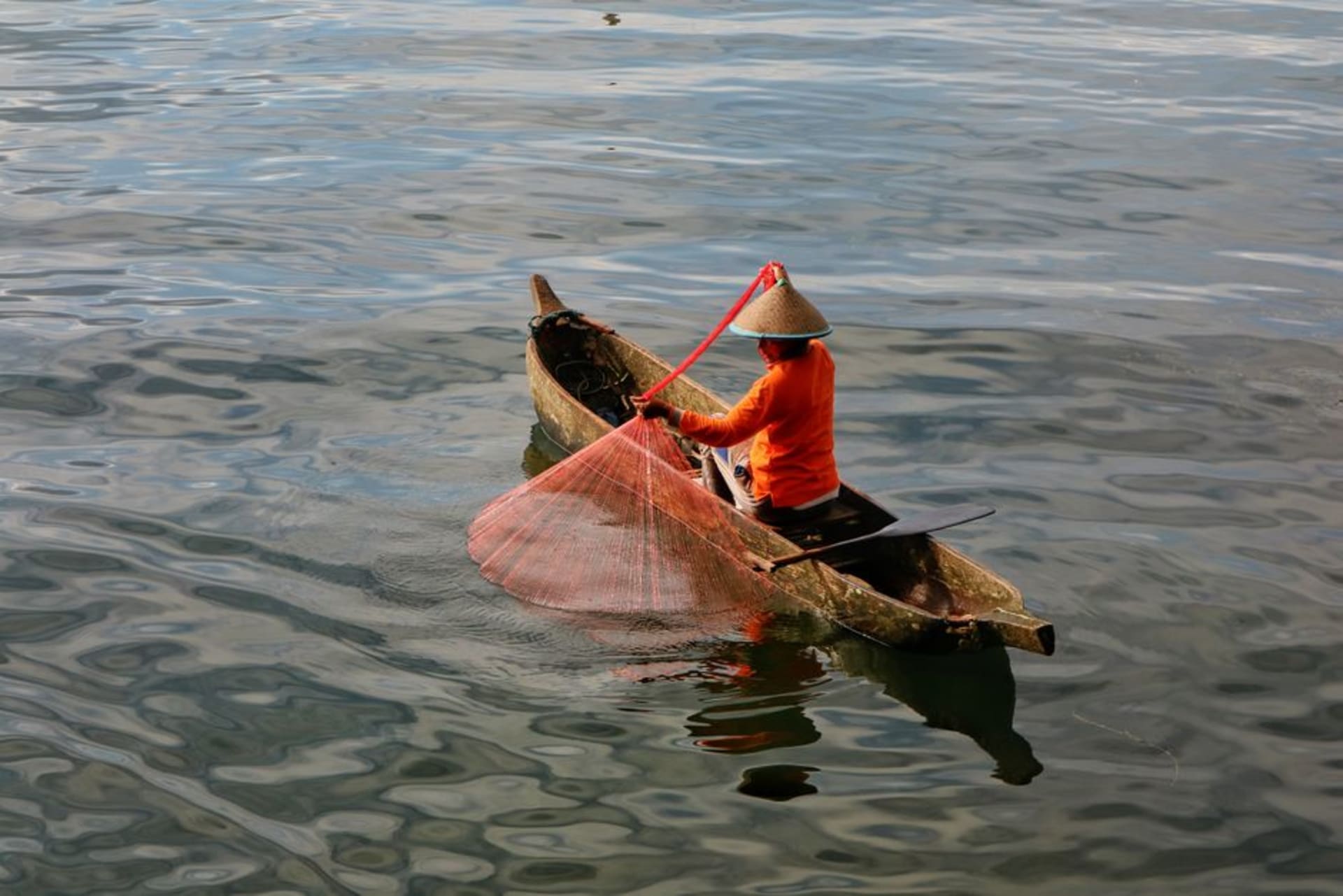
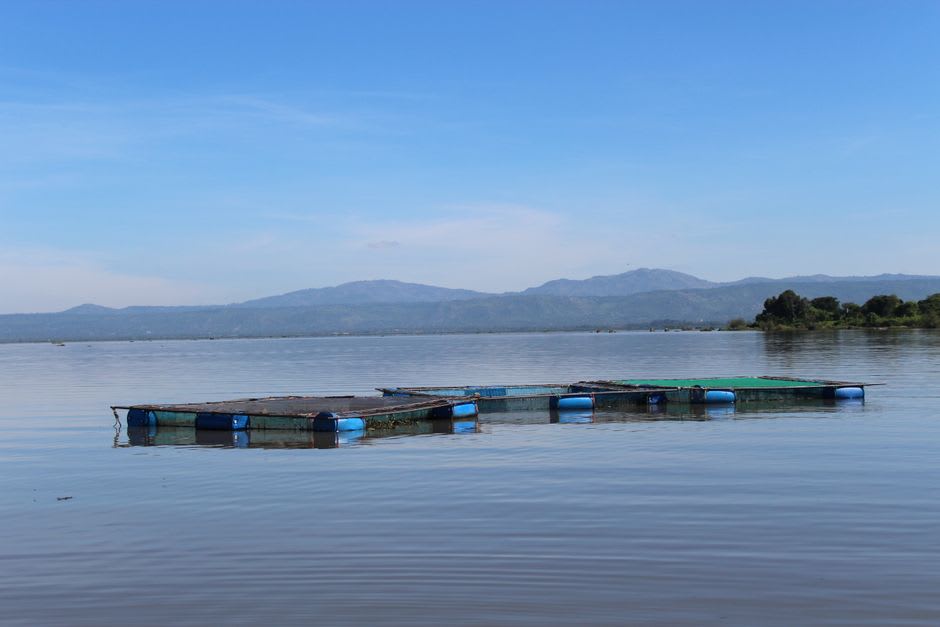
What struck me first, once I was actually at lake level, was the quiet. Unlike Lake Toba to the north, which has built out a real tourism infrastructure over decades, Maninjau still feels like a working agricultural lakeside — rice paddies terracing right down to the shoreline, and fish farming operating out of the hundreds of floating net cages (keramba) that cluster near the villages ringing the water. Locals raise carp and tilapia in those cages, and the practice has become controversial in recent years for the pollution it causes in a lake with limited water exchange, but from a kayak at dawn the cages just look like part of the landscape, wooden platforms strung together, fishermen crouched over their nets in the mist.
A village with a literary and religious pedigree
The town of Maninjau itself, on the lake’s northeastern shore, is unassuming — a strip of guesthouses and warungs — but the surrounding region carries real weight in Minangkabau intellectual history. Buya Hamka, the influential Islamic scholar, novelist, and later the first chairman of Indonesia’s national Ulema Council, was born in a village on the lake’s edge in 1908, and his childhood home has been preserved as a small museum. Reading his novel Tenggelamnya Kapal Van der Wijck, still a staple of Indonesian literature classes, gives Maninjau a different texture — this quiet crater lake as the formative backdrop for one of the country’s most important 20th-century writers.
Circling the water
I spent two days doing what most people do at Maninjau — slowly circling it. The road that traces the shoreline runs roughly 60 kilometers around the lake’s perimeter, passing rice paddies, hot springs at Sungai Batang, and small mosques whose calls to prayer echo strangely off the crater walls and carry across the water at dusk. Paragliders launch from Puncak Lawang, a viewpoint on the crater rim above the lake’s northern side, and watching them drift down over the full width of the caldera — the lake a flat pewter disc far below, ringed entirely by green walls — gave me the clearest sense of just how enclosed and complete this landscape is. It’s a bowl. You’re inside a volcano that erupted before humans existed, and it’s since filled with water, rice, fish cages, and villages that never stopped farming just because the setting turned dramatic.
When to go: May through August offers the driest roads for the Kelok 44 descent and the clearest mornings for paragliding at Puncak Lawang; go early in the day, since afternoon cloud often settles into the crater and hides the far shore.