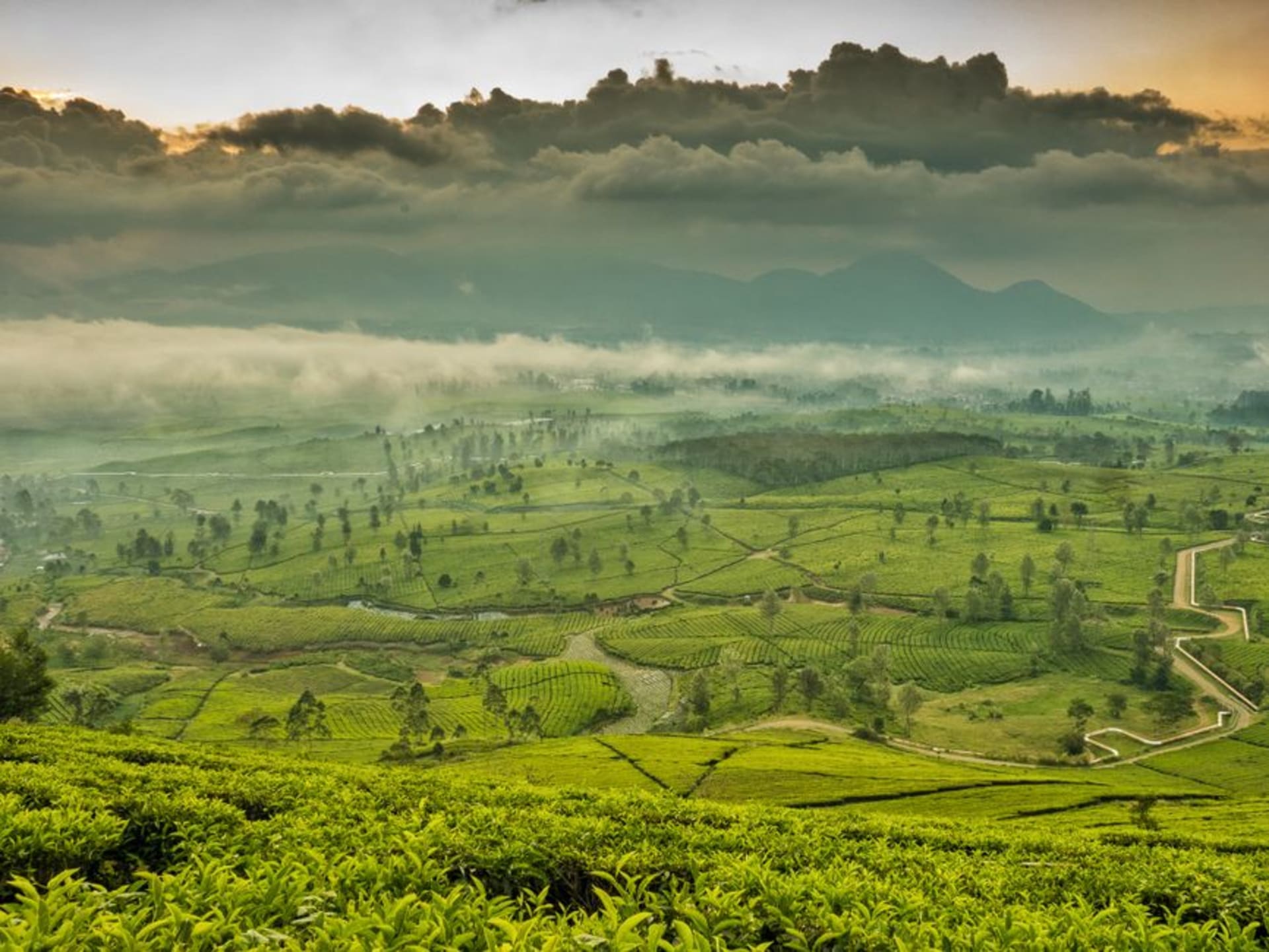
Kerinci
"Every local I met in Kerinci had an orang pendek story, told with the flat certainty of someone describing the weather."
A volcano valley thick with tea and cryptid legends, cupped by Sumatra's tallest peak and its highest lake, where the forest still feels like it might be hiding something.
Kerinci is a valley you reach almost against the road’s will — switchbacks climbing out of Jambi province into a highland basin ringed by some of the densest remaining rainforest in Sumatra, all of it wrapped inside Kerinci Seblat National Park, the largest protected area on the island. At the valley’s western edge, Mount Kerinci rises to 3,805 meters, the highest volcano in Indonesia and the second-highest peak in the entire country. It’s still active — a plume of steam is visible from the summit crater on clear mornings — and it dominates the valley the way a held breath dominates a room.
I climbed partway up with a guide from Kersik Tuo, the small village that sits at the mountain’s base, and even a few hours on the lower slopes made clear why this valley has been isolated enough to keep its own strange folklore alive. The orang pendek — literally “short person,” a bipedal, ape-like creature supposedly two to three feet tall — has been reported by locals and a handful of Western naturalists here since the colonial era, and Kerinci Seblat remains the cryptid’s most consistently cited habitat anywhere in the world. Nobody I spoke to treated it as a campfire story. A porter matter-of-factly told me his uncle had seen tracks near Gunung Tujuh two seasons ago, the same tone he’d have used to mention a leopard cat.
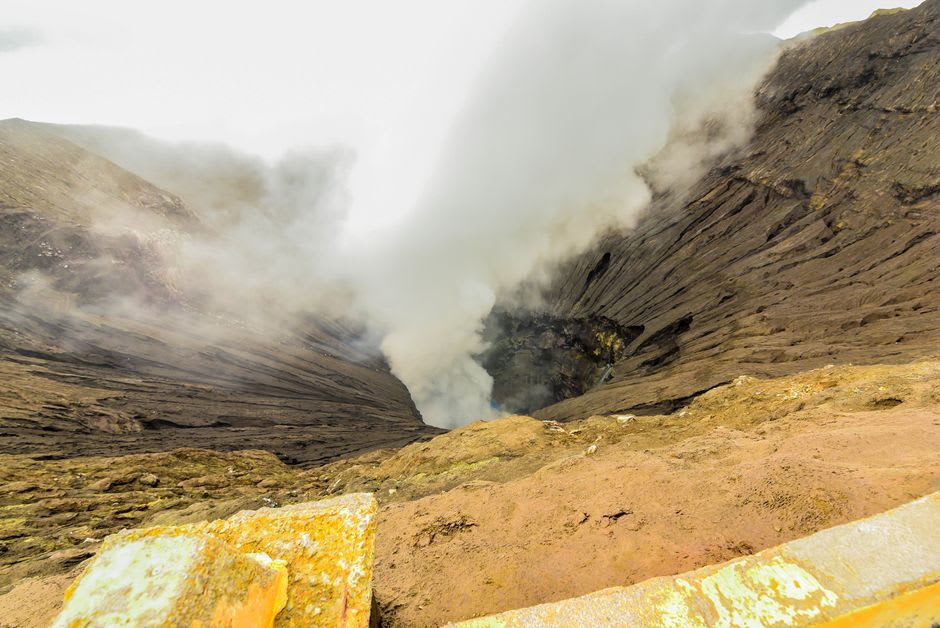
Tea, colonial ghosts, and the highest lake in Southeast Asia
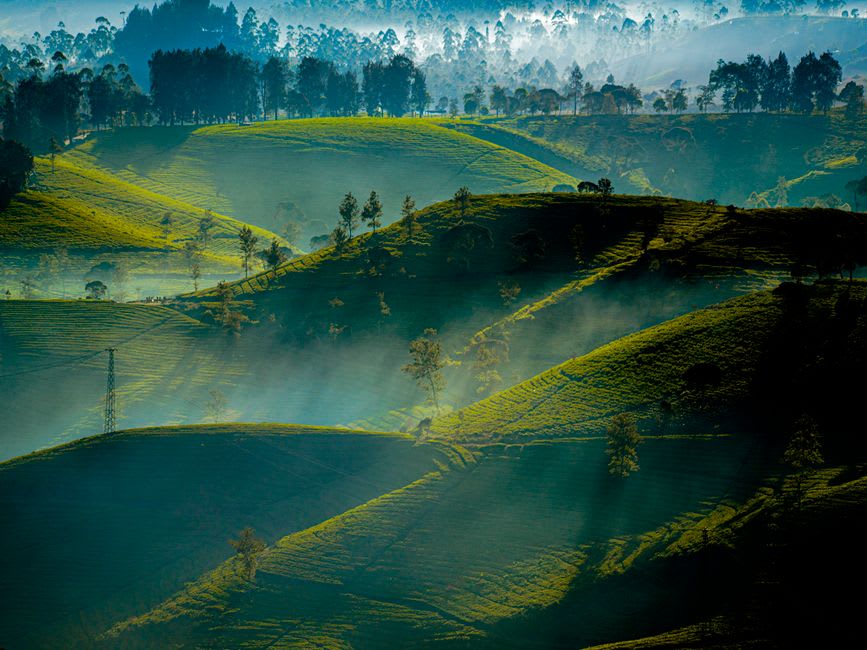
The lower slopes around Kersik Tuo are covered in tea, and this isn’t incidental scenery — the Kayu Aro tea estate here was planted by the Dutch in the early 1920s and remains one of the largest single tea plantations in the world, its rows still tended in long green terraces against the volcano’s silhouette. Walking through at sunrise, mist still caught in the rows, workers moving between the bushes with baskets on their backs, I had the odd sensation of being somewhere that colonial-era agriculture and genuine subsistence had folded into the same unbroken routine, a century apart.
North of the main valley, a punishing trek through dense forest leads to Danau Gunung Tujuh, a crater lake sitting at roughly 1,950 meters — commonly cited as the highest lake in Southeast Asia, cupped inside the caldera of seven surrounding peaks that give it its name. The water is a startling, almost artificial blue-green against the black volcanic rock, and camping on its shore, with no sound but wind moving through the crater rim, is about as isolated as I’ve felt anywhere in Indonesia. Kerinci doesn’t try to sell itself. There’s no polished tourist infrastructure, no glossy visitor center — just a valley that has quietly held onto its volcano, its tea, its lake, and whatever else might be living in the trees between them.
When to go: June to August is the driest window for summiting Kerinci and reaching Gunung Tujuh; outside those months, trails turn to thick mud and cloud cover regularly blocks the crater views.