Yogyakarta is the city I keep returning to in Indonesia, the one that anchors everything else. While Bali dazzles and Komodo astonishes, Yogya — everyone calls it Yogya — is where you begin to understand the depth of Javanese civilization, a courtly culture that has been refining itself for more than a thousand years. The sultan’s palace, the Kraton, still functions as a royal court. Gamelan orchestras rehearse in its pavilions. Batik artisans work in the surrounding neighborhoods using techniques passed down through generations. The city moves at a pace that feels deliberate, considered, as though rushing would be a kind of disrespect.
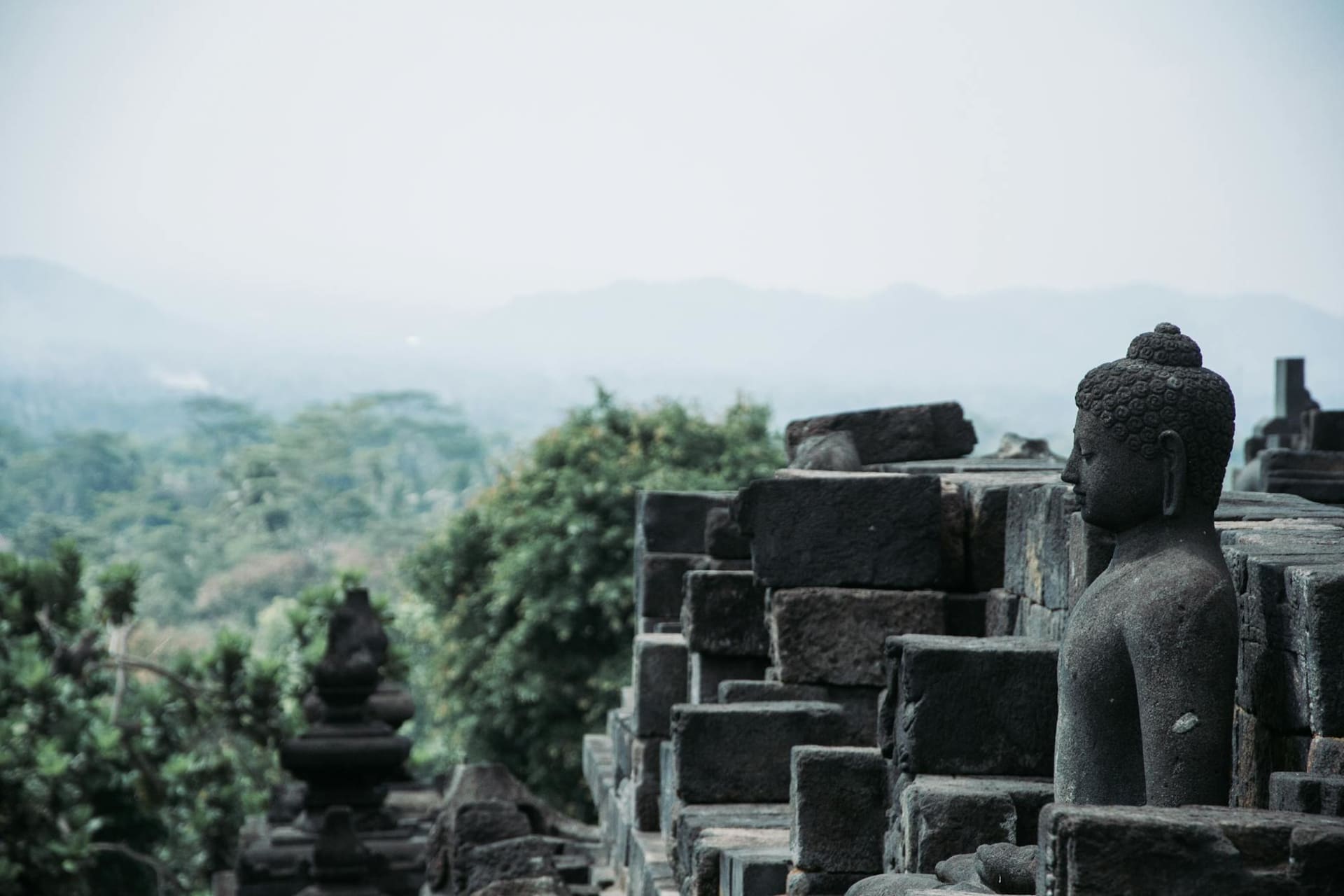
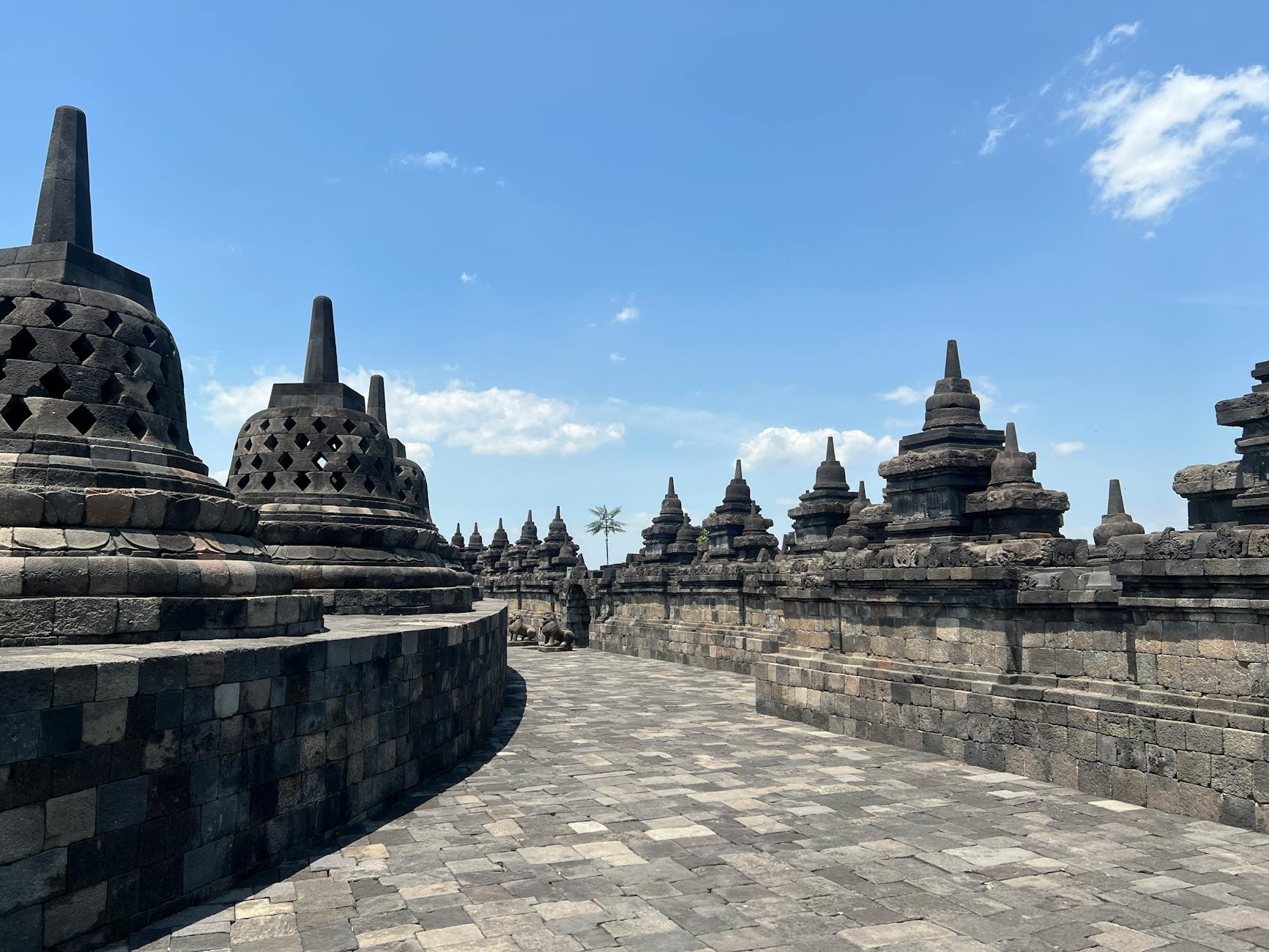
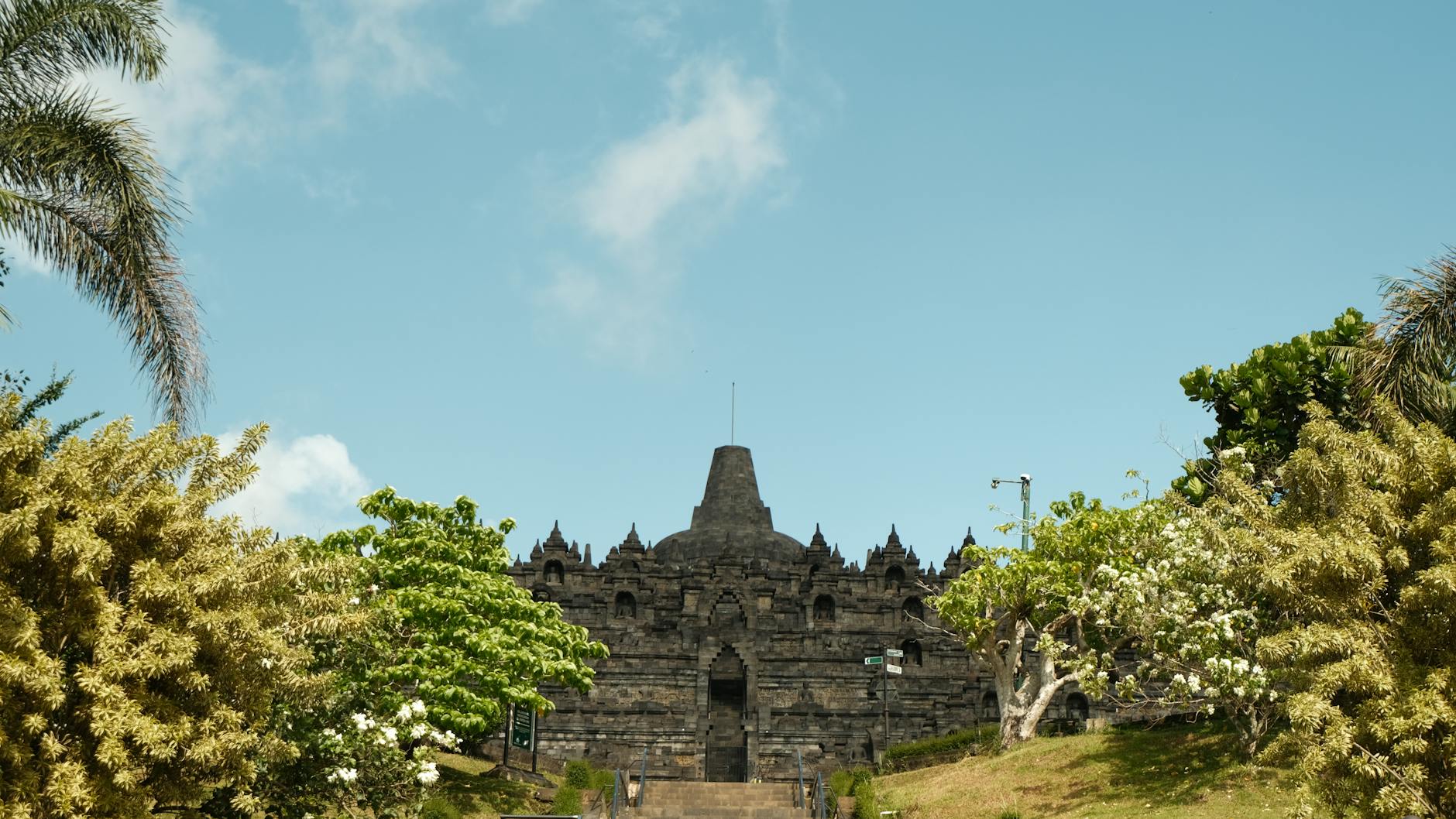
Borobudur is forty minutes northwest, and arriving before dawn — when the stupas emerge from the mist and the volcanic peaks of Merapi and Merbabu materialize on the horizon — remains one of the most profound mornings I have experienced anywhere. This is not a ruin. It is a ninth-century stone mandala, the largest Buddhist monument on earth, and walking its corridors in the early silence, reading the relief panels that tell the Buddha’s journey toward enlightenment, you feel the weight of intention that went into every carved stone. The afternoon light at Prambanan, the Hindu temple complex twenty minutes east of the city, is equally extraordinary — the towering spires catching the golden hour while the surrounding plains stretch toward the volcano.
The food in Yogya is the best in Java, and I will argue that point with anyone. Gudeg — young jackfruit slow-cooked in coconut milk and palm sugar until it turns a deep, caramelized brown — is the city’s signature, served with rice, egg, chicken, and a fiery sambal that cuts through the sweetness. The warungs along Jalan Wijilan serve it from dawn until late at night, and the versions at Bu Tjitro and Yu Djum have been perfected over decades. The street food scene beyond gudeg is equally deep: bakpia pastries from Pathuk, sate klathak grilled over coconut-shell charcoal in Bantul, and the nasi kucing — “cat rice,” so named for its small portions — sold from pushcarts that line Malioboro street after dark.
Jalan Prawirotaman has become the traveler district without losing its soul — small hotels in converted Javanese houses, galleries showing contemporary Indonesian art, and a handful of restaurants that manage to be both excellent and unpretentious. The volcano Merapi, visible from nearly everywhere in the city, is a constant reminder that this entire civilization exists on borrowed time, built atop one of the most volcanically active regions on earth. The Javanese response to this is not anxiety but ceremony — offerings to the mountain, a philosophical acceptance that the earth gives and takes. It shapes everything here.
When to go: May to September for dry weather. Visit Borobudur on a weekday to avoid crowds. The Ramayana ballet at Prambanan runs from May to October on full-moon nights — worth planning around.