Java is the gravitational center of Indonesia — politically, culturally, demographically. Half the country’s population lives here, on an island roughly the size of England, and the density produces a texture of daily life that is simultaneously overwhelming and deeply ordered. This is where the sultanates held court, where the independence movement was born, where the Javanese philosophy of halus — refinement, subtlety, the suppression of the coarse in favor of the graceful — shapes everything from how people speak to how they eat to how they navigate a traffic jam. Java rewards patience and punishes haste. I have learned this lesson several times.
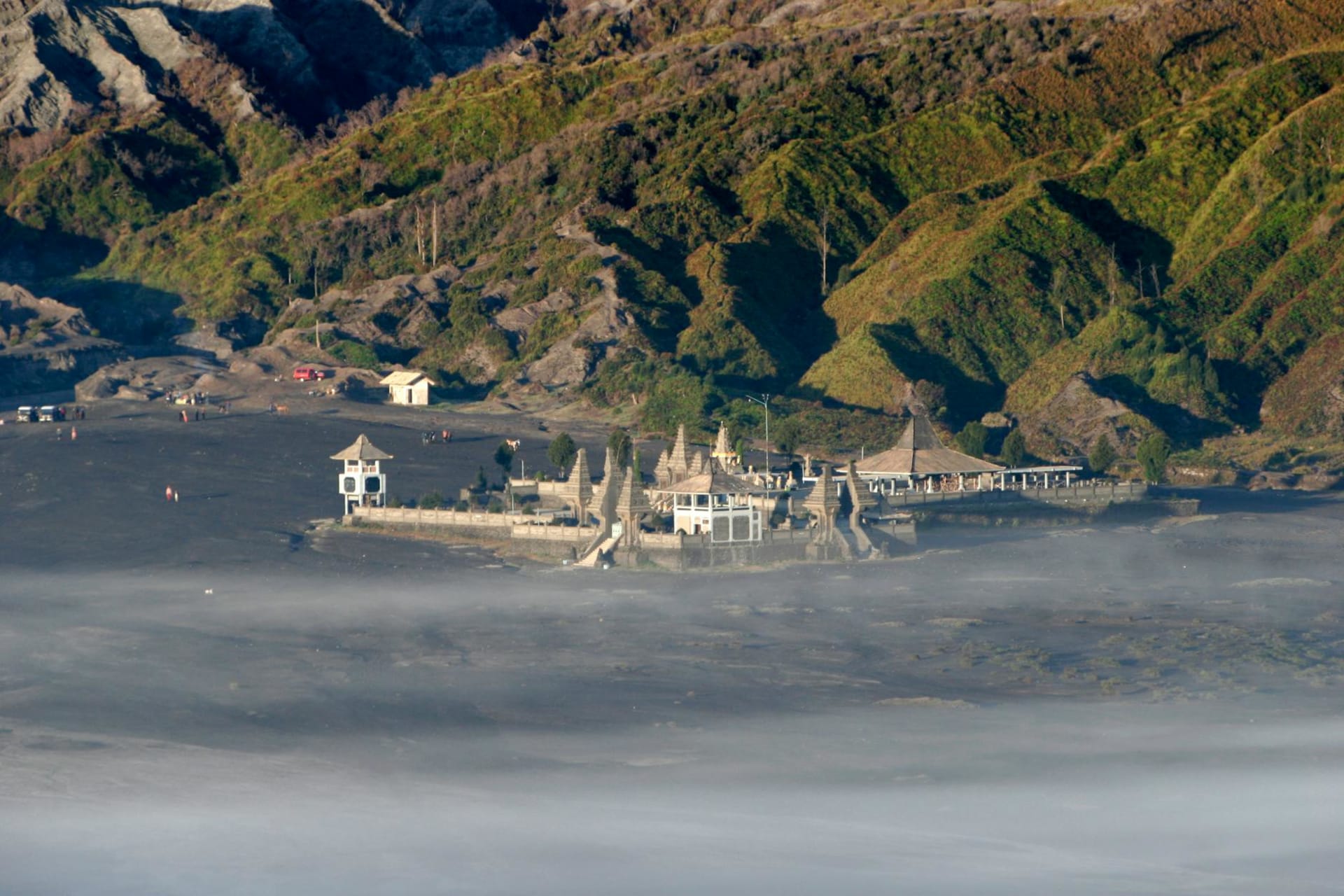
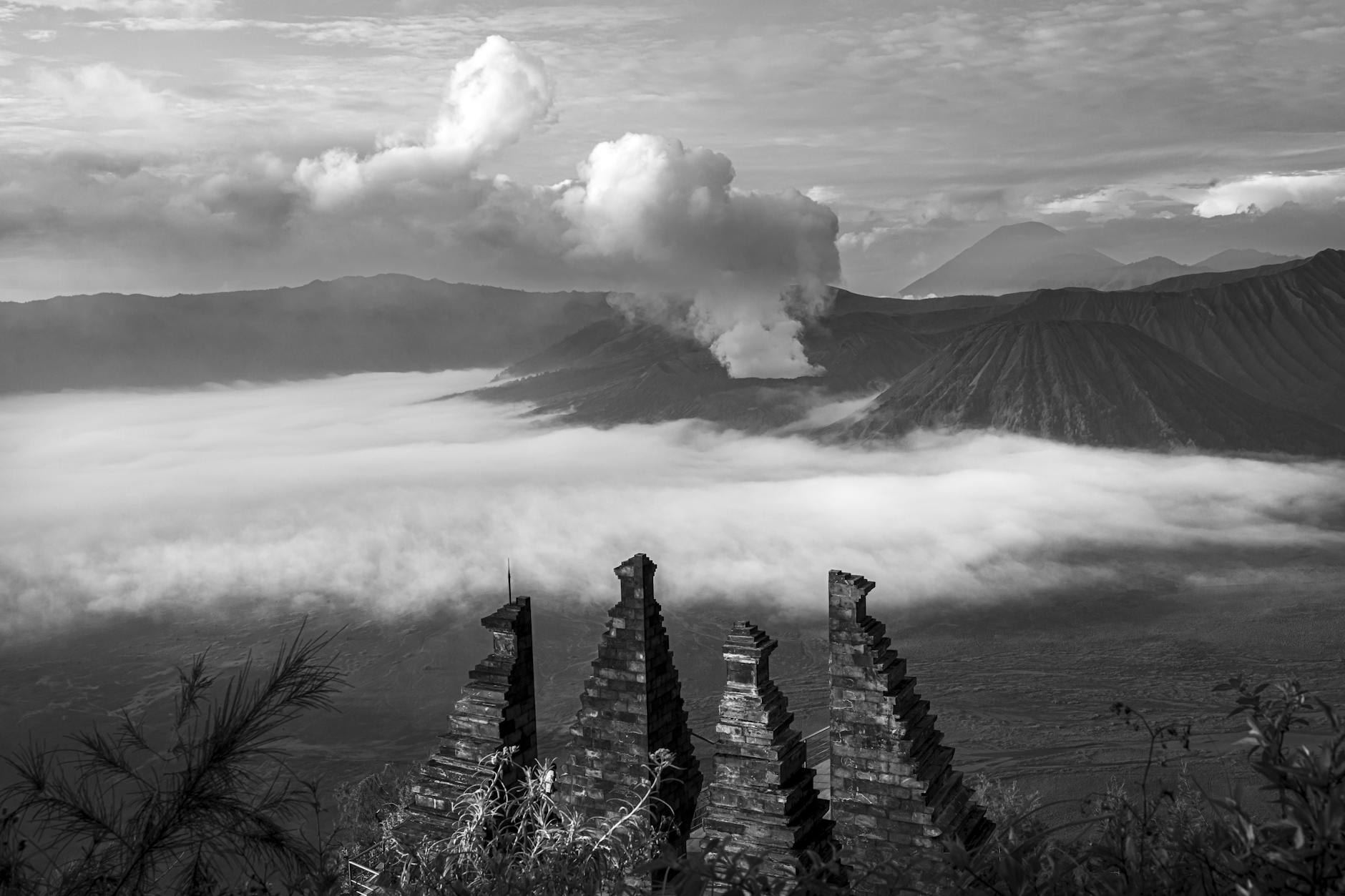
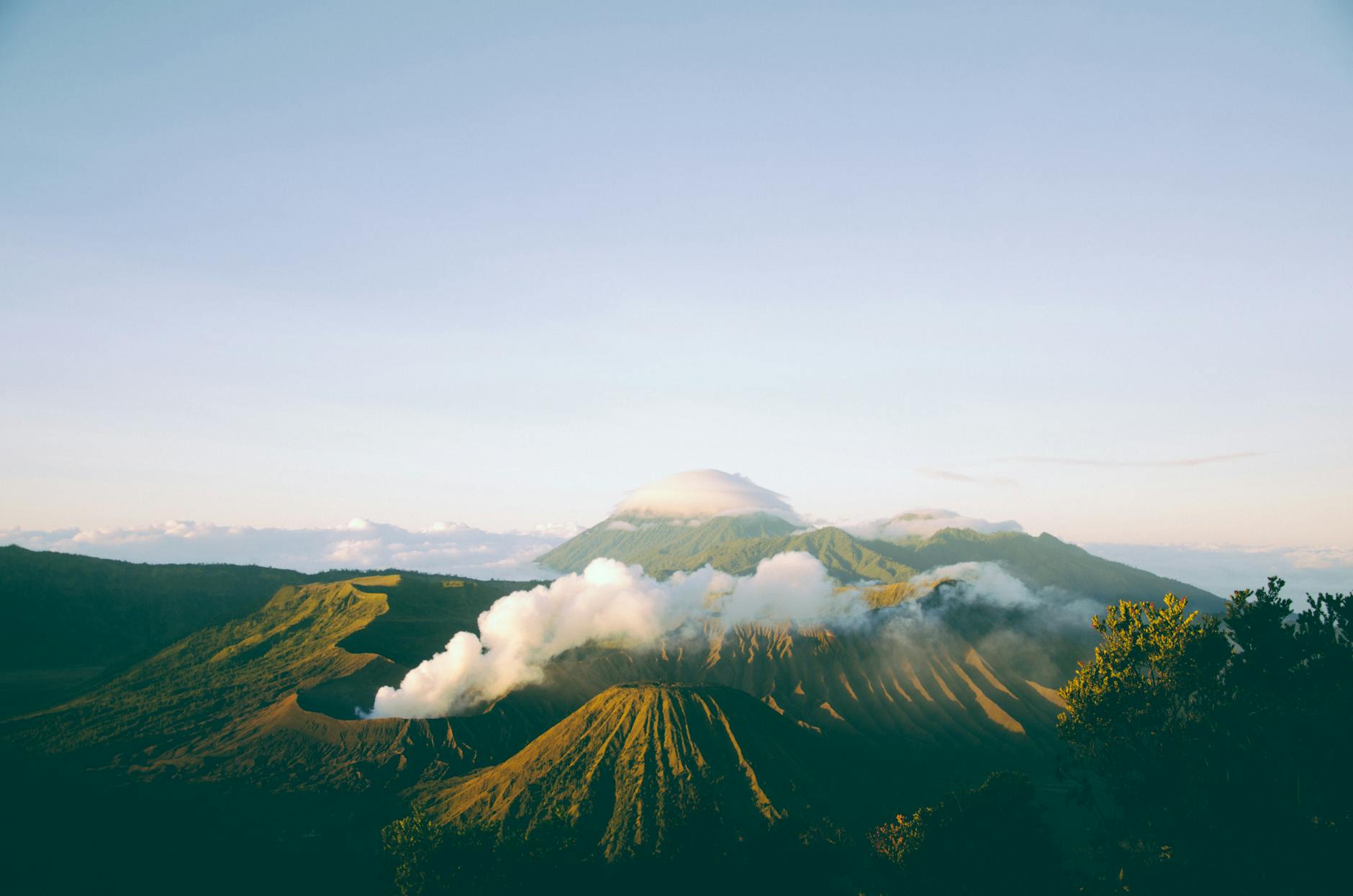
The volcanoes are Java’s spine — a chain of over thirty active peaks running east to west — and the most dramatic is Bromo. The classic experience is a 3am drive to the Penanjakan viewpoint, where you stand on a crater rim and watch the sun rise over a sea of volcanic sand, the smoking cone of Bromo in the foreground, the massive bulk of Semeru — Java’s highest peak — erupting gentle puffs of ash behind it. The caldera, a vast plain of gray sand called the Sand Sea, feels like another planet. You can ride a horse across it to the base of Bromo and climb the stairs to the crater rim, peering into the sulfurous vent while the earth shakes gently beneath your feet.
Ijen, at Java’s eastern tip, offers an entirely different volcanic experience. The hike begins at 1am — trekking in the dark up a steep path to the crater rim, then descending into the crater itself to witness the blue flames of burning sulfuric gas that dance across the rocks like something from a science fiction film. The sulfur miners who work here, carrying loads of up to 80 kilograms up from the crater floor in bamboo baskets, are a humbling encounter with the human capacity for endurance. The work is brutal, the pay is modest, and the miners do it because the alternatives are worse. At dawn, when the blue flames fade and the acid lake in the crater catches the morning light — an impossible turquoise — the beauty and the hardship exist in the same frame, and neither cancels the other.
Beyond the volcanoes, Java’s cities hold their own rewards. Jakarta is chaotic and enormous and increasingly interesting — the street food scene in Glodok (Chinatown) alone justifies a stopover. Bandung, in the highlands of West Java, has art-deco architecture from the colonial era and a cool climate that produces some of Indonesia’s best tea and coffee. Surabaya, the second city, is the gateway to the east and has a gritty authenticity that grows on you. And between the cities, the Javanese countryside unfolds in terraced rice fields, teak forests, and villages where the gamelan still plays at ceremonies that no tourist will ever see.
When to go: May to September for dry season. Bromo and Ijen are year-round but cloud-free mornings are more reliable from April to October. Yogyakarta deserves its own entry — and it has one.