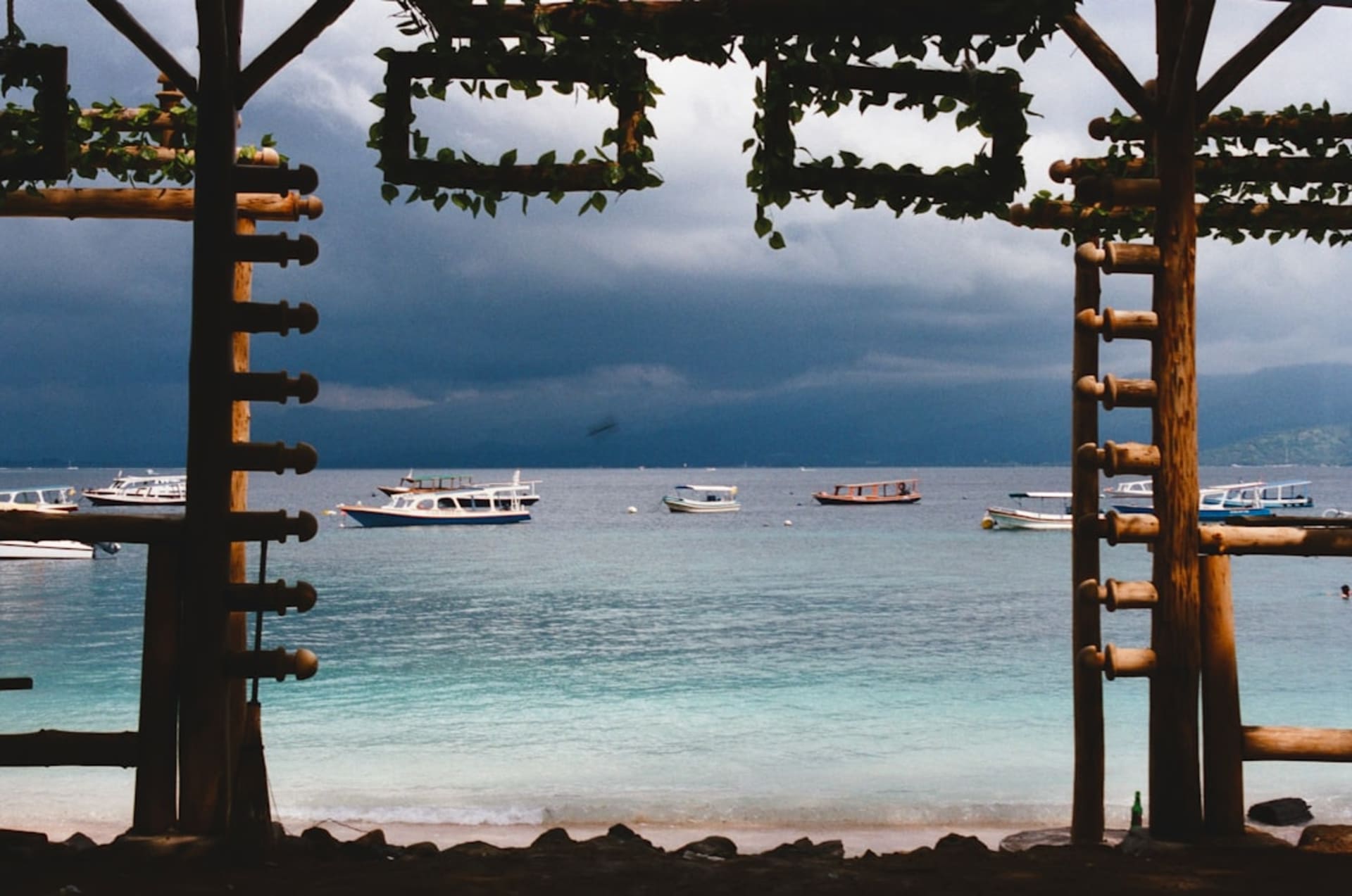
The largest and loudest of the three Gili Islands — no cars, no motorbikes, and a sunset strip that turns the whole island into one long, barefoot party.
There are no cars on Gili Trawangan, and no motorbikes either — an outright ban that’s been enforced since long before anyone thought to market it as eco-tourism. The only wheeled transport is the cidomo, a horse-drawn cart that clip-clops along the island’s single sand-and-coral ring road, and bicycles, which everyone rides badly and cheerfully into each other after dark. It gives the whole island a strange, suspended quality: you can hear the ocean and the reggae bar three doors down and almost nothing else, no engine noise at all, which after a few days starts to feel less like a novelty and more like something you’ll miss badly once you leave.
“Gili” simply means small island in the local Sasak language, and there are three of them strung off Lombok’s northwest coast — Trawangan, Meno, and Air — each with a distinct personality that longtime visitors will argue about for hours. Trawangan is the biggest of the three and, by a wide margin, the party island. What started in the 1980s as a quiet backpacker stop for divers and a handful of shipwrecked-feeling travelers turned, through the 2000s and 2010s, into Lombok’s answer to the beach-club circuit, with the west side of the island lined with bars that host sunset parties every single evening of the year, fire dancers and all.
The reef, the turtles, and what’s left of the quiet side
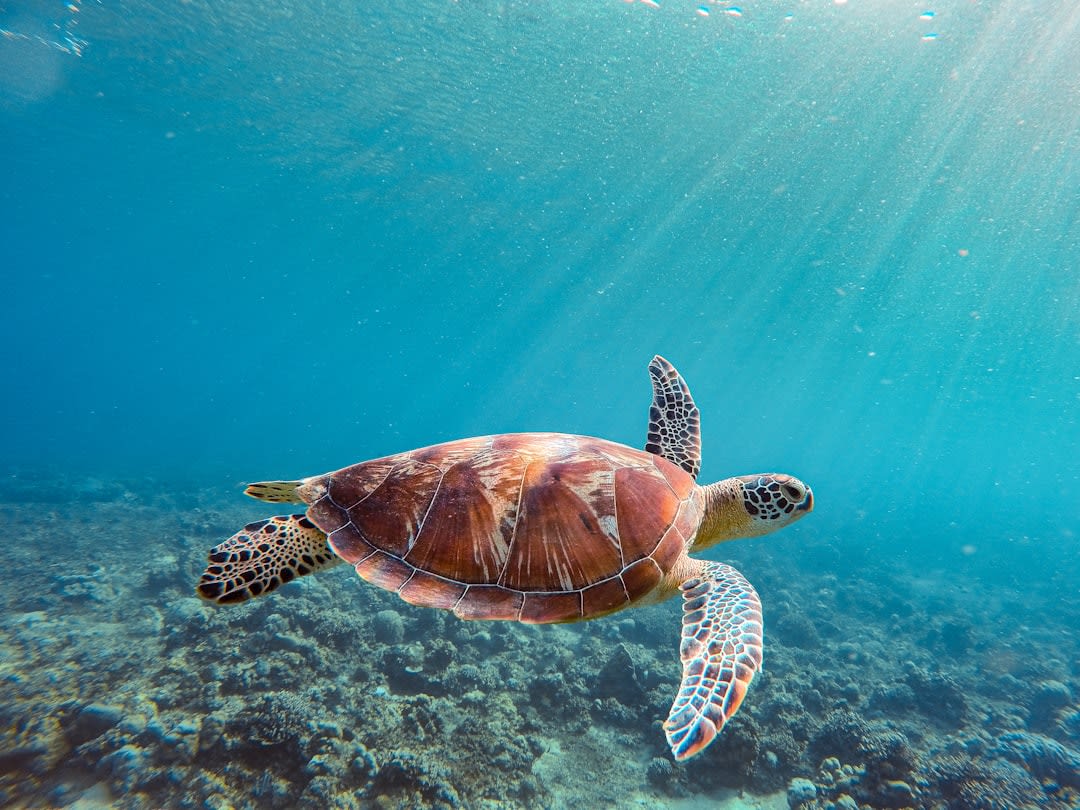
What kept Gili T from becoming purely a nightlife footnote is the diving. The three Gilis sit inside a marine protected area with a house reef that circles the whole island, and the turtle population here is genuinely remarkable — green and hawksbill turtles that have gotten so used to snorkelers that you can drift a few meters from one without it bothering to move. I went out with a dive shop on the east side, one of dozens on the island competing on price in a way that’s driven Open Water certification costs here lower than almost anywhere else in Southeast Asia, and saw four turtles and a reef shark in a single 40-minute dive.
The island’s interior, away from the beach strip, still has working coconut plantations and a small hill on the southwest side that’s the best sunset viewpoint precisely because it’s the one spot the bar crowd hasn’t colonized — you can see Bali’s Mount Agung and Lombok’s Rinjani on a clear evening, two volcanoes bracketing the horizon on either side. I climbed it at dusk with a bottle of water instead of the sunset-swing photo everyone was queuing for on the beach below, and had the whole hill mostly to myself.
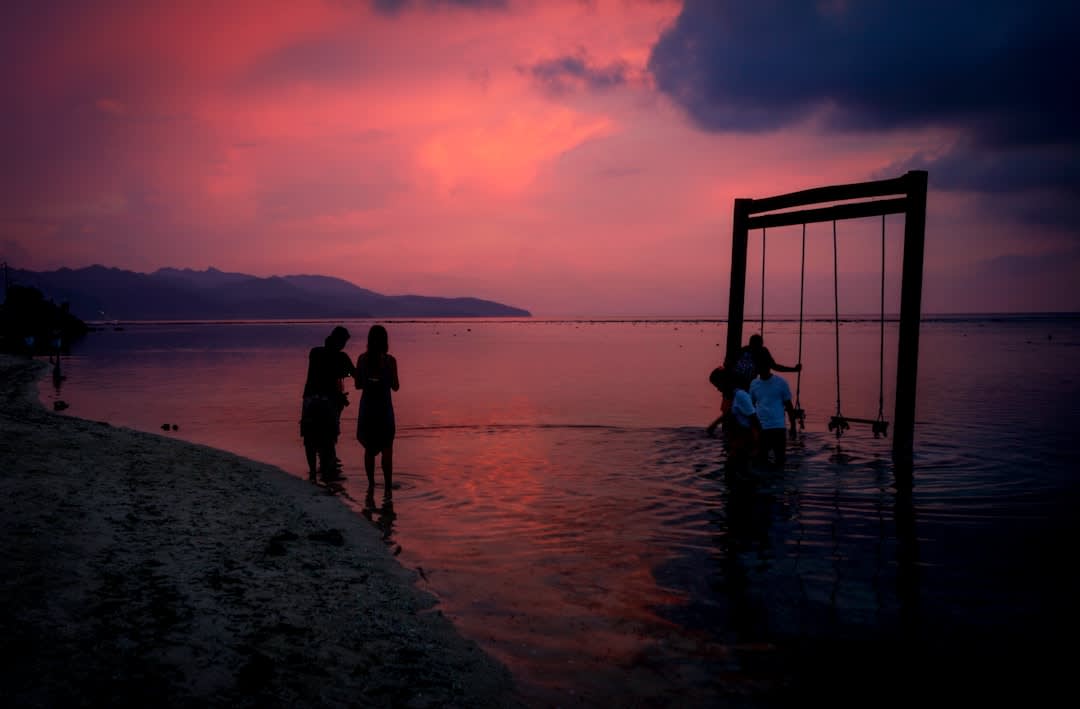
I liked Trawangan more than I expected to, and less than the version of it that gets posted to Instagram — it’s a genuinely fun, occasionally trashy island that also happens to sit on top of one of Lombok’s best reefs, and both things are true at once without much apology.
When to go: May to September for calm seas and the best diving visibility; avoid late December through February if you want to skip both the wet season swells and the peak New Year’s crowds.