Cirebon
"A city that has been a crossroads for five hundred years and still argues, happily, about what it is."
The port sultanate where Sundanese, Javanese, Chinese, and Arab traditions collided centuries ago and never fully separated again.
Cirebon sits exactly where you’d expect a great mixing to happen — on Java’s north coast, right at the border between West and Central Java, historically the point where Sundanese and Javanese culture overlapped and where traders from China, Arabia, and India dropped anchor for centuries before continuing on. Locals here don’t speak Sundanese or standard Javanese but Cirebonese, a dialect that borrows from both, and that in-between quality runs through everything the city makes, eats, and worships.
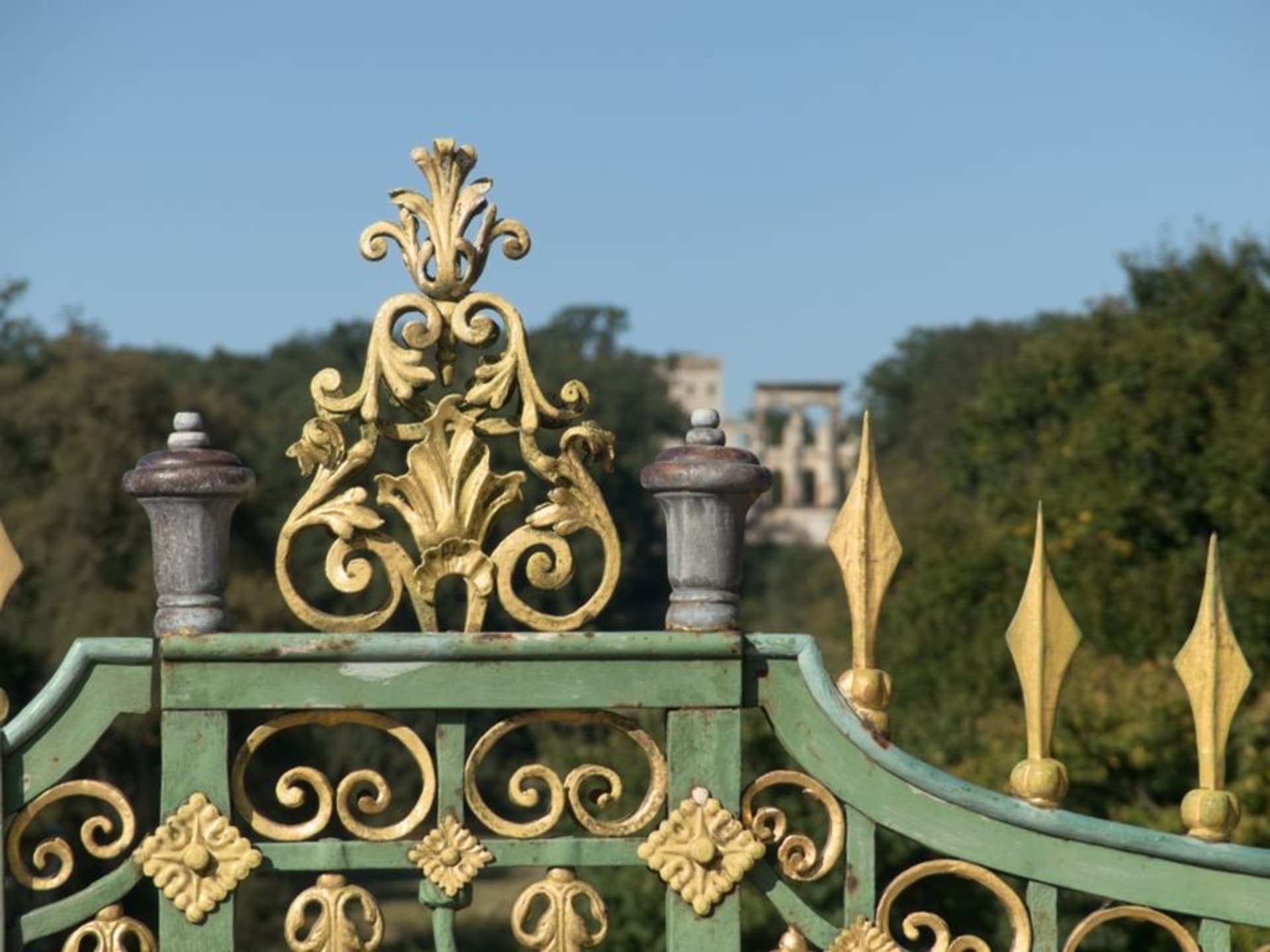
The clearest monument to this is the Kasepuhan Palace, seat of one of Cirebon’s historic sultanates and, by most accounts, the oldest of the city’s royal courts, tracing its roots to the 15th century and the era of Sunan Gunung Jati, one of the Wali Songo — the nine saints credited with spreading Islam across Java. What struck me walking through the palace grounds wasn’t the Javanese-style pendopo pavilions or the Islamic calligraphy, but the porcelain: entire walls and gateways embedded with Chinese ceramic plates, blue-and-white patterns pressed into red brick, a decorative style unique to Cirebon that visually announces the city’s trading-post identity before anyone says a word about it. The palace museum still holds the royal gilded chariot, Kereta Singa Barong, a 17th-century carriage shaped like a mythical creature that’s part elephant, part dragon, part fish — a literal three-culture hybrid built to move a sultan.
Batik that tells a different story
Cirebon has its own batik tradition, distinct from Solo’s or Yogyakarta’s, centered on the mega mendung motif — cloud patterns in gradient blues, said to be influenced by Chinese cloud imagery brought through the port trade, adapted into something recognizably Cirebonese. I visited Trusmi, the batik village just outside the city center, where family workshops have produced mega mendung cloth for generations, some still using the tulis hand-drawn method that takes weeks per piece. The blues stack in bands, darkest at the center, fading outward, and once you’ve seen the pattern you start noticing it everywhere in the city — on scarves, on shopfronts, on the sarongs older men wear to Friday prayers.
Empal gentong and a coastline that works for a living
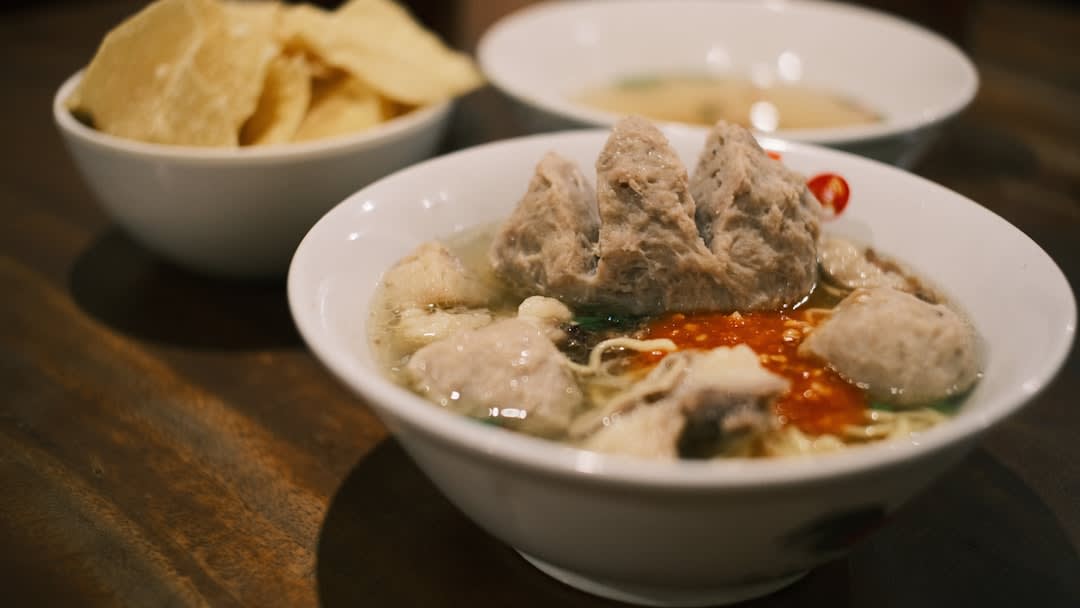
Cirebon’s food carries the same mixed inheritance. Empal gentong — a beef offal stew cooked in a clay pot over wood fire, rich with turmeric and coconut milk, served with rice cakes called lontong — is the dish locals insist you eat first, and I understood why after one bowl at a warung that’s reportedly been open since the 1970s. Nasi jamblang, rice wrapped in teak leaf and served cafeteria-style with a dozen side dishes to choose from, is the other essential, said to date back to Dutch-era forced labor projects when workers needed portable, leaf-wrapped meals.
The harbor itself is still a working fishing port, not a tourist waterfront, and I spent an evening just watching boats unload catch while the call to prayer rolled out from the Sang Cipta Rasa mosque, one of the oldest in Java, built in the same syncretic Javanese-Islamic style as the palace beside it. Cirebon doesn’t perform its history. It just keeps living inside it.
When to go: April to October, during the dry season, is easiest for exploring the palace complexes and Trusmi’s open-air workshops without the wet-season humidity turning the coast oppressive.