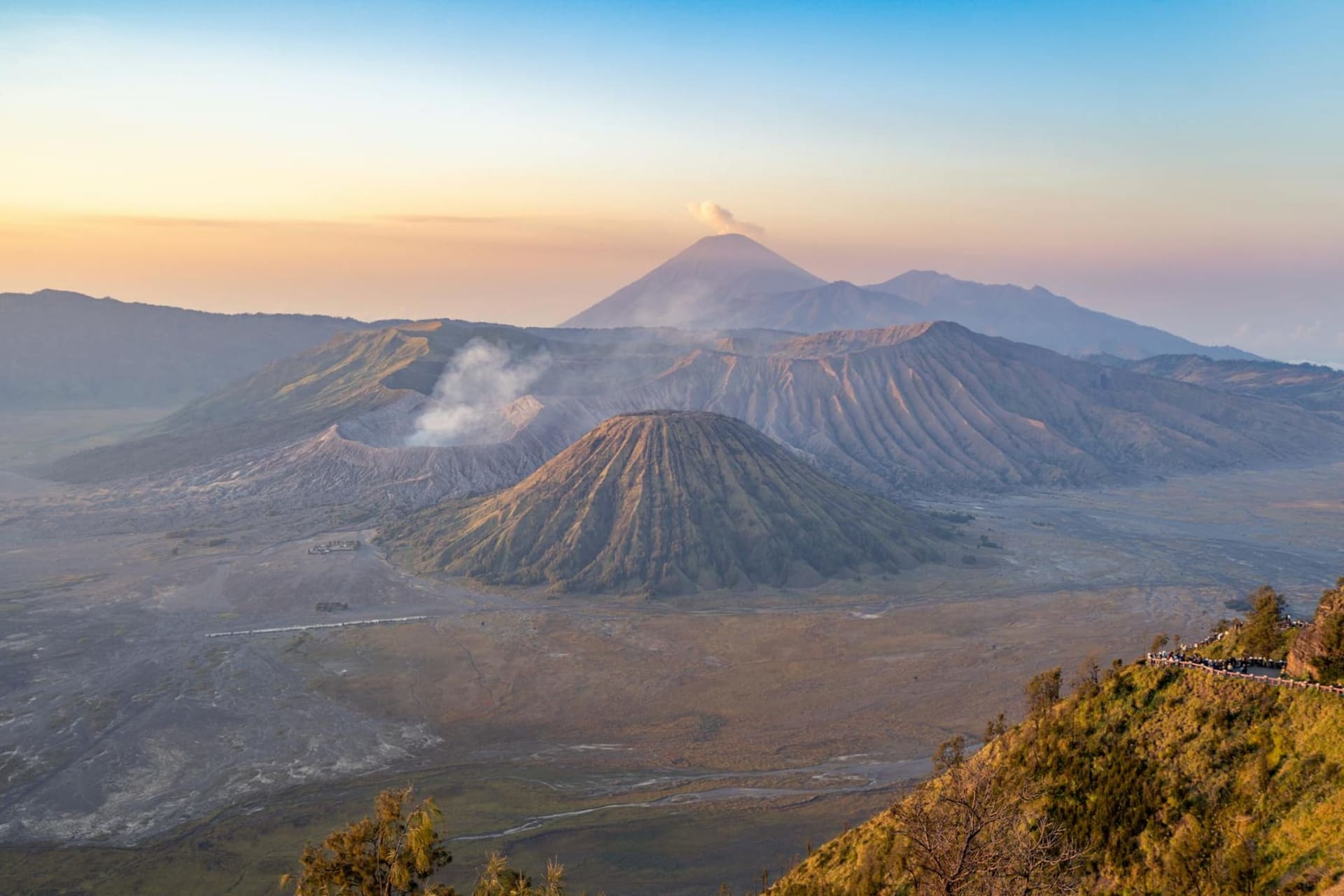
Bromo Tengger
"Bromo at sunrise is proof that volcanoes are not geological features but deliberate performances."
A smouldering caldera rising from a sea of volcanic sand, most dramatic at pre-dawn.
The jeep left Cemoro Lawang at 3:45 in the morning. No lights, no signs, just a driver who had done this route so many times his hands moved the wheel the way a musician fingers chords — without thought, out of pure muscle. Lia and I sat pressed together under a single fleece, watching the village vanish behind us and the darkness become absolute.
The Sand Sea Before Light
What they do not prepare you for is the smell. Before the volcano becomes visible, before the caldera rim cuts its jagged silhouette against the pre-dawn sky, the air carries it — sulphur mixed with cold volcanic dust, something mineral and ancient that sits at the back of the throat like a warning. We crossed the Pasir Berbisik, the Whispering Sands, on foot after the jeep could go no further. The sand is not sand in any coastal sense. It is fine grey ash compacted into something almost solid, the floor of a dead ocean that the earth simply forgot to fill with water. My boots left prints that the wind erased within minutes.
The Bromo crater rim sits at 2,329 metres. We climbed the 253 concrete steps in full dark, guided by ropes and the sounds of other people breathing hard above us. At the top, the crater opened below like something boiling under a lid.
The Moment the Light Changes
I had set an alarm for the summit. I did not need it. The light at Bromo does not arrive — it erupts. One moment there is only grey and outline, the outline of Mount Semeru behind Bromo like a second thought, and then orange tears open the eastern edge of the sky and the entire Tengger Caldera becomes a theatre. The sulphurous smoke rising from the crater caught the low light and turned gold. Lia grabbed my arm and said nothing, which is the only appropriate response.
What surprised me: the Hindu temple at the base of the crater steps, the Pura Luhur Poten, draped in black-and-white checked cloth. The Tenggerese have maintained their pre-Islamic Hindu traditions here for centuries, and during the Yadnya Kasada festival they throw offerings — vegetables, livestock, money — directly into the crater. The volcano receives. The crater does not refuse. There is theology in that arrangement that I am still thinking about.
We ate nasi goreng at a warung back in Cemoro Lawang as the sun lifted fully, the village materialising slowly from cold mist, motorcycles beginning their circuits, someone frying something with shallots and the whole street smelling briefly like something domestic and grounding after hours of sulphur and altitude.
When to go: The dry season, April through October, offers the clearest skies for sunrise; July and August are peak but worth it. Avoid January and February when rain closes the sand sea roads and the crater disappears inside cloud for days at a time.