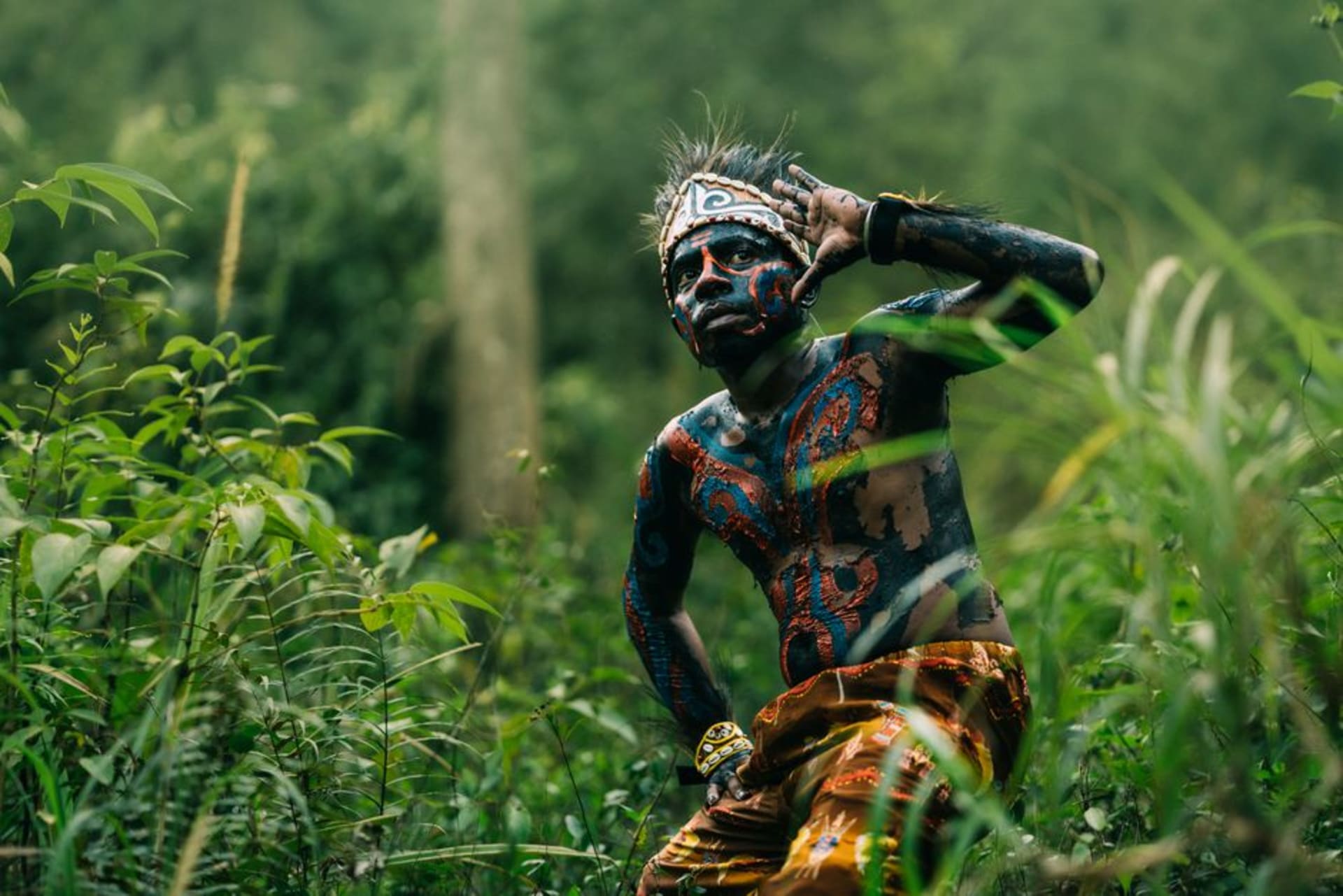
Baliem Valley
"I flew for an hour over unbroken jungle and mountains and landed in a valley that was still, in the ways that matter, discovering the rest of the world too."
A highland valley so isolated the outside world didn't know it existed until 1938, home to the Dani people and a landscape that makes the rest of Indonesia feel like a different country entirely.
There is no road into the Baliem Valley. That single fact shapes everything about visiting it — you fly, on a small plane out of Jayapura, over roughly an hour of unbroken mountainous rainforest with the Snow-capped peaks of the Jayawijaya range occasionally visible through cloud, and then the terrain opens without warning into a wide, fertile highland valley at around 1,600 meters elevation, checkerboarded with sweet potato gardens and irrigation channels, ringed by cloud forest. The town of Wamena sits at its center, the only real settlement, and from there the valley radiates out into villages that were, within living memory, entirely unknown to the outside world.
That’s not an exaggeration. A 1938 aerial survey led by the American naturalist Richard Archbold spotted smoke and cultivated fields from the air and discovered, essentially by accident, that a fertile valley home to an estimated 50,000 people existed in the highland interior of New Guinea, a population the outside world had no record of. The Dani people who live here had developed a settled agricultural society — sophisticated sweet potato cultivation, pig husbandry, an intricate system of irrigated garden plots still visible from the air today — in complete isolation from the rest of human history for millennia, cut off by some of the most difficult terrain on the planet. First sustained contact came only in the 1950s and 60s, meaning there are people alive today whose grandparents’ generation experienced first contact with the outside world firsthand.
Honai, salt wells, and the Baliem Valley Festival
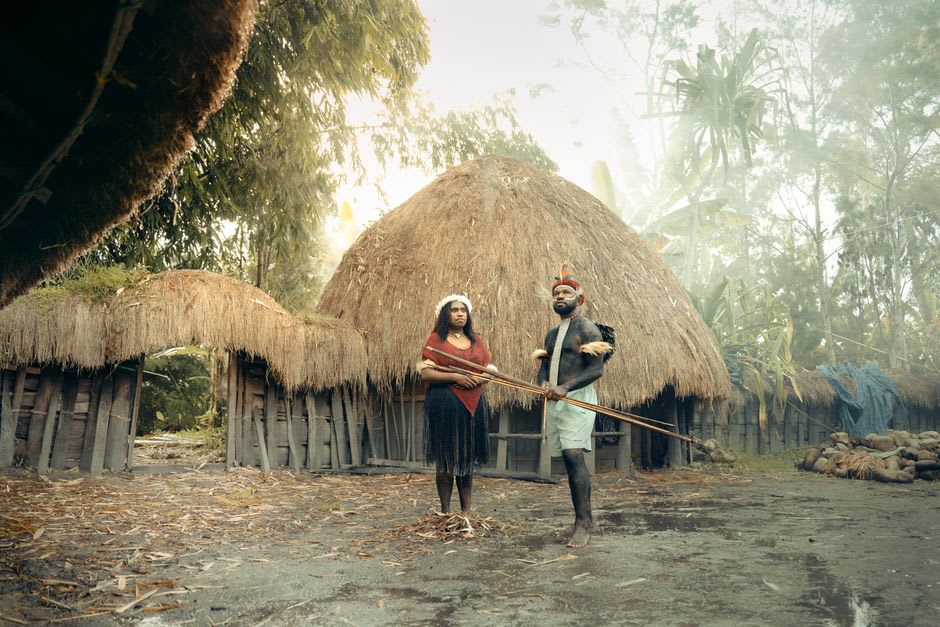
Dani villages are built around the honai, a round, low-doored hut with a thick thatched conical roof designed to trap warmth against the highland’s surprisingly cold nights — the valley sits high enough that temperatures drop sharply after dark, a fact that catches visitors expecting tropical Indonesia off guard. Men and women traditionally sleep in separate honai within the same family compound, and pigs, the valley’s primary form of wealth and the centerpiece of every ceremonial exchange, are kept close by, sometimes within the family compound itself. Traditional dress persists here more visibly than almost anywhere else in Indonesia — older Dani men in particular still wear the koteka, a gourd sheath, in daily life in more remote villages, not as costume for visitors but as ordinary clothing, though this is fading with each generation. Near the village of Jiwika, ancient salt wells — wooden troughs where naturally brined water is collected and evaporated — represent a salt-production technique that predates any outside contact and remains in limited use.
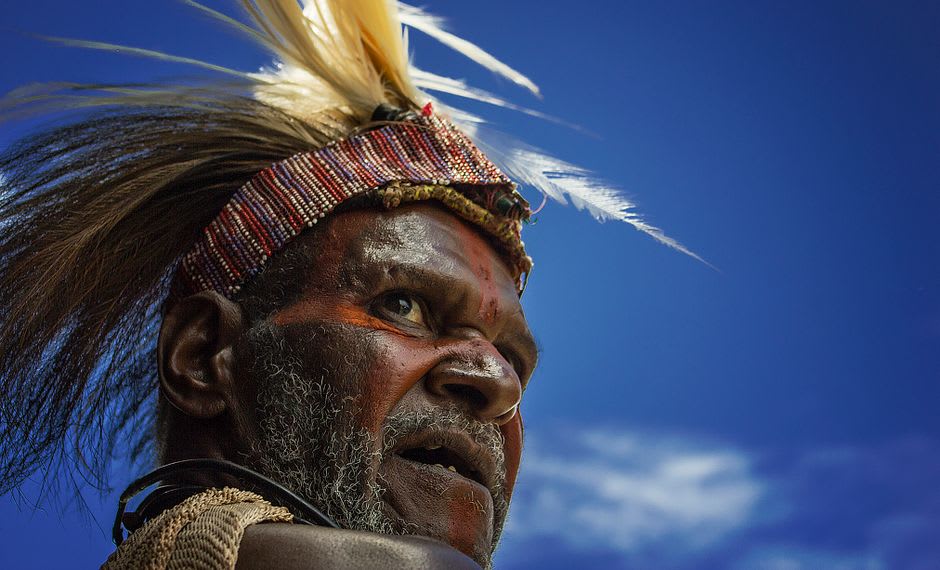
The Baliem Valley Festival, held each August, is the single best window into this culture for an outside visitor — a multi-day gathering where Dani, Lani, and Yali communities from across the highlands perform mock battles in full ceremonial dress, complete with the elaborate feather headdresses, pig-fat and ochre body paint, and spears and bows that were, within recent generations, used in real inter-village conflict rather than performance. It draws Indonesian and international visitors, but nowhere near the density of a Bali festival — I stood close enough to the mock-battle lines to feel genuinely uncertain whether I was watching theater or witnessing something with real stakes, which is precisely the disorientation that makes the valley unlike anywhere else in the archipelago. Trekking beyond Wamena into villages like Kimbim or up toward Lake Habema requires a local guide, both for the terrain and for the cultural navigation, and porters and guides from Wamena are essential rather than optional.
When to go: June to September is the dry season and the only sensible window, both for trekking conditions and to coincide with the Baliem Valley Festival in August, which is worth building an entire trip around.