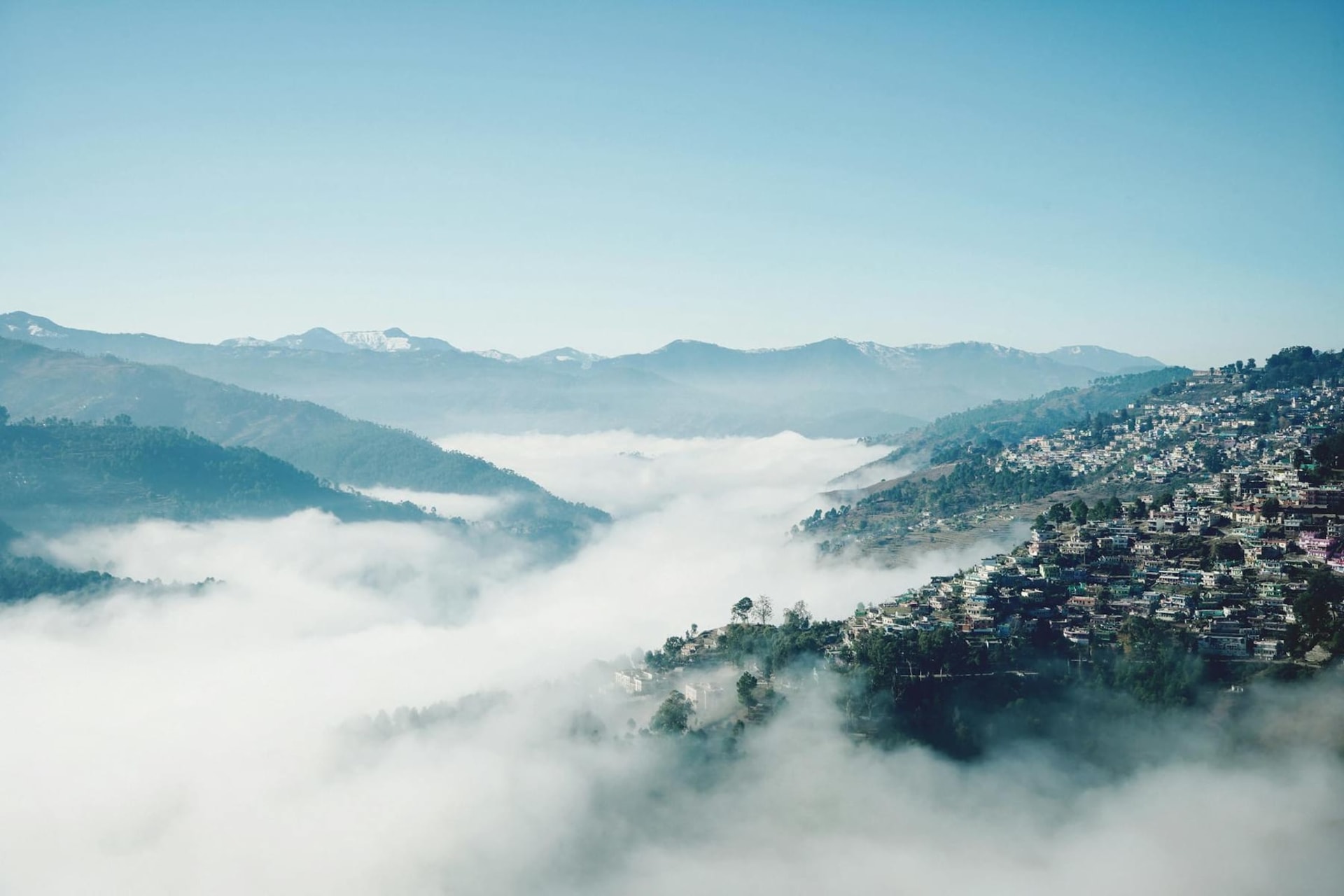
A UNESCO-proposed valley in Arunachal Pradesh where Apatani women once wore nose plugs and rice fields mirror the sky.
Getting here requires paperwork. The Inner Line Permit — a bureaucratic inheritance from the British era — demands that foreigners apply in advance, declare their intentions, carry copies. I had mine laminated, a habit I picked up crossing borders in Southeast Asia. Lia rolled hers into her jacket pocket and promptly forgot about it until a checkpoint in Itanagar asked for it. It was there, just crumpled. They waved us through.
The road into Ziro drops from the ridge and the valley opens below you all at once — a rare topographic reveal, the kind that makes you reach for a breath you weren’t expecting to need. At roughly 1,500 meters, the air is cooler than you want after the heat of Assam. Pine forests cover the surrounding hills. The floor of the valley is almost entirely rice paddy, divided by low earthen bunds into a patchwork that in certain morning light looks less cultivated than painted.
Apatani Country
The valley belongs to the Apatani people, and their presence is architectural, cultural, and deeply particular. Their villages — Hong, Hari, Bula, Dutta — sit at the edge of the paddy fields, close enough to work the land but set apart on slightly higher ground. Bamboo and wood frame their houses. Pigs root under stilted floors. The older women, the ones who lived before the tradition ended in the 1970s, still carry the traces of their community’s former practice: circular nose plugs called yaping hullo, worn to discourage abduction by rival tribes, though the explanation is contested and the anthropology here is complicated and worth sitting with.
I spent a morning walking the bunds between Hong village and the fields beyond, photographing almost nothing, just watching the way the water in the paddies held the sky — literal reflection, cloud for cloud, hill for hill.
The Surprise at Ziro Putu
We ate most of our meals at small dhabas near the market in Hapoli, the main town, ordering pork with bamboo shoots and rice wine served warm in a steel cup. But the genuine discovery came at Ziro Putu hill, where a short climb above the town delivers a view of the entire valley. I had expected a viewpoint. What I hadn’t expected was the silence — not the absence of sound, but a particular density to the quiet, as if the hills were absorbing noise rather than merely lacking it. Lia sat beside me on the grass for almost an hour without either of us speaking. That doesn’t happen often.
The Ziro Music Festival draws crowds every September, transforming the valley briefly into something louder. Outside that window, the place largely keeps its own pace.
When to go: October through April offers the clearest skies and the most comfortable temperatures. The monsoon (June–September) brings drama and mist but also flooded tracks and leech-heavy trails — worth considering if you don’t mind the wet.