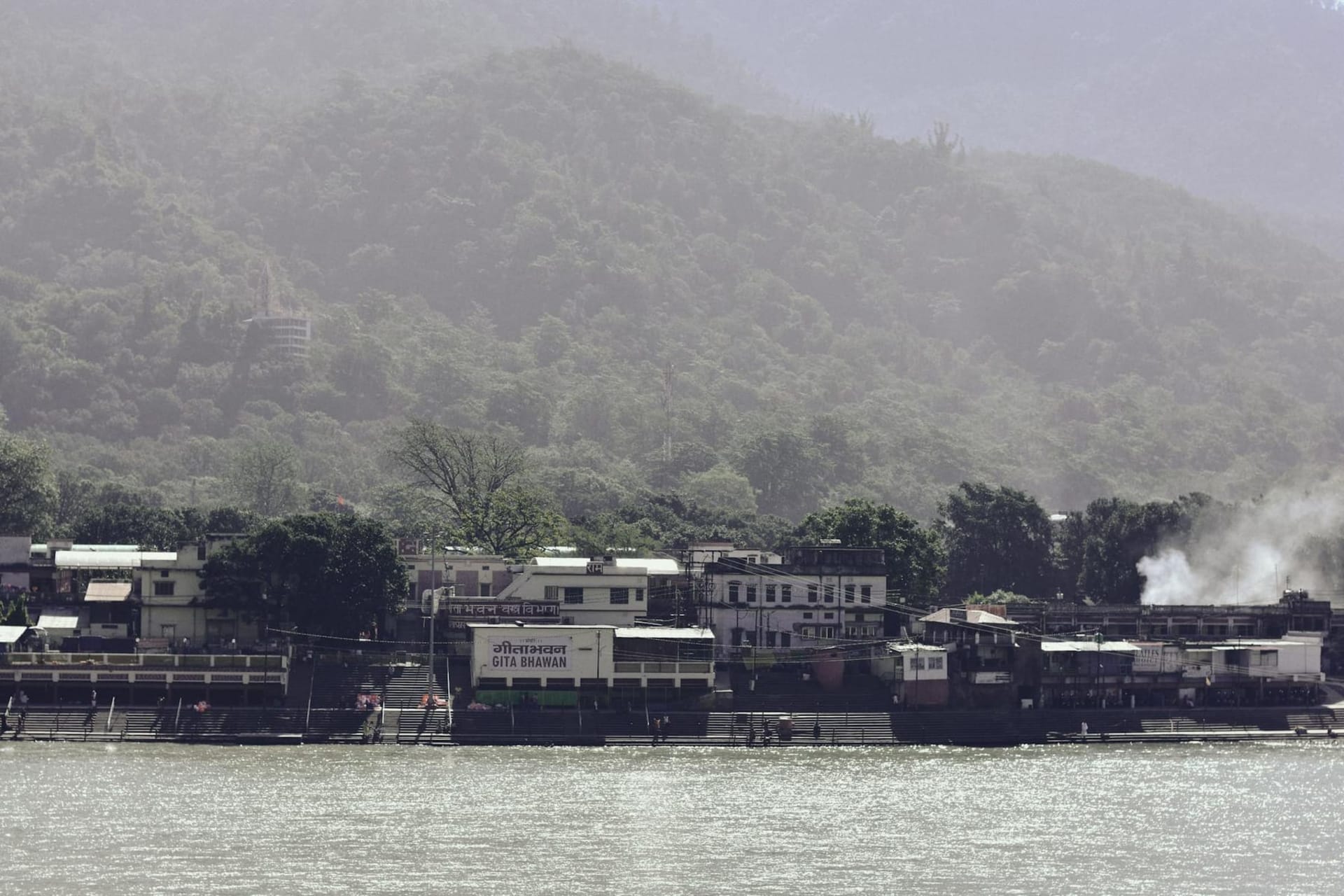
The yoga capital of the world where the Ganges rushes cold from the Himalayas past ashrams and suspension bridges.

I arrived at Rishikesh on a February morning when the river was still wearing its winter color — that impossible cold jade that comes from snowmelt, not sea. The bus from Haridwar had dropped me at the edge of Swarg Ashram, and I stood for a moment with my bag at my feet, watching a sadhu in saffron robes wade into the current without flinching. The Ganges here is nothing like the wide, tired river I had seen in Varanasi. Here it is fast and narrow and entirely sure of itself, still new from the mountains.
The Banks of Swarg Ashram
Swarg Ashram is Rishikesh’s older, quieter soul. No cars cross to this side — only foot traffic and the occasional cow wandering past the chai stalls on Baba Kharak Singh Marg. Lia and I spent our first afternoon simply walking the ghats, watching families perform their evening aarti as marigold offerings spun away in the current. The smell on the riverbank is particular: cold water, incense, wet stone, wood smoke from the tea fires. I bought a cup of masala chai from an old man who had the same cart in the same spot for what seemed like geological time. He did not look at me when he handed it over. He was watching the river.
The ashrams here accept the devout and the curious in roughly equal measure. The Beatles stayed at Maharishi Mahesh Yogi’s ashram — now overgrown and technically closed, though the gates have a habit of being unlocked — and something of that era’s earnest seeking still lingers in the air of the neighborhood.
Ram Jhula at Dusk
The surprise came on our second evening. I had expected Ram Jhula to be overrun with tourists photographing each other against the river view, and it was — but then the lights came on. At dusk, the suspension bridge fills with pilgrims heading to the Trayambakeshwar temple on the opposite bank, and the whole structure begins to sway gently under the weight of all that faith and foot traffic. Standing at the midpoint, the river forty feet below, the mountains visible upstream in the last of the light, I felt something I had not expected from a town famous for yoga retreats: a genuine vertigo of scale. The Himalayas begin here. The Ganges begins here. It is a place where things start.
We ate that night at a small thali restaurant near the Geeta Bhawan — unlimited servings of dal, sabzi, rice, and two types of roti for eighty rupees. No menu. No choices. Just food, and more food when your plate was empty.
When to go: October through March offers cool, clear days and low crowds; avoid the June-September monsoon when the Ganges can flood the lower ghats and many ashrams close. February is especially good — cold nights, brilliant mornings, and the river at its most photogenic.
Keep exploring
More from India
 india
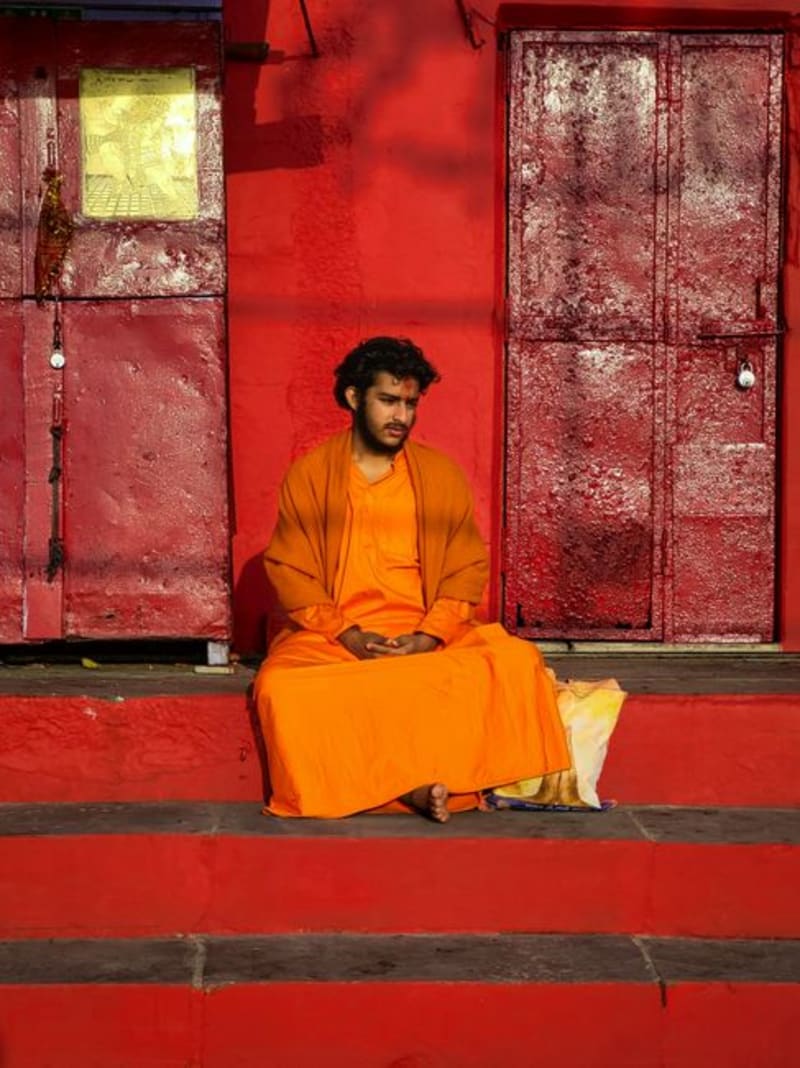
india Sarnath
The deer park outside Varanasi where the Buddha gave his first sermon, and where the noise of India finally, briefly, goes quiet.
Explore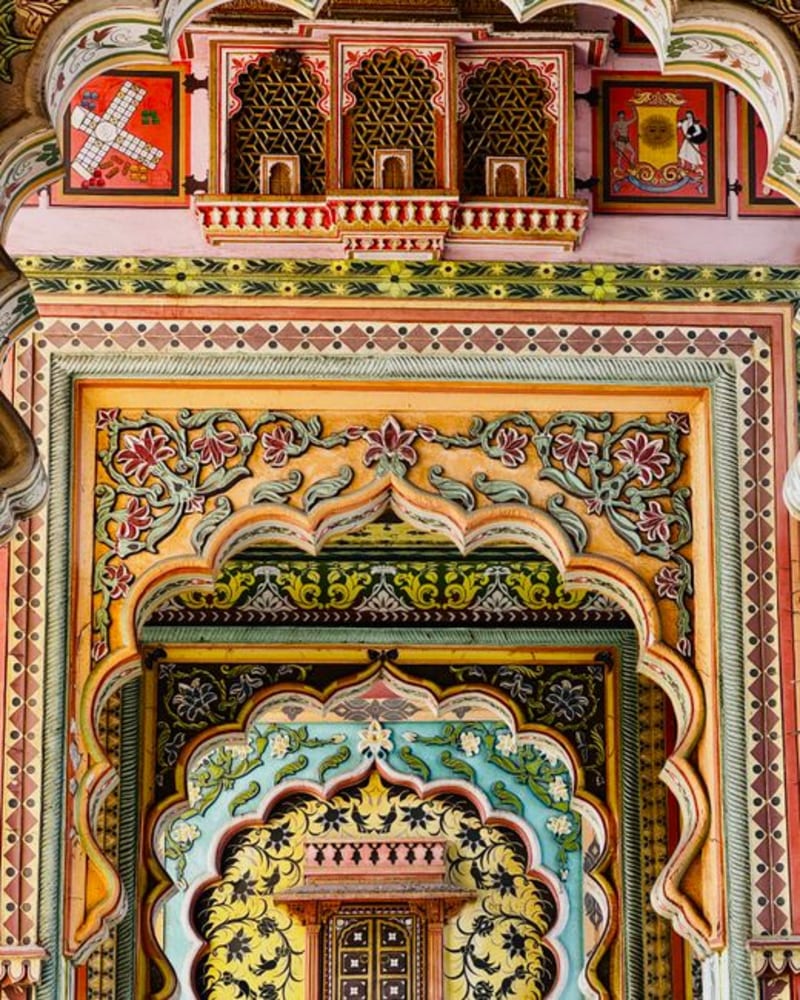 india
india Shekhawati
An open-air gallery of frescoed merchant mansions scattered across dusty Rajasthani towns, painted by families competing to outdo each other in color.
Explore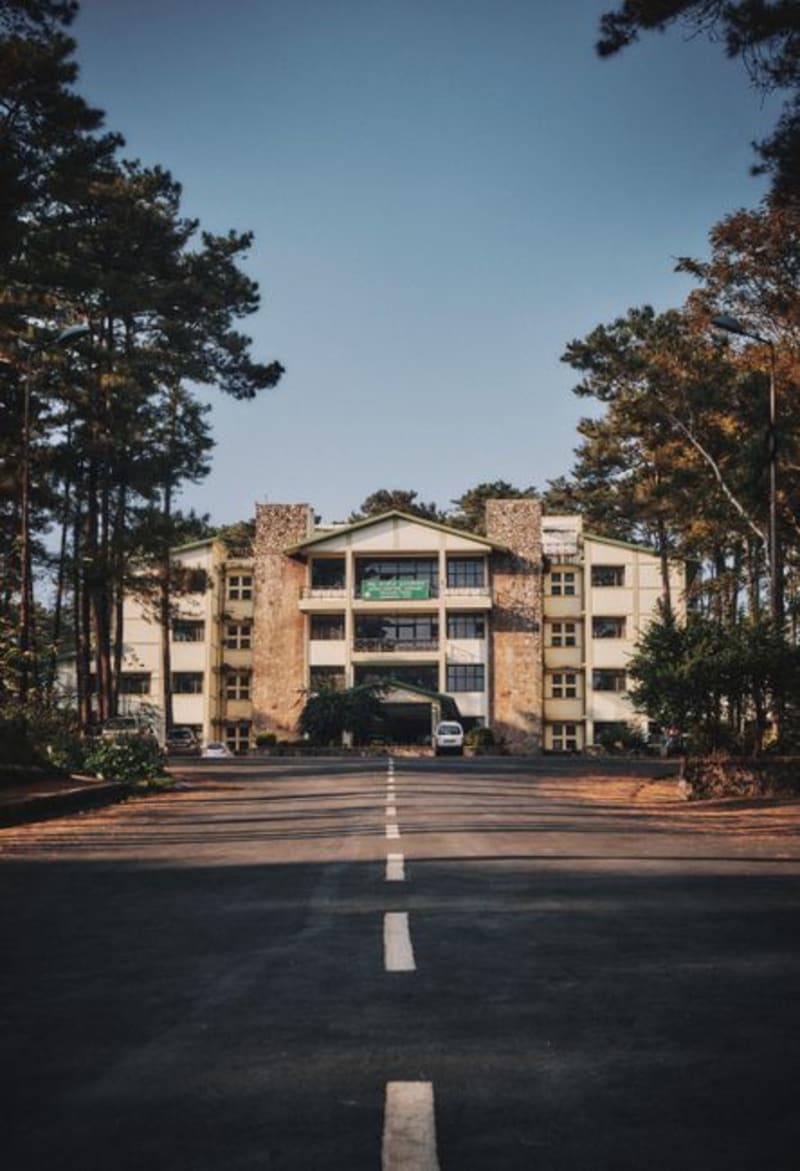 india
india Shillong
Meghalaya's hill capital where colonial pines, Khasi matriliny, and a genuine live-music obsession earned it the nickname Scotland of the East.
Explore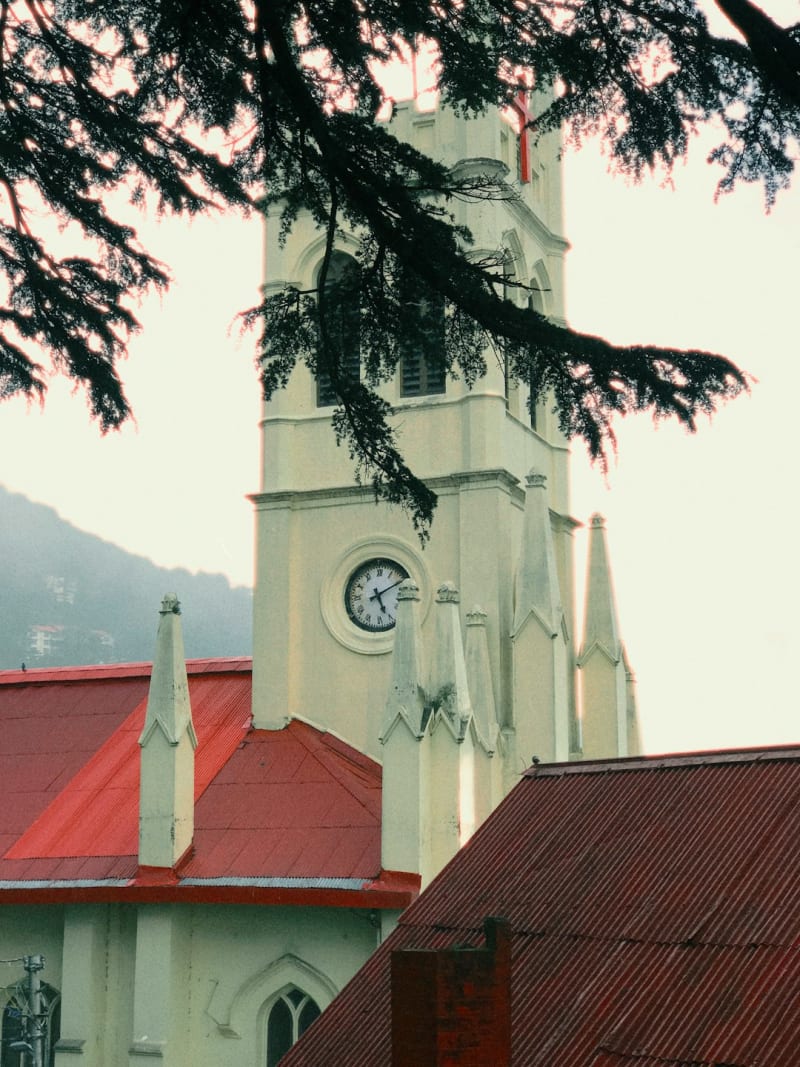 india
india Shimla
The former summer capital of the British Raj, strung along a Himalayan ridge with a toy train, a timber-framed Mall Road, and the fading grandeur of an empire that left but never quite packed up.
Explore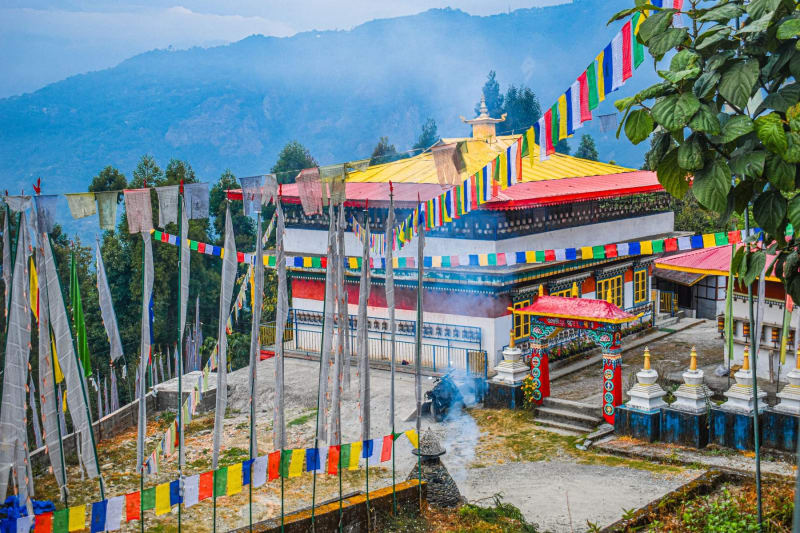 india
india Sikkim
Himalayan kingdom with Buddhist monasteries, cardamom forests, and views of the world's third-highest peak.
Explore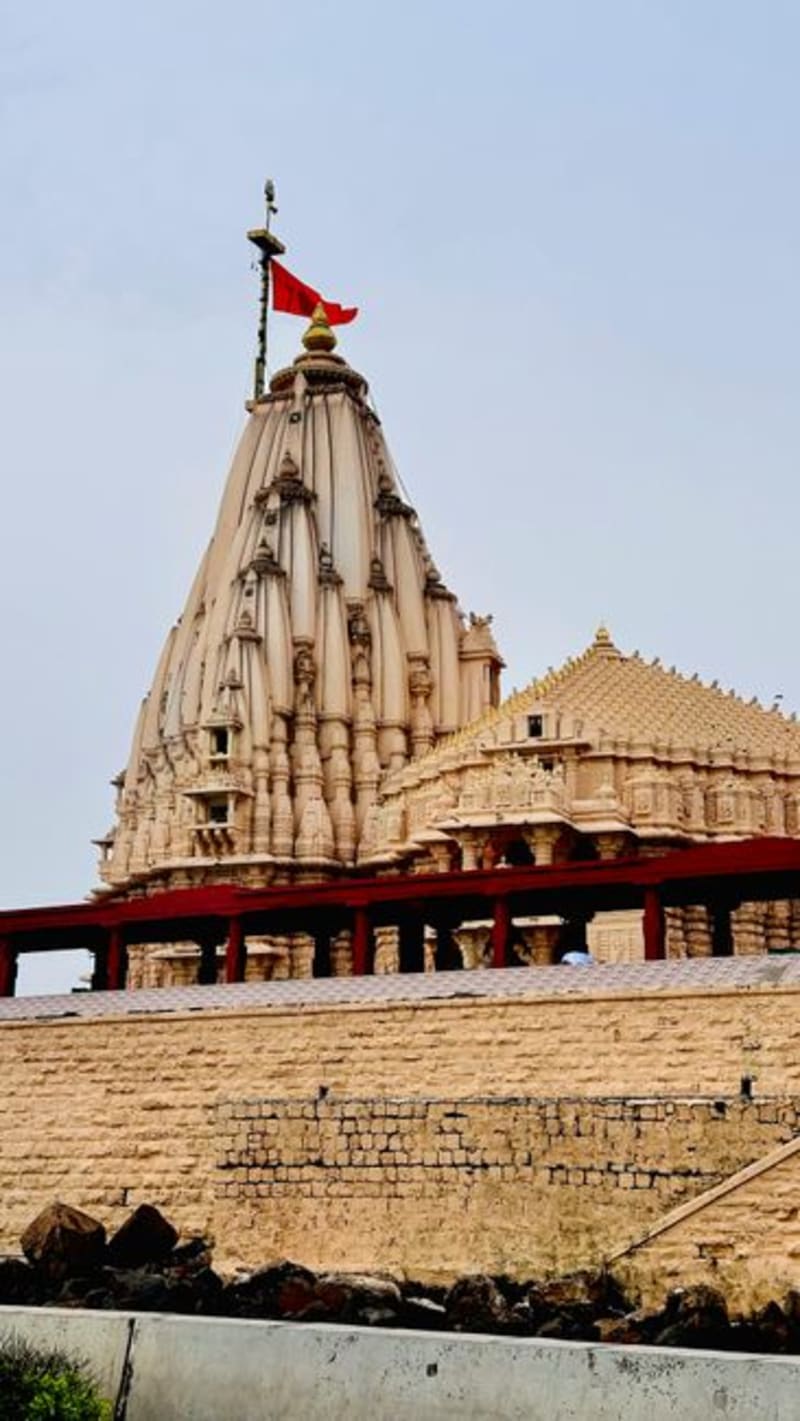 india
india Somnath
The Shiva temple at the edge of the Arabian Sea that has been destroyed and rebuilt more times than any shrine in India, and stands today as proof that some places refuse to stay ruined.
Explore