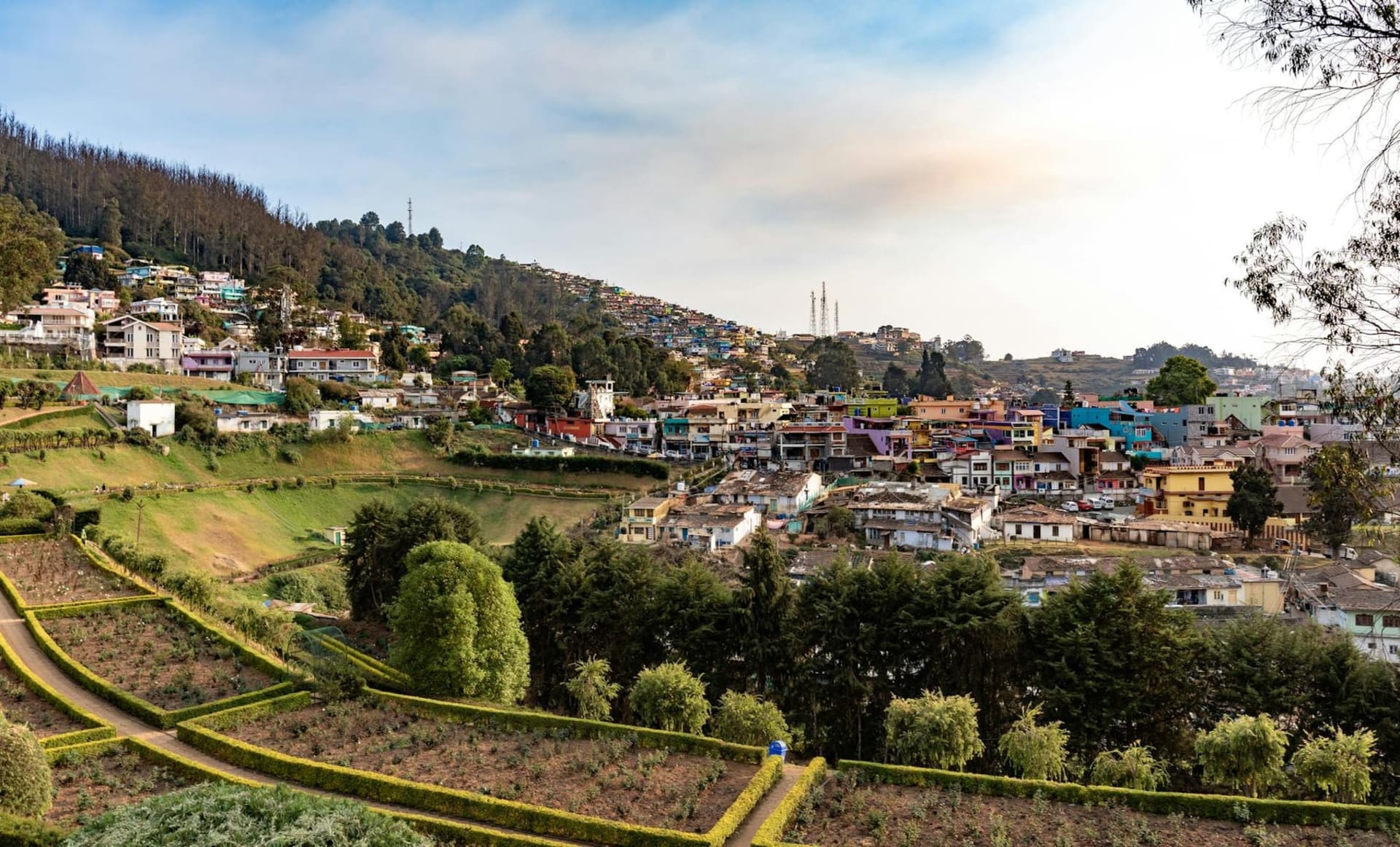
Ooty
"The Nilgiri Mountain Railway earns its UNESCO status on every single curve between Mettupalayam and Ooty."
The Nilgiri toy train climbs through eucalyptus and tea estates to a British hill station in the clouds.
The toy train leaves Mettupalayam at dawn, and within twenty minutes the Tamil plains have vanished entirely. What replaces them is something the word “landscape” can barely hold — a slow vertical unraveling of tropical forest, mist corridors, and the smell of wet earth so rich it feels like breathing mulch. The Nilgiri Mountain Railway does not feel like a tourist attraction. It feels like a decision the British made in 1899 that accidentally created one of the world’s great slow journeys.
The Climb
There are sixteen tunnels and over two hundred and fifty curves between the base and Ooty at 2,240 meters. I stopped counting after the first hour and started watching instead. The rack-and-pinion mechanism — the train literally gripping a toothed rail to haul itself uphill — produces a grinding, straining sound that fills the narrow carriage. Lia pressed her face to the window as we crossed the Kallar viaduct and I watched her expression shift from polite interest to something quieter and more genuine. That shift is what Ooty does to people before they even arrive.
The tea estates appear somewhere around Coonoor, the mid-station where most passengers spill out for chai and don’t fully want to get back on. They shouldn’t leave — the best stretch is still ahead, the gradient steepening, the eucalyptus groves giving way to tight-cropped green rows that catch the morning light like corduroy.
Ooty Itself
The town is an odd inheritance. Charing Cross — the actual name of the central junction — is ringed by tailors, vegetable sellers, and an ancient SBI branch, but the bones underneath are unmistakably colonial: the stone Christ Church on the hill, the Botanical Gardens laid out in 1847, the crumbling Savoy Hotel where the corridors smell of camphor and damp wood. I had not expected to feel nostalgic for a past that wasn’t mine, but Ooty has a particular talent for that.
The surprise was the local market off Commercial Road on a Tuesday morning. I had wandered away from the Botanical Gardens looking for coffee and found instead an entire lane selling nothing but fresh nilgiri herbs, eucalyptus oil in unlabeled bottles, and hand-rolled beeswax candles. A woman pressed a leaf into my palm and told me to crush it. The smell — sharp, medicinal, green — was more Ooty than anything I photographed all week.
Dinner at the Hotel Dasaprakash on Ettines Road: a steel thali of sambar, rasam, and a bright pumpkin kootu, served on banana leaf with rice that had absorbed the whole altitude somehow. I have no scientific explanation for why food tastes better at two thousand meters. It just does.
When to go: April through June, before the monsoon settles in, offers clear skies and the year’s best visibility on the train ride up. October and November bring a second clear window after the rains, with the tea estates at their greenest.