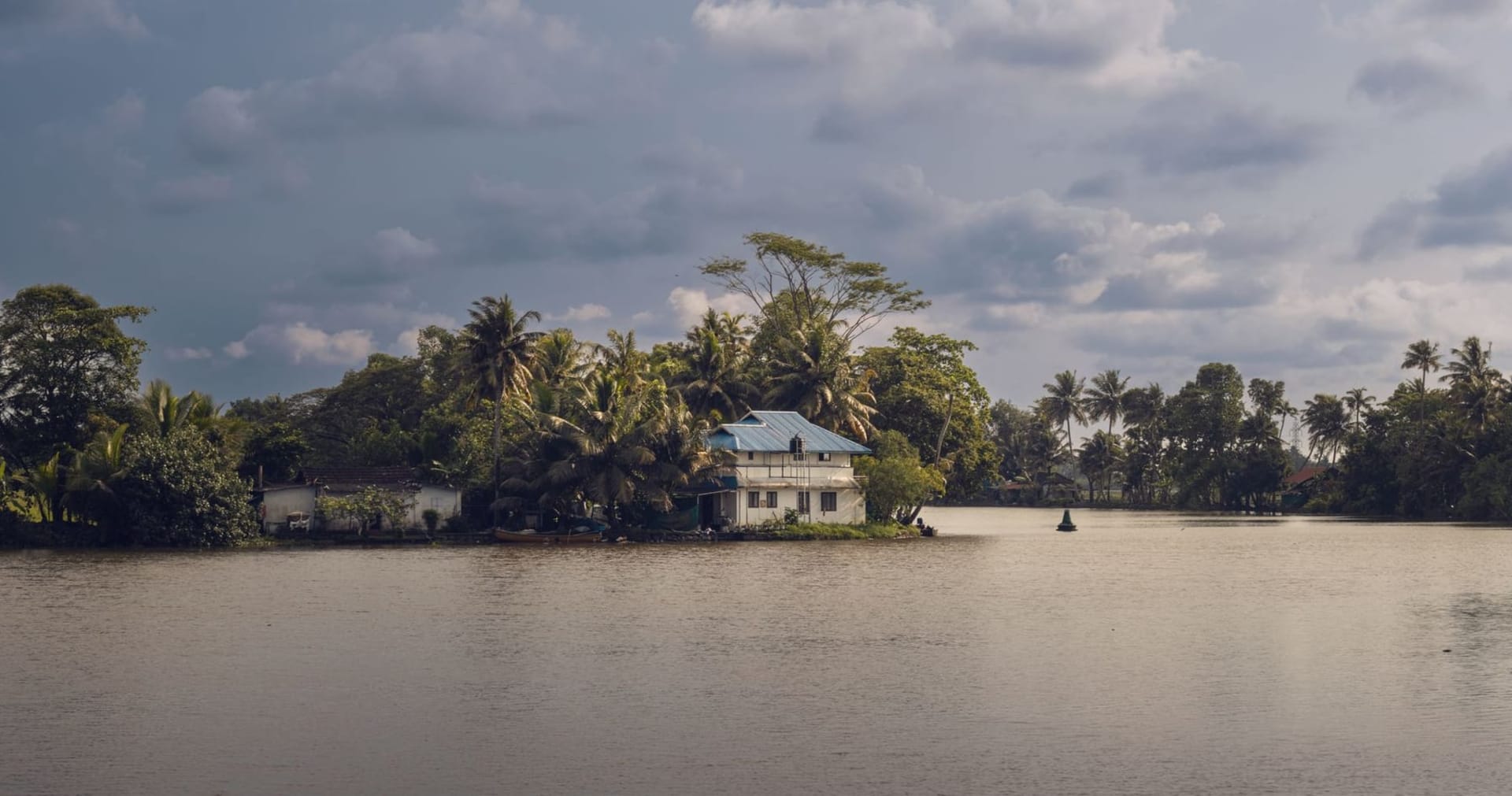
The world's largest river island in the Brahmaputra, home to Vaishnavite monasteries and vanishing Mising tribal culture.
The ferry from Nimati Ghat smells of diesel, wet jute, and the particular mineral cold of a river that carries an entire mountain range inside it. I stood at the prow for the forty-five-minute crossing and watched Majuli materialize from the haze — flat, improbably green, a smear of bamboo and paddy fields balanced on the Brahmaputra like something the current forgot to take.
The Monasteries at Dawn
I arrived during Raas Mahotsav, the Vaishnavite festival held each November at the satras — the monastic institutions that have anchored island life since the 15th century. At Kamalabari Satra, I woke before five and found the monks already in the namghar, the prayer hall lit by brass oil lamps whose smoke rose in slow threads toward a thatched ceiling black with decades of devotion. The mask dances — Bhaona — began as the sky outside went the color of a bruise turning yellow. Papier-mâché demons with eyes the size of fists lurched past me, held up by monks I’d watched eating rice and dal an hour earlier. The proximity of the sacred and the mundane felt less like contradiction than like the honest arrangement of life.
Mising Villages and the Taste of Apong
Lia found the Mising village of Salmora on the southeastern tip by asking a boy on a bicycle, the only reliable navigation on an island where roads end without warning at the water’s edge. The Mising are an indigenous people, river-dwellers who build their houses on bamboo stilts against the floods and brew apong — rice beer, cloudy and slightly sour — in clay pots kept beneath the raised floors. A woman named Lakshmi poured us each a small glass without ceremony, the way you’d offer water to a guest. The taste was cold and faintly sweet, somewhere between sake and something older. I hadn’t expected the stillness of it — no performance, no tourism theater. Just a drink, shared.
What surprised me most was the humor. Everyone on Majuli seemed to find the island’s slow disappearance — it has lost more than half its landmass to erosion since the 1950s — darkly funny. A monk at Auniati Satra told me they’d moved the library three times in thirty years, always a little further from the bank. He shrugged. What else do you do?
Getting There and Staying
The ferry from Jorhat crosses to Kamalabari Ghat. Guesthouses cluster near the satra towns; I stayed at a family homestay in Garamur village, where dinner was mustard-heavy fish curry and the roosters started at 4 a.m. without apology.
When to go: October to March, when the monsoon has retreated and the Brahmaputra runs lower. November catches the Raas festival, which is worth every logistical inconvenience of getting here.