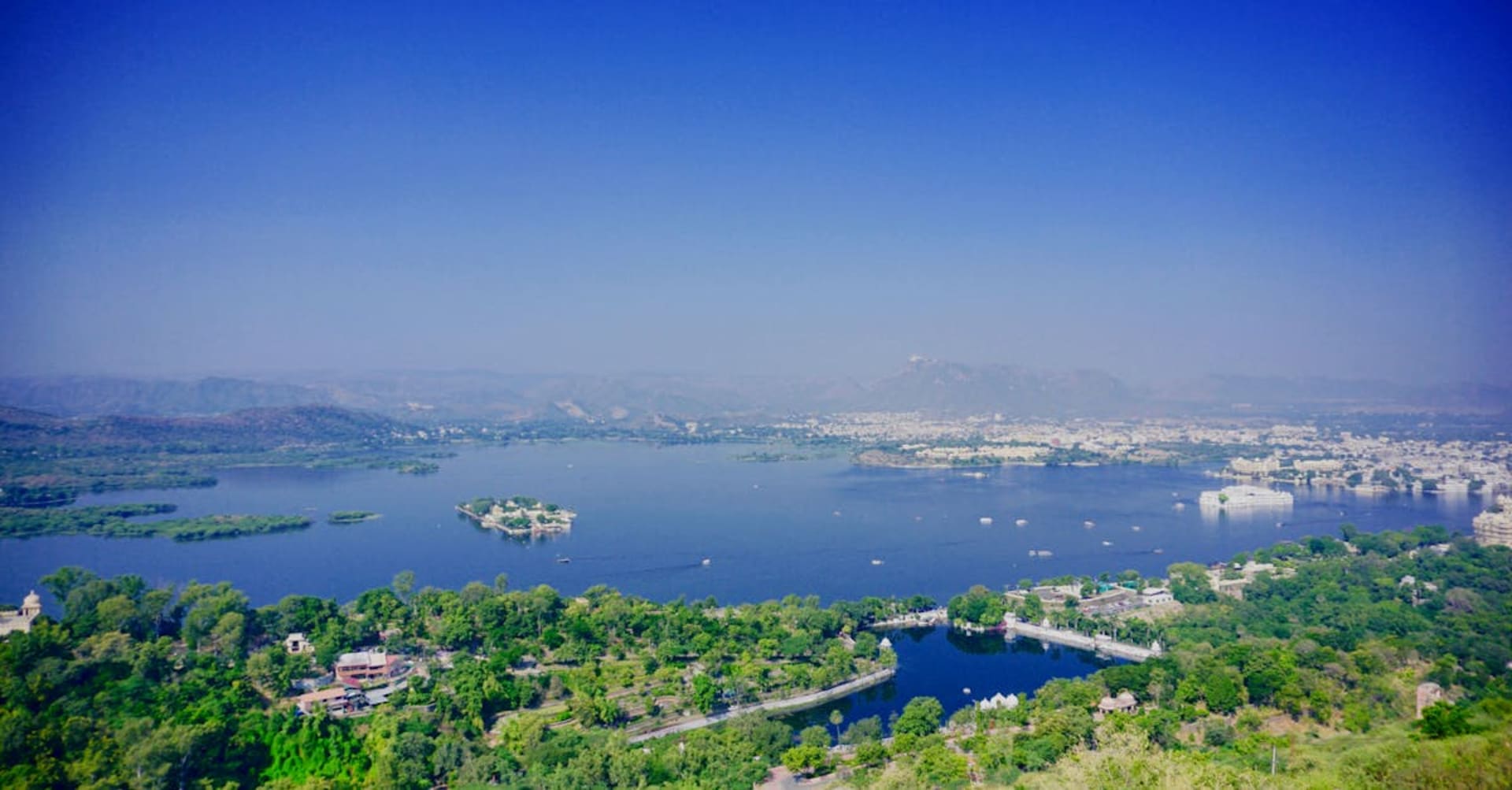
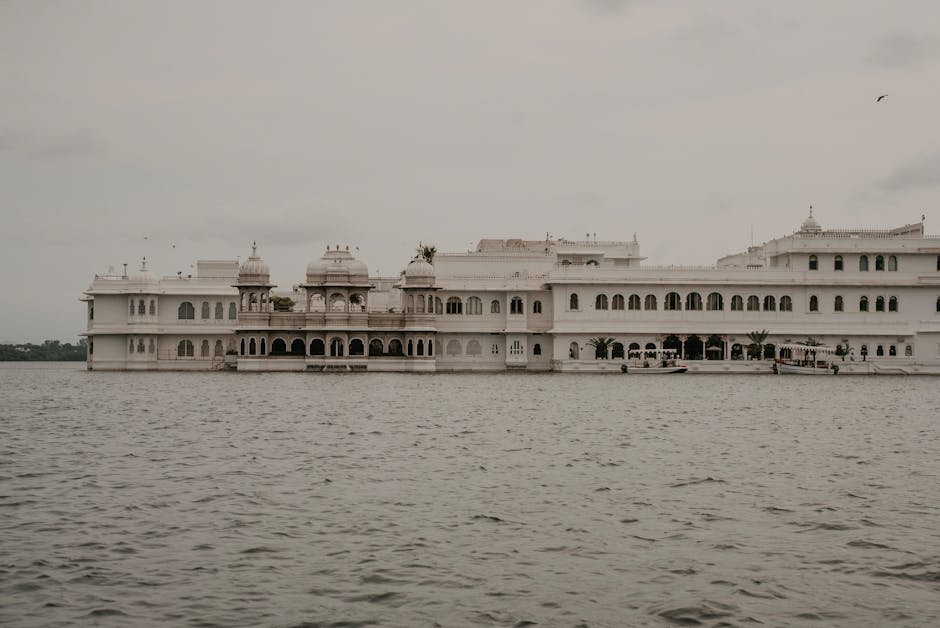
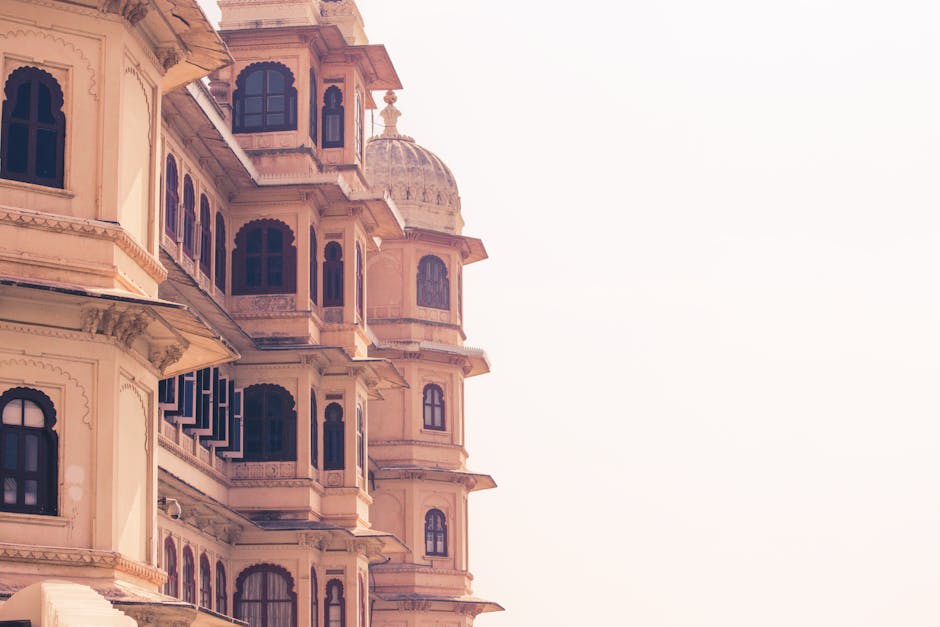
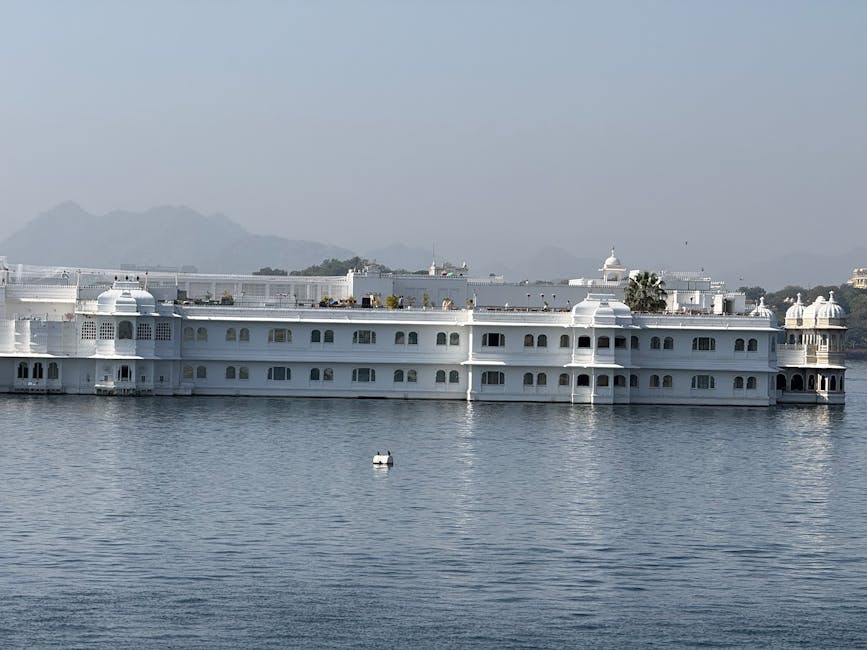
Udaipur earns its reputation. The City Palace rises from the eastern shore of Lake Pichola in a cascade of white marble, balconies, and courtyards that took three hundred years to build and feels like it could absorb three hundred more without losing its capacity to astonish. The Lake Palace, sitting on an island in the middle of Pichola, is now a luxury hotel and the most photogenic building in Rajasthan — its white walls reflected in still water at sunset produce an image that has launched a thousand honeymoon bookings.
I checked into a haveli guesthouse on the lake side of the old city, and from my rooftop the view was so improbable I actually laughed. The Lake Palace floated on the water like a marble ship. The City Palace towered to the left, its balconies and windows catching the late-afternoon light. The Aravalli Hills rose behind everything, green after the monsoon, and the water of Lake Pichola held it all in a reflection so still it doubled the beauty. I sat on that rooftop for the entire first evening, drinking masala chai and watching the light change, and I understood why every travel writer who comes here reaches for the same words. Udaipur is not subtle. It is not hiding its beauty behind layers of grit and chaos like Delhi or Mumbai. It is, instead, offering it openly, almost generously, as if the city has decided that its purpose is to be beautiful and has devoted centuries to perfecting the craft.
But Udaipur is not only palaces. The old city is a tangle of narrow lanes, art galleries, rooftop restaurants, and textile shops where the shopkeepers offer chai before they offer prices — a negotiation strategy I recognise from the souks of Morocco and that works equally well on both continents. Jagdish Temple anchors the old town with its Indo-Aryan spire and constant stream of worshippers, and the steps leading up to it are lined with vendors selling flowers, incense, and miniature paintings in the Mewar style — a school of art that developed here over centuries and that depicts, with exquisite precision, the court scenes, hunting parties, and love stories of the Rajput kings. I bought a small painting of a palace scene from a shop where the artist was the grandson of the artist who had painted the originals, and the continuity — the unbroken line of skill passed from hand to hand across generations — moved me more than the painting itself.
The Monsoon Palace on the hill above the city catches the last light and offers views across the Aravalli Range that stretch to the horizon. Boat rides on Lake Pichola at sunset, with the palace glowing and the Aravallis darkening behind, are the kind of experience that makes you understand why the Mughals fought for centuries to control this place. Saheliyon ki Bari, the Garden of the Maidens, is a quiet refuge of fountains and lotus pools built for the queen’s ladies-in-waiting, and its peaceful geometry is the perfect antidote to the sensory intensity of the rest of Rajasthan. I had dinner at Ambrai, a restaurant on the lake’s western shore, and the reflected lights of the City Palace shimmered on the water between courses of laal maas — the fiery Rajasthani mutton curry that tastes exactly as red as it looks. Udaipur is not the India of cliché. It is the India of refinement, of beauty cultivated over centuries, of a culture that decided long ago that the pursuit of the beautiful is not frivolous but essential.
When to go: September to March for the best weather. October and November are ideal — post-monsoon greenery, comfortable temperatures, and clear skies. Summer is brutally hot, and the monsoon fills the lakes but limits outdoor exploration.