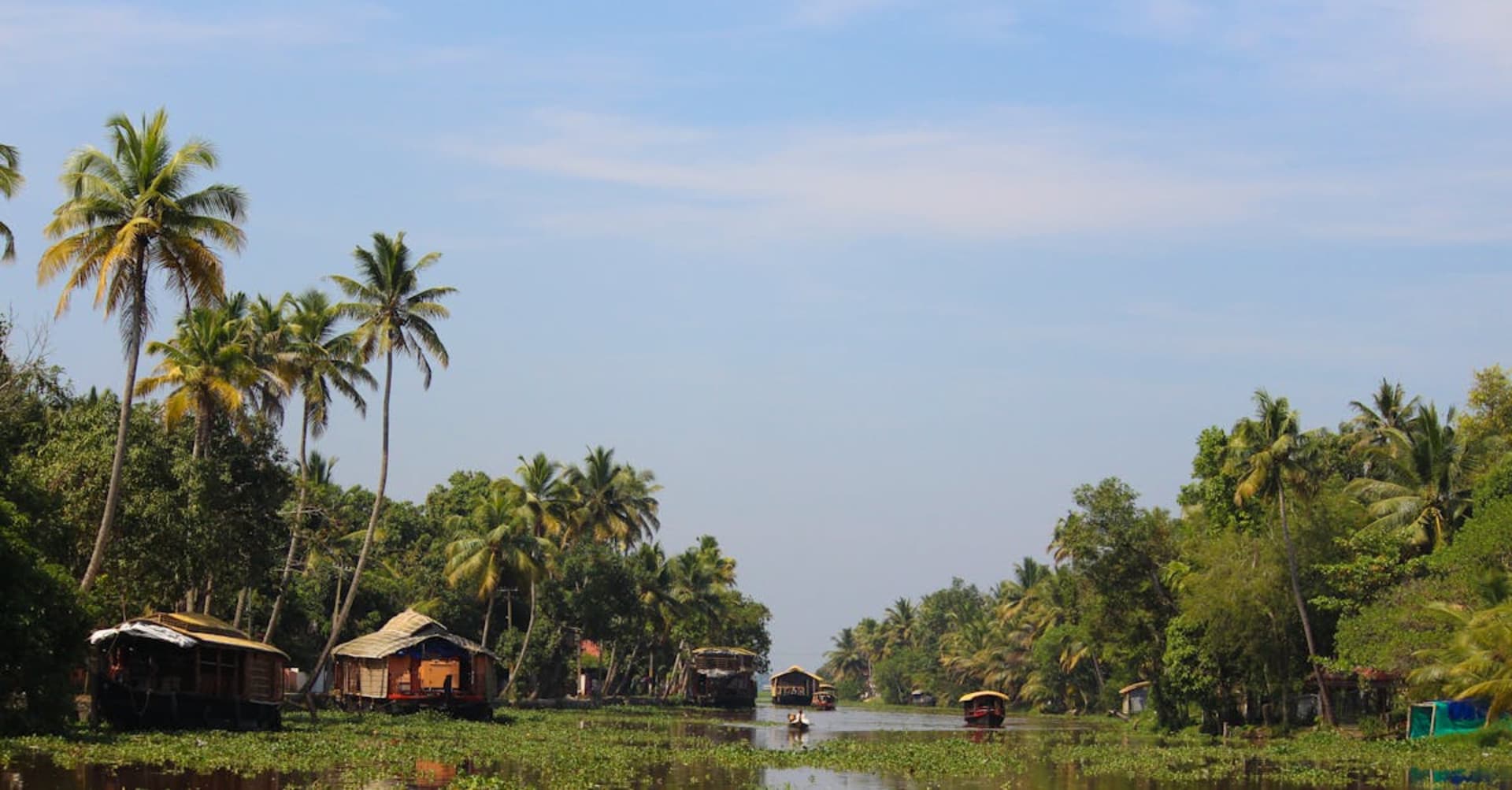
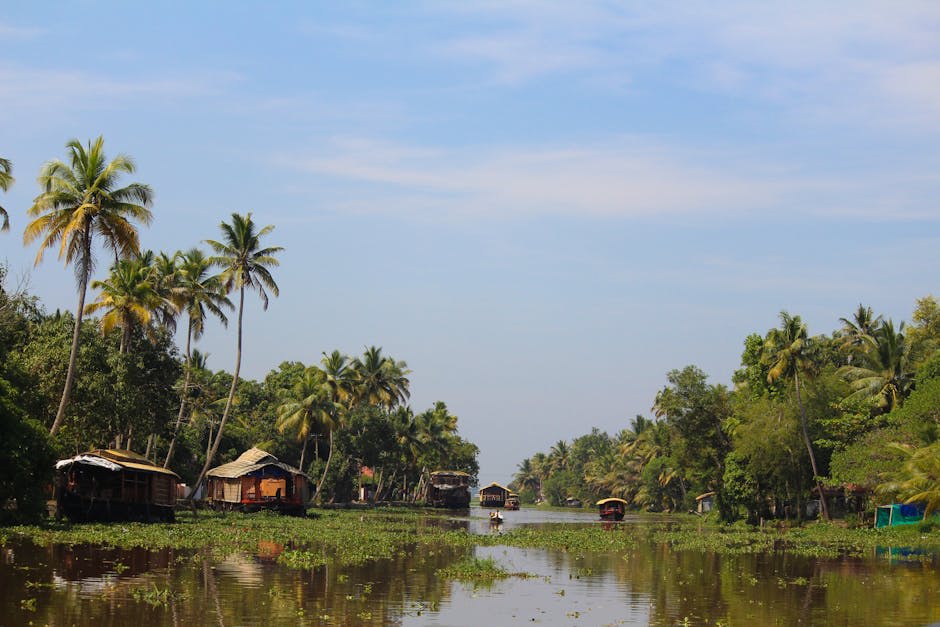
Kerala is the India that first-timers wish the whole country could be — green, calm, clean, and impossibly beautiful. The state runs along the Malabar Coast in the southwest, a narrow strip between the Western Ghats and the Arabian Sea, and the landscape shifts from beach to backwater to mountain with a speed that keeps you constantly reaching for a camera. The backwaters of Alleppey are the signature experience — a network of palm-shaded canals and lakes navigated by kettuvallam houseboats that drift past rice paddies, village temples, and children waving from the banks.
I boarded a houseboat in Alleppey on a Tuesday afternoon, and for the next twenty-four hours the world contracted to the width of a canal. The kettuvallam — a converted rice barge with a thatched roof and a crew of three — moved so slowly that kingfishers would land on the railing and stay. The cook prepared lunch in a galley smaller than a Paris bathroom: fish curry with raw mango, avial thick with coconut, rice that tasted of the paddy it came from. We passed churches and mosques and temples within minutes of each other, a reminder that Kerala is one of the most religiously diverse states in India, and one of the most literate — the education rate here is nearly one hundred percent, and you feel it in every conversation.
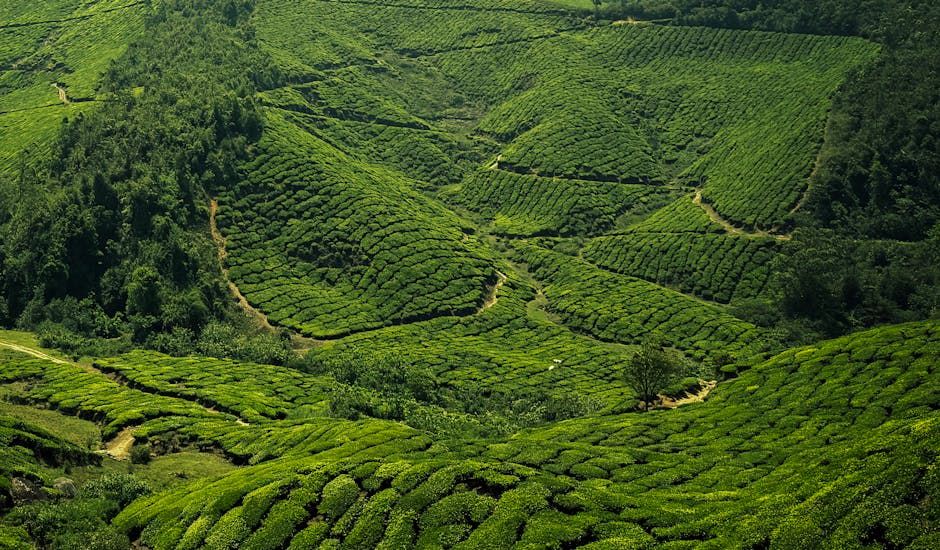
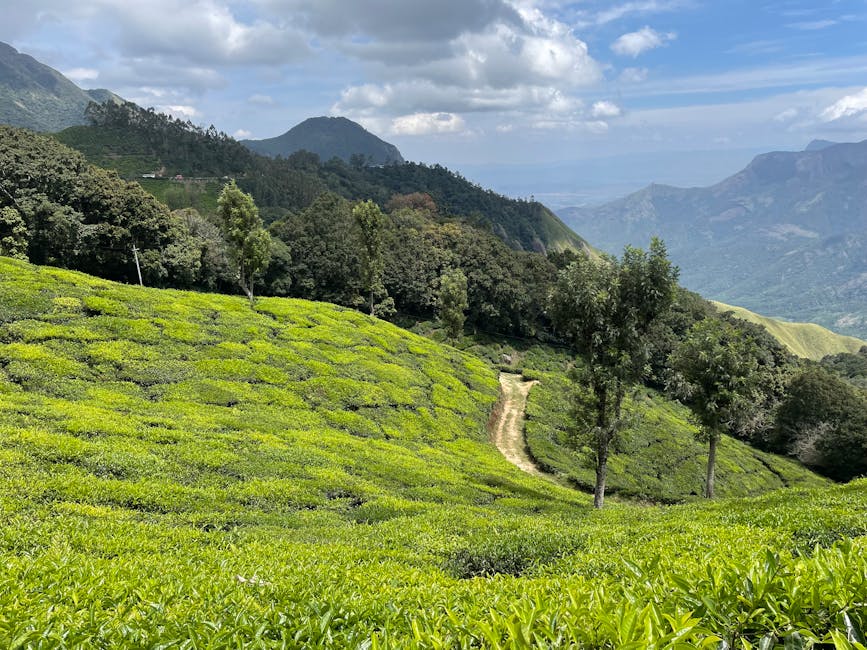
The hill station of Munnar sits at 1,600 metres amid tea plantations that carpet the mountains in geometric green. I drove up from the coast in three hours, the temperature dropping with every switchback, and arrived in a landscape that felt more like the Scottish Highlands than tropical India — except for the tea. Endless, rolling carpets of it, the bushes trimmed to waist height, the pluckers moving through the rows with baskets on their backs. The Kolukkumalai estate, reachable only by jeep on a road that tests both vehicle and nerve, produces some of the highest-grown tea in the world, and the tasting room at the top serves cups that justify every terrifying hairpin turn.
The spice gardens of Thekkady offer walking tours through cardamom, pepper, and cinnamon groves. Kochi, the historic port city, layers Portuguese churches, Chinese fishing nets, Jewish synagogues, and a contemporary art scene into a single walkable waterfront. The Kochi-Muziris Biennale, held every two years, has turned the old Fort Kochi warehouses into one of Asia’s most important contemporary art events. And the food — coconut-rich curries, appam with stew, fresh fish wrapped in banana leaf, karimeen pollichathu that I dream about from across an ocean — is among the best regional cuisine in India. Kerala taught me that Indian food is not one thing but fifty, and that the south has been quietly outperforming the north for centuries.
When to go: September to March for post-monsoon greenery and pleasant temperatures. The monsoon from June to August is dramatic but makes travel difficult. Ayurvedic retreats are popular during the rainy season.