Amritsar
"The Golden Temple feeds the hungry and astonishes the faithless in equal measure, without asking either to change."
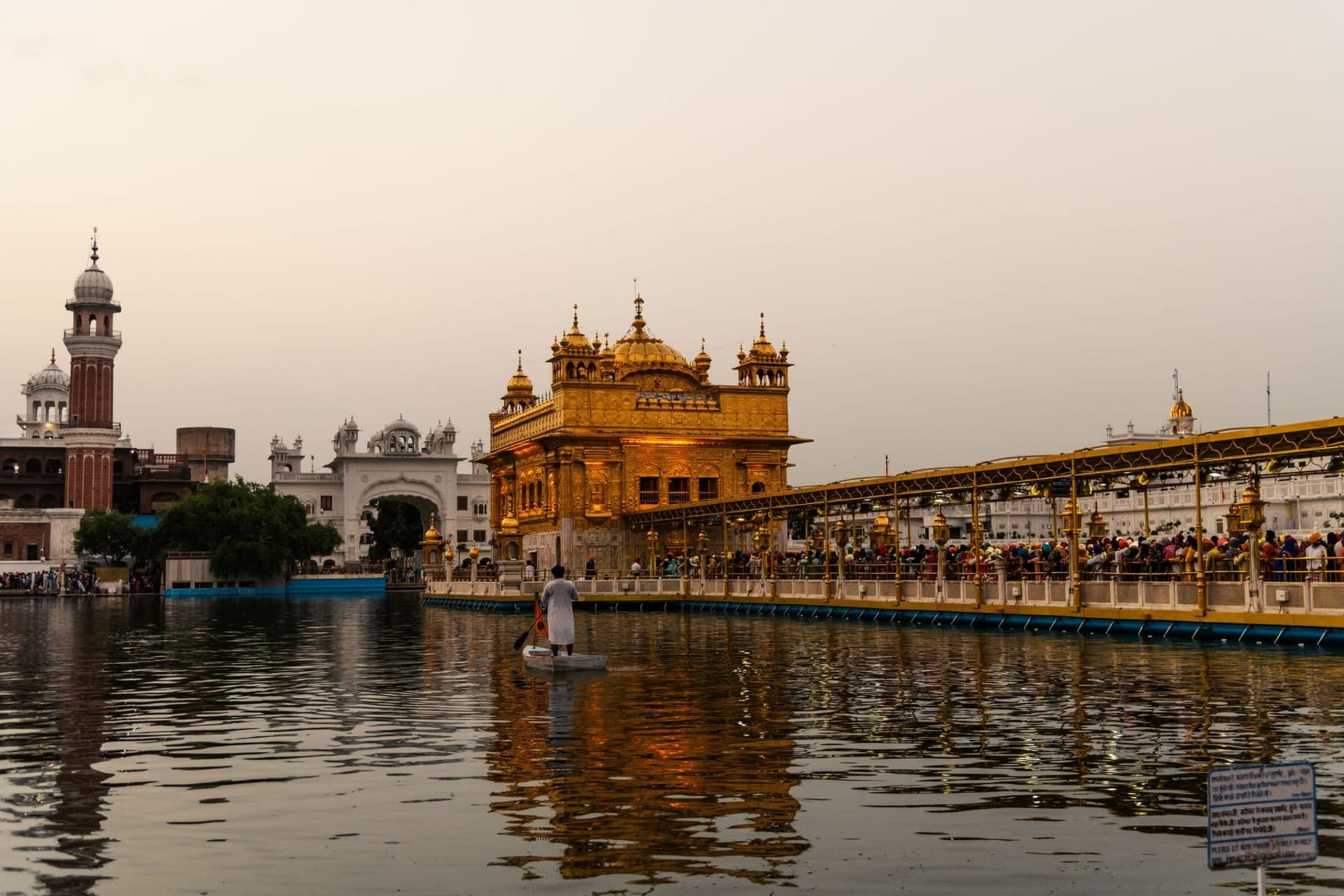
The Golden Temple floats in its sacred pool, feeding thousands daily regardless of faith.
I arrived in Amritsar on a January morning when the fog off the Beas River still hadn’t lifted, the kind of cold that surprises you after Delhi’s dust and noise. The auto-rickshaw from the railway station took us down Majitha Road past vendors layering parathas with white butter the way a mason lays bricks — unhurried, precise, professional. Lia pressed her face to the window and said nothing, which is what she does when something is already exceeding her expectations.
The Temple Itself
Nothing quite prepares you for the Harmandir Sahib. I’d seen the photographs. Everyone has seen the photographs. What the photographs cannot transmit is the quality of the light at six in the morning, when the first sun catches the gold plating and the reflection in the Amrit Sarovar fractures it into something moving and plural. I stood on the white marble causeway, the Parikarma, barefoot on stone cold enough to sting, and felt the particular humility that beautiful things designed without vanity tend to produce.
The hum inside is continuous — the Gurbani kirtan broadcast from speakers throughout the complex, voices and harmonium and tabla braided together and played without interruption, day and night, every day of the year. I sat against a pillar for longer than I intended. The sound does something to your sense of elapsed time.
The Langar
What genuinely surprised me was the scale of the langar — the community kitchen that feeds anyone who arrives, no questions, no categories, somewhere between thirty thousand and one hundred thousand people every single day. I’d read the number and filed it as statistic. Then I walked into the hall and saw the rows of people sitting on the floor, the volunteers moving with dal and roti in the same fluid rhythm as the prayers outside, and the number stopped being abstract.
We ate together on the floor — dal makhani, chapati, a sweetened rice pudding called karah prashad that they press into your palms warm. A man beside me worked in the kitchen and told me he’d been volunteering every Sunday for eleven years. Seva, he said. Service as devotion.
Eating on Lawrence Road
After the temple we wandered toward Lawrence Road for kulcha — the Amritsari kind, stuffed with potato and spiced paneer, blistered in a tandoor and slicked with ghee. There is a specific pleasure in eating something that has been perfected in one city and is not quite right anywhere else in the world. This is that thing.
When to go: October through March avoids the brutal pre-monsoon heat. January brings fog and cold but also Lohri bonfires and a city briefly turned festive, which is worth the chill.