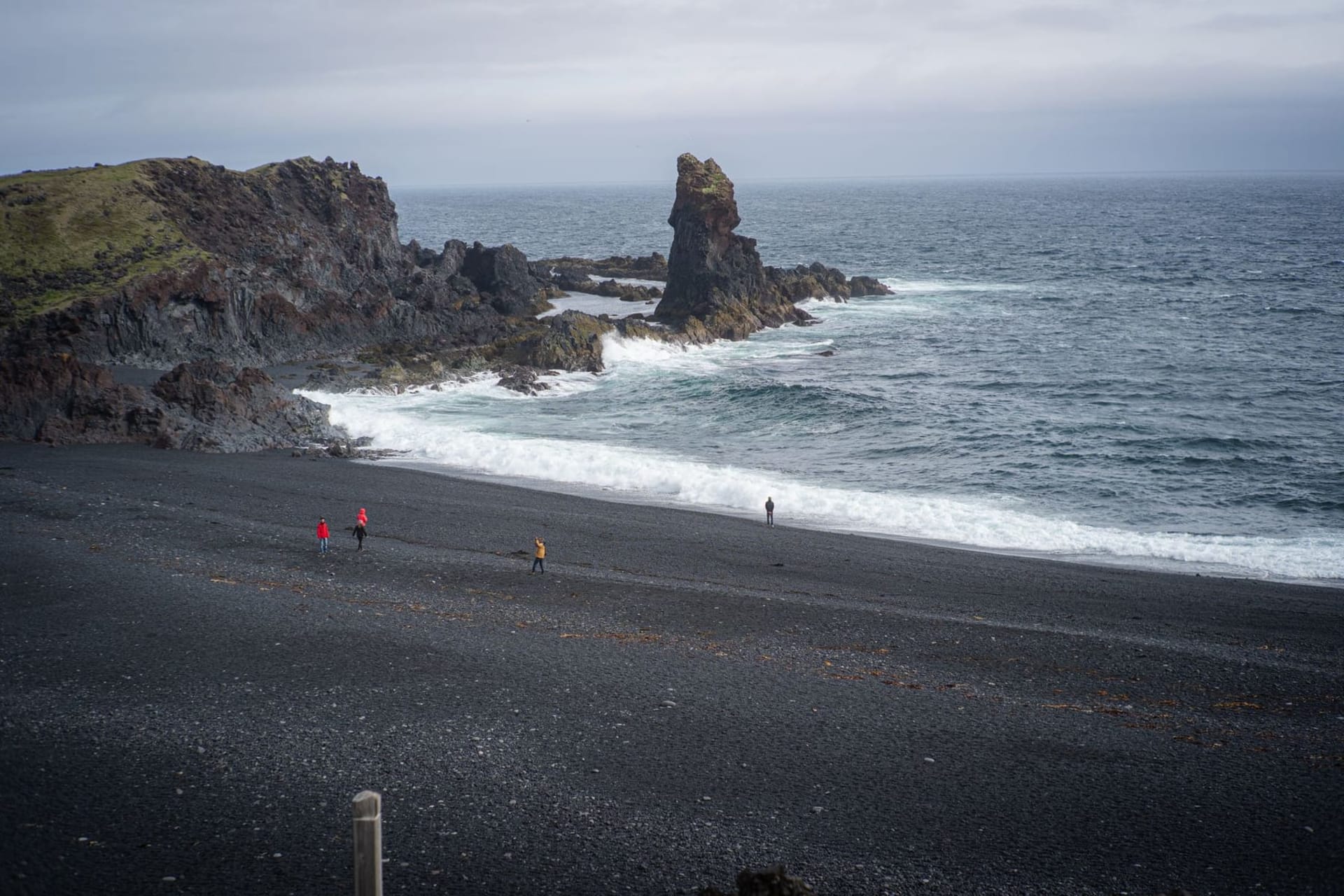
Reykjanes Peninsula
"Reykjanes is the place where the earth is still deciding what shape it wants to be."
A raw volcanic peninsula of lava fields, geothermal pools, and dramatic fissures where two continental plates continue their slow-motion divorce.
The first thing that hit me was the smell — not the clean cold I expected from Iceland, but something sulfurous and mineral, like struck matches and old iron. We had rented a car at Keflavík and driven twenty minutes south along Route 425, and already the landscape had abandoned any pretense of hospitality. Black lava fields in every direction, broken and folded like crumpled paper that had been set aside and forgotten. No trees. Almost no color at all, except for the occasional daub of chartreuse moss trying its luck in a crack.
Lia pressed her face to the passenger window and said nothing for a long time. That was how I knew the place was working on her.
Where the Plates Pull Apart
The Reykjanes Peninsula sits astride the Mid-Atlantic Ridge, the seam where the Eurasian and North American tectonic plates are slowly, ceaselessly parting ways — widening by about two centimeters each year. At the Bridge Between Continents, a small footbridge near Sandvík, I walked from one continent to the other in three steps. It felt absurdly modest for something so geologically enormous. The rift valley below the bridge is only a few meters wide here, but standing over it with wind flattening my jacket against my chest, I felt the vertigo of deep time in a way no museum exhibit had ever given me.
Further along the coast, the Reykjanesviti lighthouse stands on a headland above boiling fumaroles and a collapsed shoreline that looks like it lost an argument with the ocean. The ground here hisses. Steam curls from vents in the rock at random intervals, as if the earth is breathing through a wound.
The Hot Pot at the Edge of the World
We found the old Grindavík swimming pool — the public sundlaug — on our second afternoon, before the town was evacuated ahead of eruptions that reshaped this part of the peninsula entirely. What struck me about Icelandic hot pots is how ordinary they are to the people soaking in them. Two older men were arguing about something local and political, waist-deep in forty-degree water with steam lifting off the surface into the grey afternoon. The world was ending geologically nearby, and they were annoyed about something the town council had decided.
I ordered lamb soup — kjötsúpa — at a small place near the harbor: fatty, dense, smelling of thyme and wet wool. It tasted like weather.
The Surprise at Kleifarvatn
The unexpected discovery came at Kleifarvatn, a volcanic lake sitting in a lava basin with no visible outlet. I had read that the lake was slowly shrinking — cracks in the lakebed opened during a 2000 earthquake had begun draining it from below. Standing at the shore, watching the dark water against the darker rock, I realized the landscape here was not just old — it was actively unfinished. Reykjanes is not geology you visit. It is geology you witness, mid-sentence.
When to go: Late spring through early autumn (May to September) offers the most drivable roads and the longest light — though summer nights never fully darken, which adds its own strange quality to the volcanic emptiness. Winter visits are possible but require careful attention to road closures, especially after eruption activity near Grindavík.