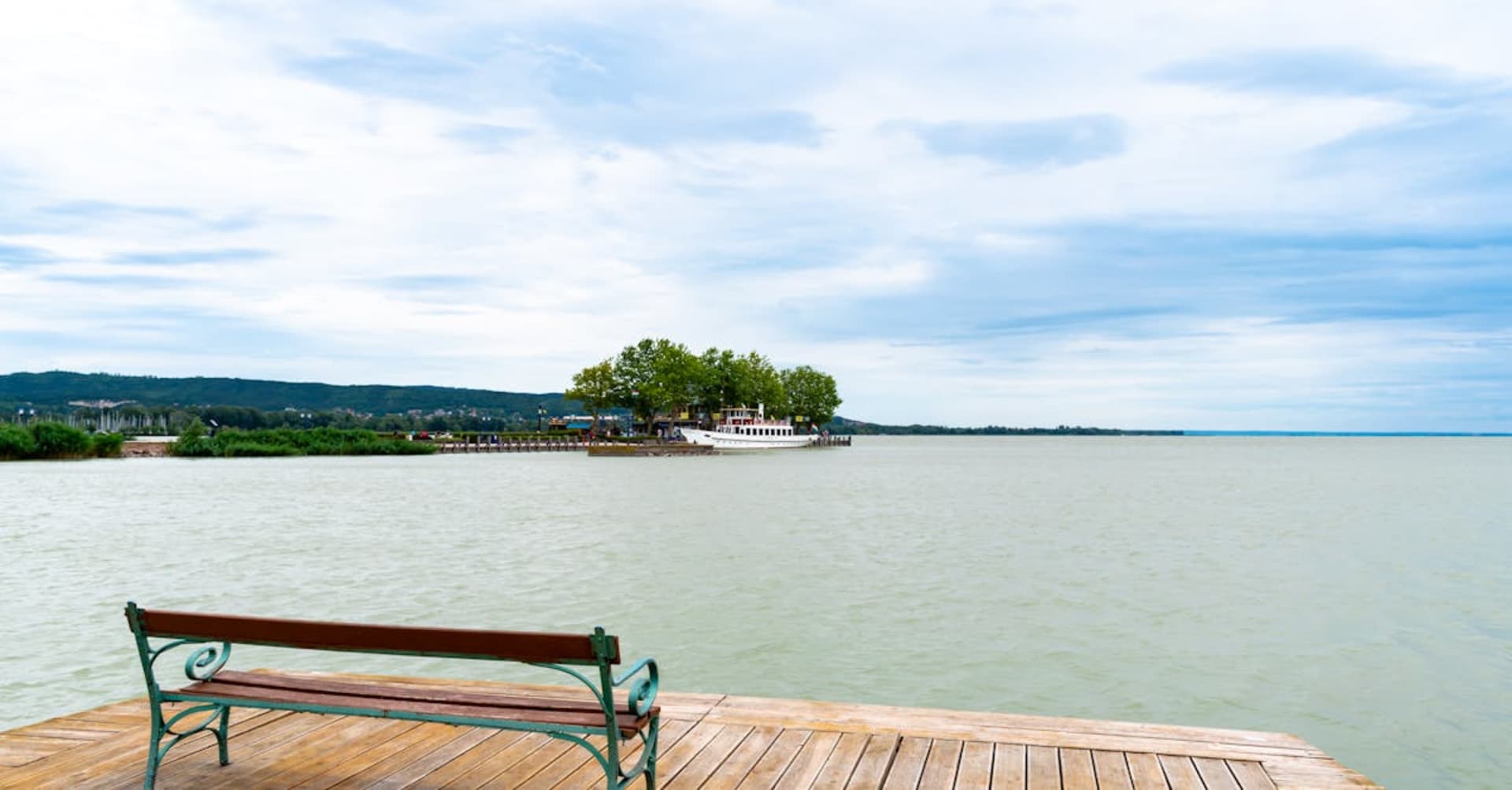
Hungarians call Balaton their sea, and in a landlocked country, the devotion makes sense. The lake stretches seventy-seven kilometers across the Transdanubian countryside, and when I first saw it from the train window — a sheet of silver under an overcast sky, impossibly flat, reaching to a horizon line that could have been the Atlantic — I understood the possessiveness. This is not a lake to Hungarians. It is a collective memory. Every family has a Balaton story, a Balaton summer, a Balaton romance.
The southern shore is flat and family-friendly — wide beaches, gentle entry, resort towns like Siófok where the nightlife runs late and the vibe is more Ibiza than I expected from landlocked Central Europe. But the northern shore is where the landscape gets interesting: volcanic hills, wine villages, and the Tihany Peninsula rising above the water with its Benedictine abbey and lavender fields that scent the air in June.

Wine, Volcanoes, and the Cycling Path
The Badacsony wine region climbs the slopes of an extinct volcano on the northern shore. The volcanic soil produces distinctive whites — Olaszrizling and Szürkebarát — best tasted at hillside terraces overlooking the lake. I sat at one of these terraces as the sun set behind the far shore, drinking a glass of wine that tasted of volcanic stone and summer grass, and thought: this is what the French would do with this landscape, except the Hungarians got here first and charge a fraction of the price.
Tihany itself is a lavender-scented village with views in every direction. The lake’s western end, around Keszthely and its Festetics Palace, feels almost aristocratic. Cycling paths circle the entire lake — a flat, manageable ride through villages, vineyards, and reed beds that I completed in a day, though two would have been wiser and less painful.

When to go: June through August for swimming. Late September for wine harvest festivals and golden light without the crowds.