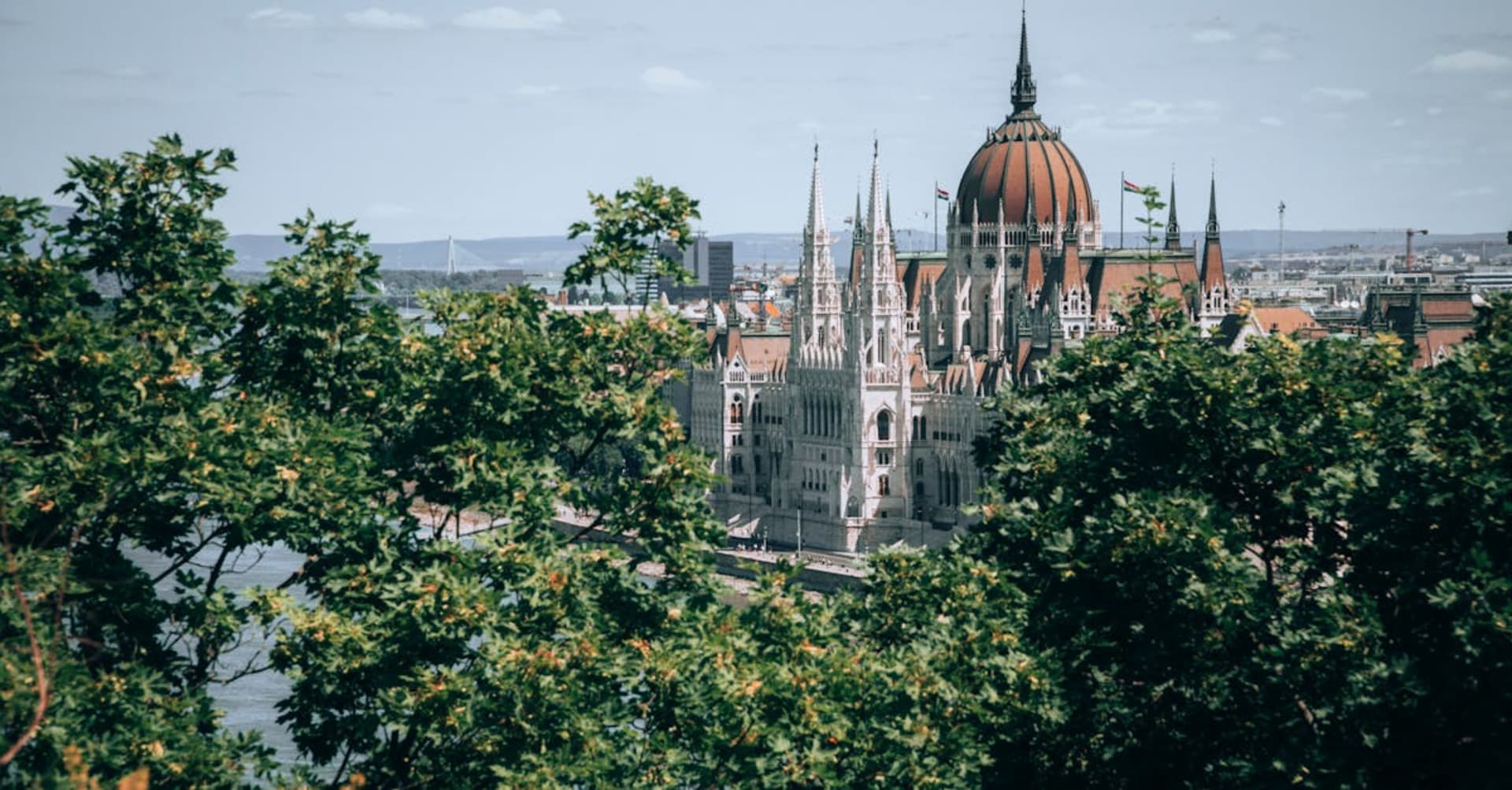
Budapest is really two cities that agreed to share a river, and I arrived on a November morning when the fog sat so low on the Danube that Pest disappeared entirely from the Buda side — just a few spires poking through the white, like a city half-remembered. Buda rises on the western bank — castle hill, medieval lanes, the Fisherman’s Bastion with its fairytale turrets framing the best view of Parliament across the water. Pest spreads flat and grand on the east — the boulevards, the cafés, the ruin bars carved out of abandoned buildings in the Jewish Quarter where you drink spritzers beneath walls covered in street art and hanging plants.
The thermal baths are the city’s defining ritual, and they changed my relationship with mornings entirely. Széchenyi, with its yellow Neo-Baroque palace and outdoor pools steaming in winter air, is the most famous — I played chess there with a retired schoolteacher who beat me in nine moves and then bought me a coffee. Gellért offers Art Nouveau elegance so perfect it feels like bathing inside a painting. Rudas has Ottoman-era stone pools where the light filters through star-shaped openings in the dome, and the rooftop pool at night offers a view of the illuminated city that made me forget I was sitting in mineral water at eleven PM.

The Ruin Bars and the Food Revolution
The ruin bars of the Jewish Quarter deserve their reputation, but only if you go beyond Szimpla Kert (though Szimpla on a Tuesday afternoon, when it functions as a farmers’ market, is genuinely wonderful). The food scene has evolved dramatically — from market halls serving lángos to Michelin-starred restaurants reimagining Hungarian cuisine. The Great Market Hall on Vámház körút is where I spent my mornings: paprika in a dozen grades, kolbász sausages hanging from the ceiling, and lángos fried to order with sour cream and cheese that made me reconsider every fried bread I have ever eaten.
What surprised me most was the wine. Hungarian wine is chronically underrated outside the country — I sat at a natural wine bar in the Palace District and tasted a Juhfark from Somló that was unlike anything I have encountered in years of drinking through French and Mexican cellars. Budapest is not Paris or Mexico City, but it is reaching for something, and the ambition tastes good.


When to go: April through June and September through October. Winter is atmospheric for the baths, with Christmas markets along the Danube.