Sam Tung Uk Museum
"I stood at the gate and turned around once, just to check the towers were actually still there — the contrast is that stark."
A 18th-century Hakka walled village preserved whole inside Tsuen Wan, its ancestral hall standing exactly where the town grew up around it.
Sam Tung Uk means “three-beam dwelling,” named for the structural style of the original houses, and the village was founded in 1786 by the Chan clan, Hakka settlers who built a walled compound to protect themselves and their extended family from bandits and instability common to the period. What makes it worth the detour into Tsuen Wan today isn’t just the age of the buildings — it’s the collision. Step through the arched entrance gate and you’re standing in an 18th-century clan village, symmetrical rows of grey-brick houses around a central ancestral hall. Turn around, and modern Tsuen Wan’s residential towers rise directly behind the back wall, close enough to feel less like a backdrop and more like the village is under quiet siege by its own city.
The whole village was declared a monument and converted into a museum in the 1980s, after the last residents moved out and the surrounding land was needed for the new town’s expansion — a fairly rare outcome in Hong Kong, where historic structures more often lose that particular argument. The rows of houses now hold exhibitions on Hakka life and the history of Tsuen Wan, with some rooms furnished as they would have been, right down to the cooking implements and the wooden beds.
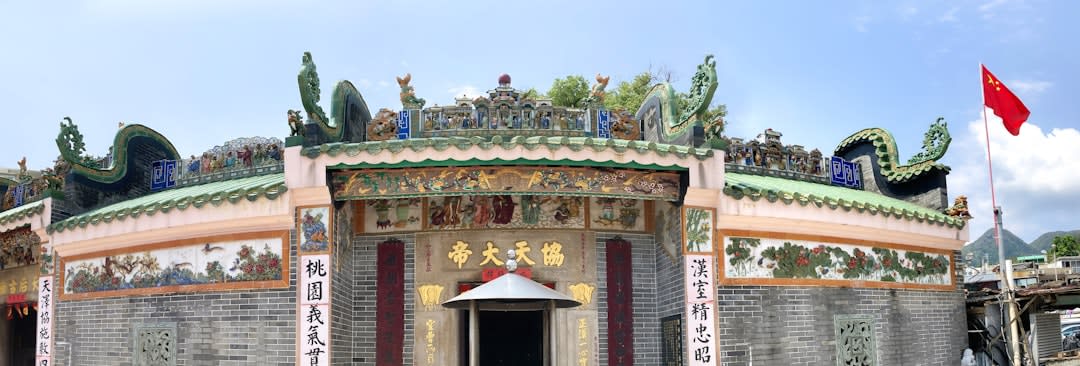
The ancestral hall at the rear of the compound remains the emotional center of the site — an altar space where the Chan clan once conducted rites honouring their forebears, still intact with its carved wood screens and faded couplets on red paper. I found myself lingering there longer than in any of the furnished houses, partly because the quiet felt more genuine, less arranged for a museum visit and more like a room that simply hasn’t finished being what it always was.
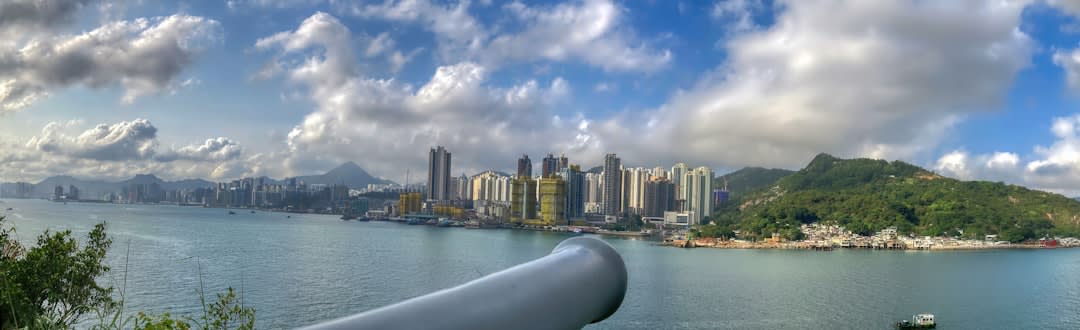
Tsuen Wan itself, outside the museum walls, is a working residential district with none of the postcard glamour of the harbour-front neighbourhoods — but it’s an honest look at how most Hong Kong residents actually live, in dense new towns built to house a population that long ago outgrew the old urban core.
When to go: Any day, any season — it’s a compact indoor-outdoor site that doesn’t depend much on weather, and it’s free to enter, which makes it an easy addition if you’re already heading toward Tsuen Wan for other reasons. Weekday mornings are quietest.