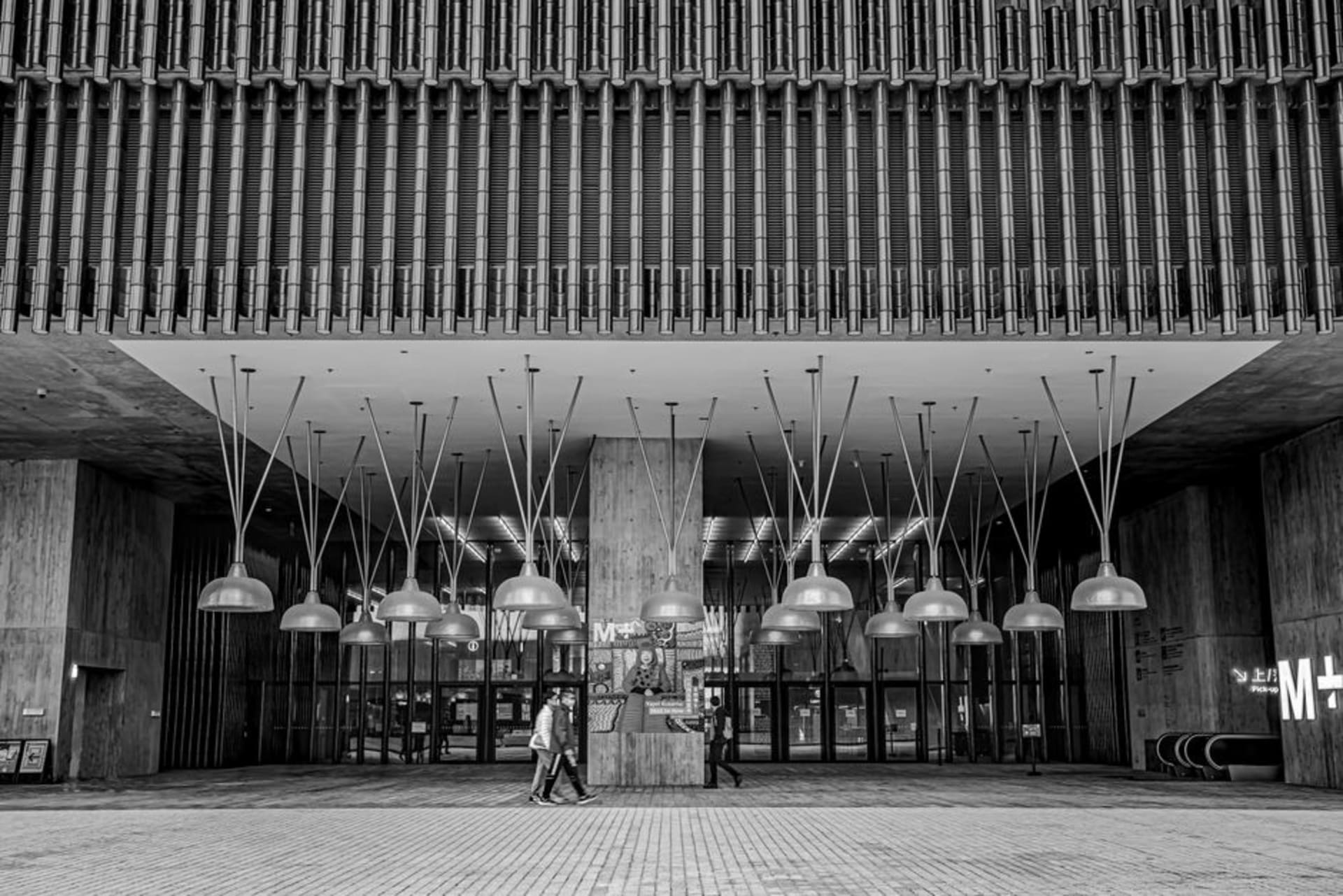
M+ Museum
"I went in expecting a nice building. I came out having rearranged how I think about Hong Kong's entire visual history."
A vast concrete-and-tile museum of visual culture rising over the harbour, where contemporary Asian art gets the scale and seriousness it's long deserved.
I put off visiting M+ for almost two years, mostly because I assumed I already understood what it would be — a modern art museum, the kind every ambitious city builds eventually, competent and forgettable. Lia finally dragged me there on a grey Tuesday when West Kowloon was nearly empty, and within twenty minutes I understood I had been wrong in a specific and slightly embarrassing way. This was not a museum trying to prove Hong Kong belonged in the same conversation as London or New York. It was a museum built on the premise that Asian visual culture had been under-collected and under-explained for decades, and that someone finally needed to do the work properly.
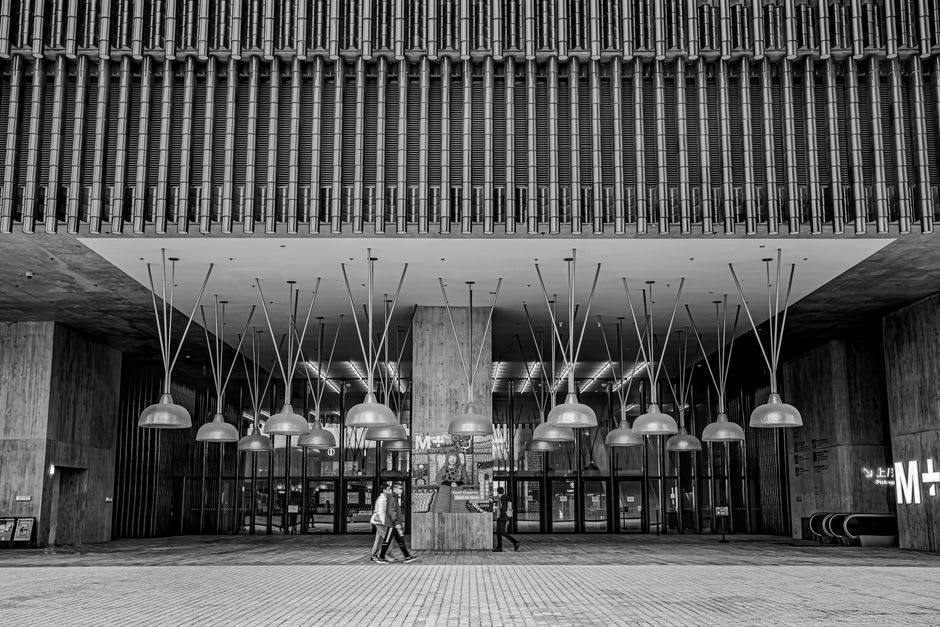
The building itself, designed by Herzog & de Meuron, does something clever with its shape — a horizontal podium topped by a vertical tower clad in ceramic tiles that turn into an LED facade at night, visible from across the harbour. Inside, the collection moves confidently between disciplines in a way I haven’t seen many museums pull off: a gallery of Cantonese neon signage, rescued piece by piece from demolished shopfronts before they were lost, sits a few rooms away from moving-image installations and industrial design from across Asia. The neon room got me more than anything else in the building — these were signs I recognized from old photographs of Mong Kok and Sham Shui Po, hanging here suspended and lit like religious relics, which in a sense they are.
We spent close to four hours inside and still skipped an entire floor, which is either a criticism or the highest compliment I can give a museum, depending on your patience for that sort of thing. The rooftop garden at the top of the podium is worth finding on your way out — a quiet break from the galleries with a clean view straight down the harbour toward Hong Kong Island, framed by the Hong Kong Palace Museum’s angular roofline just next door.
When to go: Weekday mornings are quietest. Book timed tickets online in advance for special exhibitions, which sell out on weekends. Give yourself at least three hours, and check the rooftop garden hours separately, since they sometimes close before the main galleries.