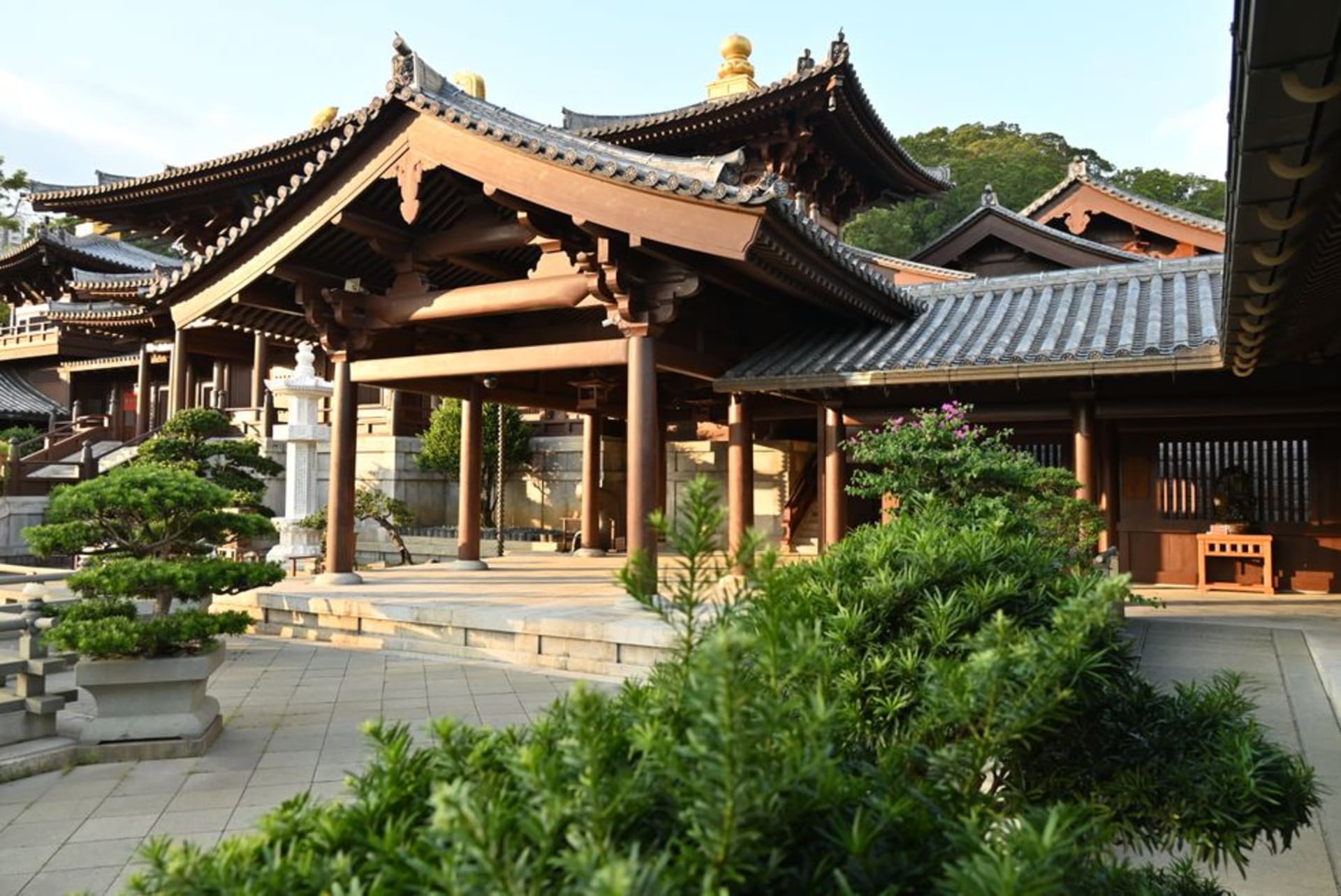
Chi Lin Nunnery and Nan Lian Garden
"I kept forgetting to look up, because the ground — the pond, the wood, the silence — kept pulling my eyes back down."
A Tang dynasty temple complex built without a single nail, rising out of Diamond Hill's concrete like it slipped through a crack in time.
I almost didn’t go. Diamond Hill sounded, from the map, like just another MTR stop buried in a residential stretch of Kowloon, and Lia and I were tired from three straight days of Mong Kok’s noise. But we came up the escalator out of the station and the traffic noise cut off almost immediately, replaced by something I did not expect in this city: quiet. Chi Lin Nunnery sits in a shallow bowl surrounded by towers, and somehow the towers stay out of the way, at least visually, once you’re inside the complex.
The nunnery was rebuilt in the 1990s in the style of Tang dynasty architecture, using traditional interlocking wood joinery instead of a single nail or metal fastener — the same method used across East Asia over a thousand years ago, revived here with a precision that borders on obsessive. Walking through the timber halls, past the lotus ponds and the hall of celestial kings, I found myself running my hand along a beam just to feel the joint, trying to understand how it held without anything I would recognize as a fastening. It’s the kind of detail that sounds dry on paper and becomes genuinely moving in person, once you register the discipline it represents.
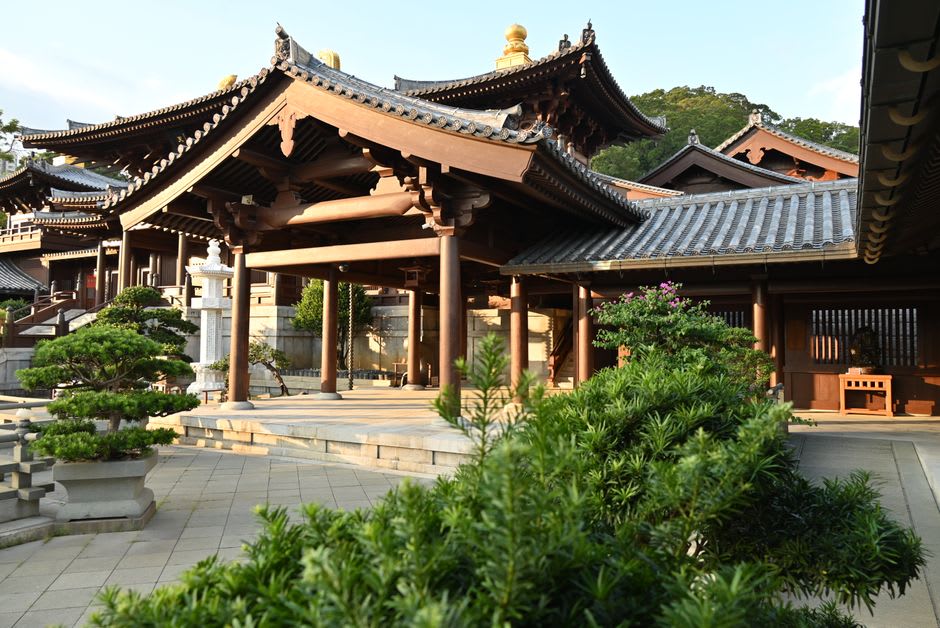
Nan Lian Garden sits directly across the road, connected by a pedestrian bridge, and it operates on the same Tang-dynasty logic — a classical Chinese garden built to a historical template, with a golden pavilion suspended over a pond, dwarf pine trees shaped over decades, and a waterfall that appears out of nowhere behind a rock formation. Lia is usually the one rushing me through gardens — she has a shorter patience for “pretty plants,” her words — but she sat on a bench by the pond for a good twenty minutes without saying anything, which for her is close to a religious experience of its own.
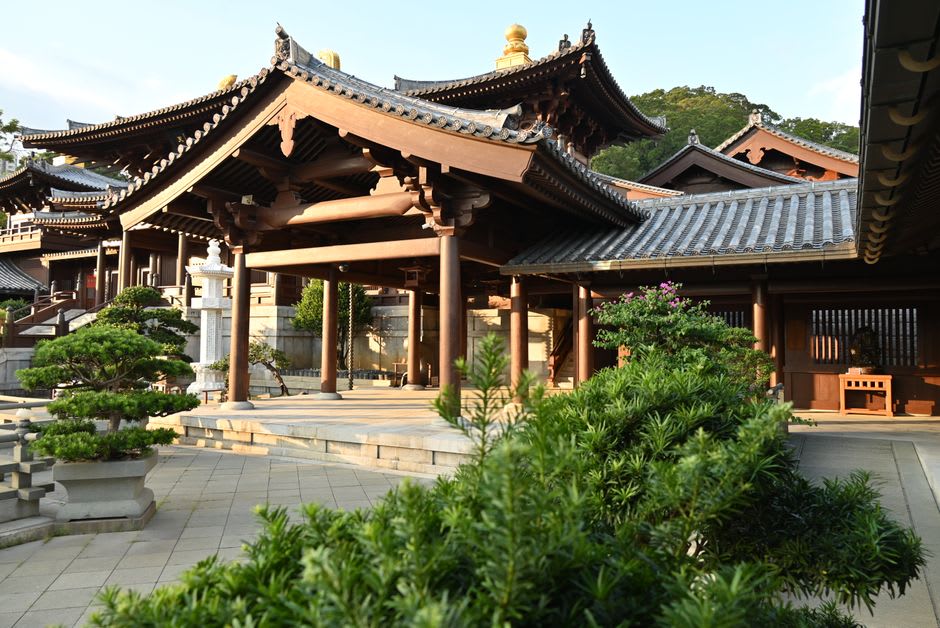
There’s a vegetarian teahouse tucked into the garden, run by the nunnery, serving simple noodle and tofu dishes to a soundtrack of trickling water and the occasional monk moving quietly between buildings. It is not trying to be a destination restaurant, and that’s precisely its value — a place to sit for an hour and let the morning’s calm actually register before the city reclaims you at the exit.
When to go: Weekday mornings, ideally before 10am, when the complex is close to empty and the light comes in low and soft over the ponds. October to December brings the clearest skies for photos, but the gardens are calm in any season — this is one Hong Kong site where the crowds, not the weather, are the real variable to plan around.
Keep exploring
More from Hong Kong
 hong-kong
 Choi Hung Estate
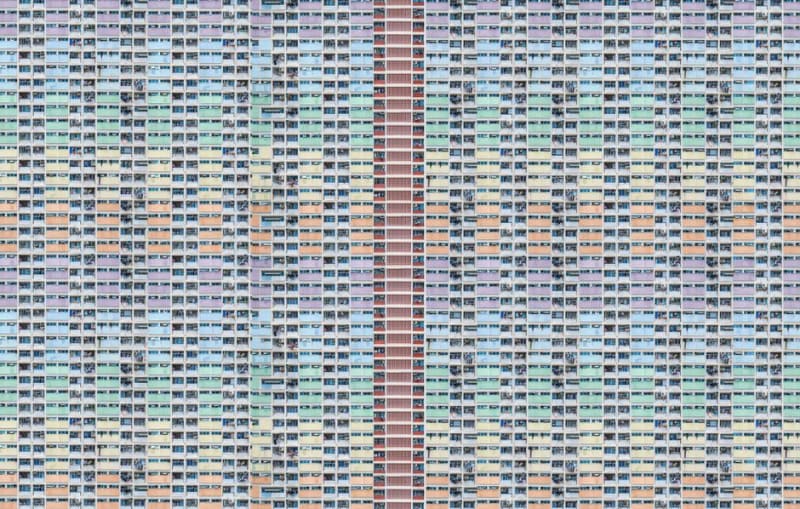
A 1960s public housing estate whose rainbow-painted basketball court has become one of the most photographed spots in Hong Kong, tourists and residents sharing the same railing.
Explore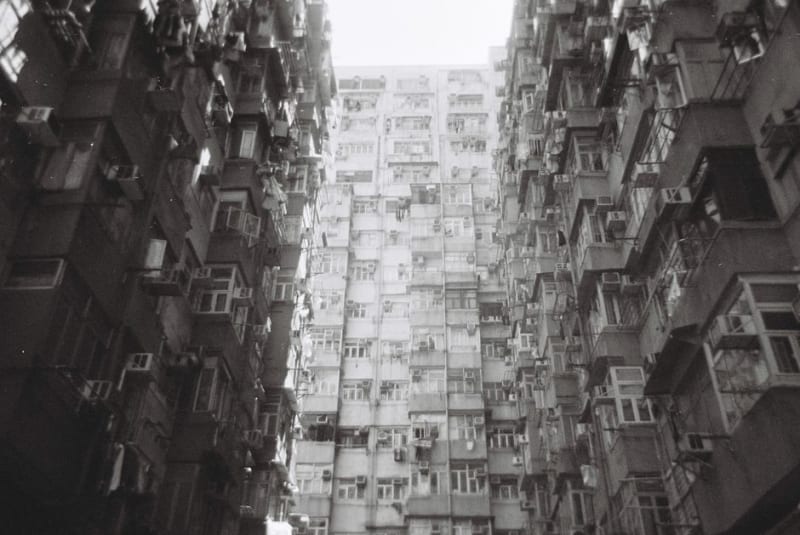 hong-kong
 Chungking Mansions
A seventeen-storey building on Nathan Road that is essentially its own country — curry houses, guesthouses, and a hundred nationalities in one stairwell.
Explore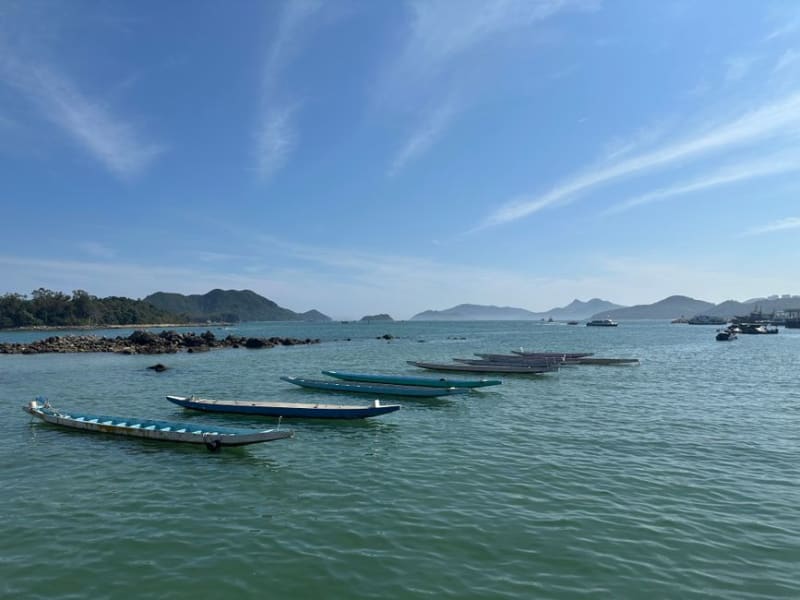 hong-kong
 Clear Water Bay
A pair of clean, lifeguarded beaches on the Sai Kung peninsula named with unusual honesty — the water really is that clear.
Explore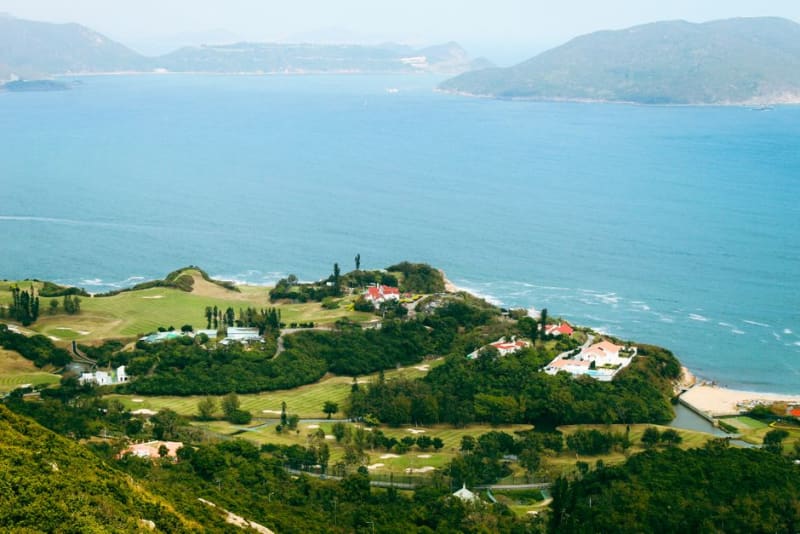 hong-kong
 Clearwater Bay
A peninsula of golf courses, film studios, and genuinely turquoise beaches that Hong Kong somehow keeps mostly to itself.
Explore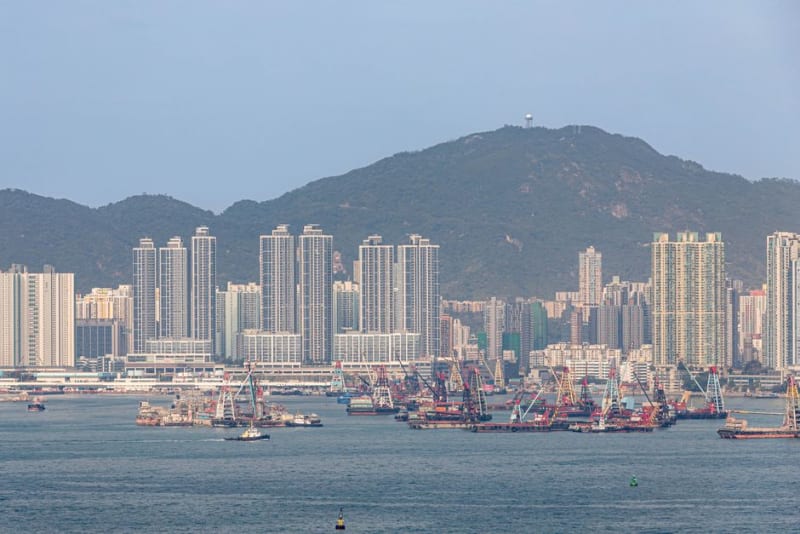 hong-kong
 Deep Water Bay
A small, genteel beach between Aberdeen and Repulse Bay where the Bond films once shot and the golf club above still keeps things quiet.
Explore hong-kong
 Discovery Bay
A car-free suburb on Lantau where golf carts outnumber cars, the beach is oddly quiet, and Hong Kong briefly feels like a different country.
Explore