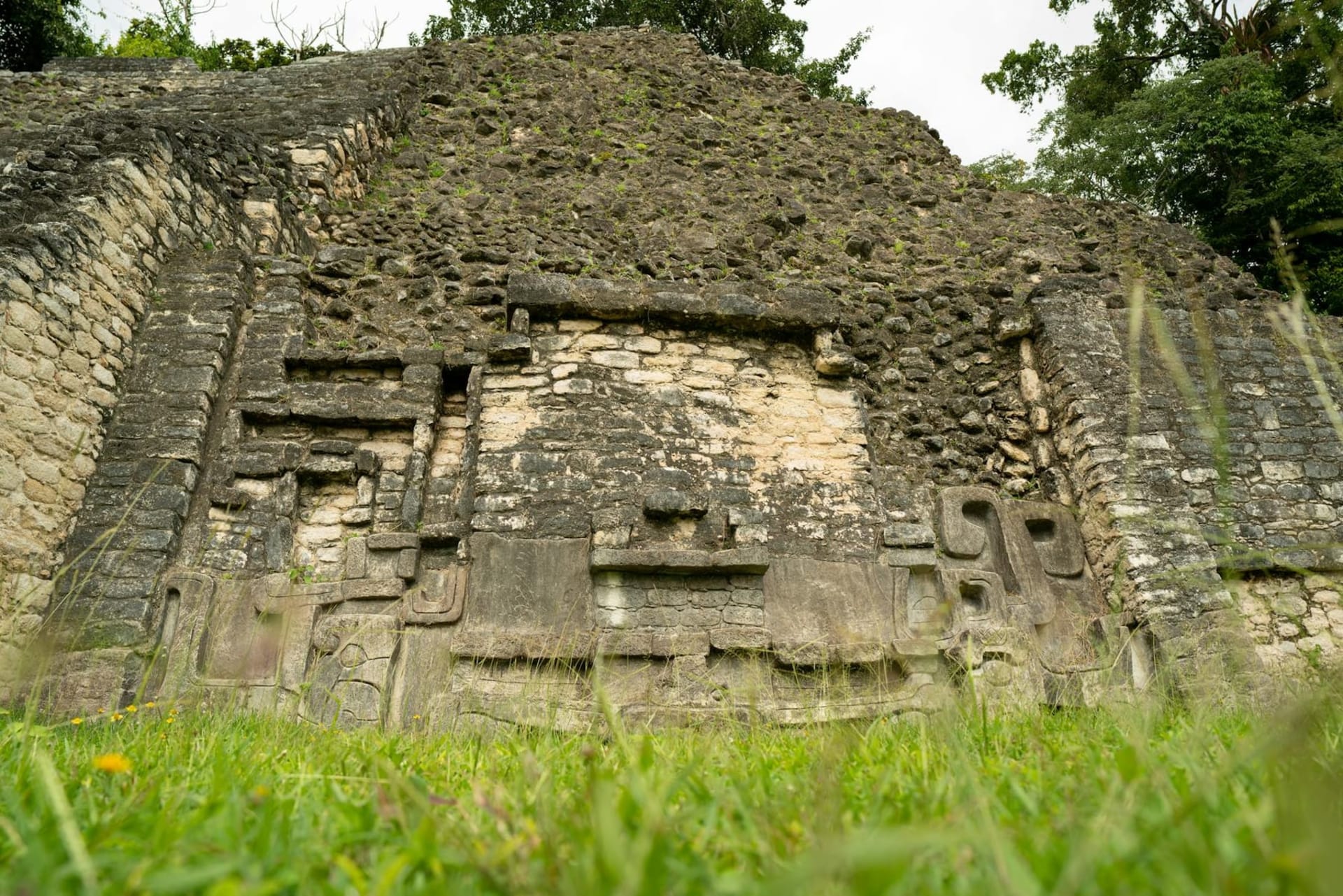
Copan Ruins
"Copan's stelae are portrait galleries of kings who wanted to be remembered — and they are."
The Athens of the Maya world, famous for the finest carved stelae and a hieroglyphic stairway of extraordinary detail.
There is a particular quality of light at Copan in the early morning — thin and green-tinted, filtered down through ceiba canopy so dense it feels like standing at the bottom of a river. I arrived before the tour groups, before the heat had settled into the stone, and the Great Plaza was entirely mine. Fourteen stelae stood around me in the grass, each one a king frozen mid-gesture, headdress erupting upward in an improbable cascade of feathers and serpent heads. I walked from one to the next slowly, the way you would in a gallery, because that is exactly what it is.
The Stelae Up Close
What sets Copan apart from every other Maya site I have visited — Palenque, Chichen Itza, Tikal — is the depth of the carving. The sculptors here worked in andesite, a volcanic rock that holds fine detail the way limestone rarely does. The faces of the rulers are fully three-dimensional, almost portraiture in the modern sense: wide noses, heavy-lidded eyes, mouths slightly open as if caught mid-speech. Stela A, dated to 731 AD, shows King 18 Rabbit with his feet planted wide and his gaze aimed somewhere just past your left shoulder, utterly unconcerned with your presence across thirteen centuries.
Lia spent twenty minutes in front of Stela H, convinced she could read something in the glyphs along the side. She could not, but the attempt felt correct — Copan demands that kind of slow attention.
The Hieroglyphic Stairway
The stairway stopped me cold. I had read about it, seen photographs, and still was not prepared. Sixty-three steps, each one carved with glyphs, forming the longest known Maya text in existence — approximately 2,200 individual hieroglyphs recording the dynastic history of Copan’s rulers. Much of it was collapsed and reassembled in uncertain order by early archaeologists, which means the full text may never be fully decoded. This, unexpectedly, moved me more than if it had been perfectly legible. There is something about a story that cannot be entirely recovered.
Below the stairway, a small jaguar altar sits in the grass. I almost stepped on it. The park is full of these moments — meaning tucked just below the sight line.
The Town and the Tunnels
The town of Copan Ruinas, a fifteen-minute walk from the site, is the kind of place that rewards an extra day. Cobbled streets, painted facades in ochre and terracotta, a parque central where kids play football in the shadow of the church. I ate baleadas — thick flour tortillas folded over refried beans and crema — at a counter facing the street, watching a pickup truck unload plantains. The tunnels beneath the ruins, which expose earlier construction phases including the Rosalila Temple preserved in its original red and yellow paint, require a separate ticket and are worth every lempira.
When to go: November through April brings dry, cooler conditions ideal for walking the site in comfort. Avoid Semana Santa if you want the plaza to yourself at dawn.