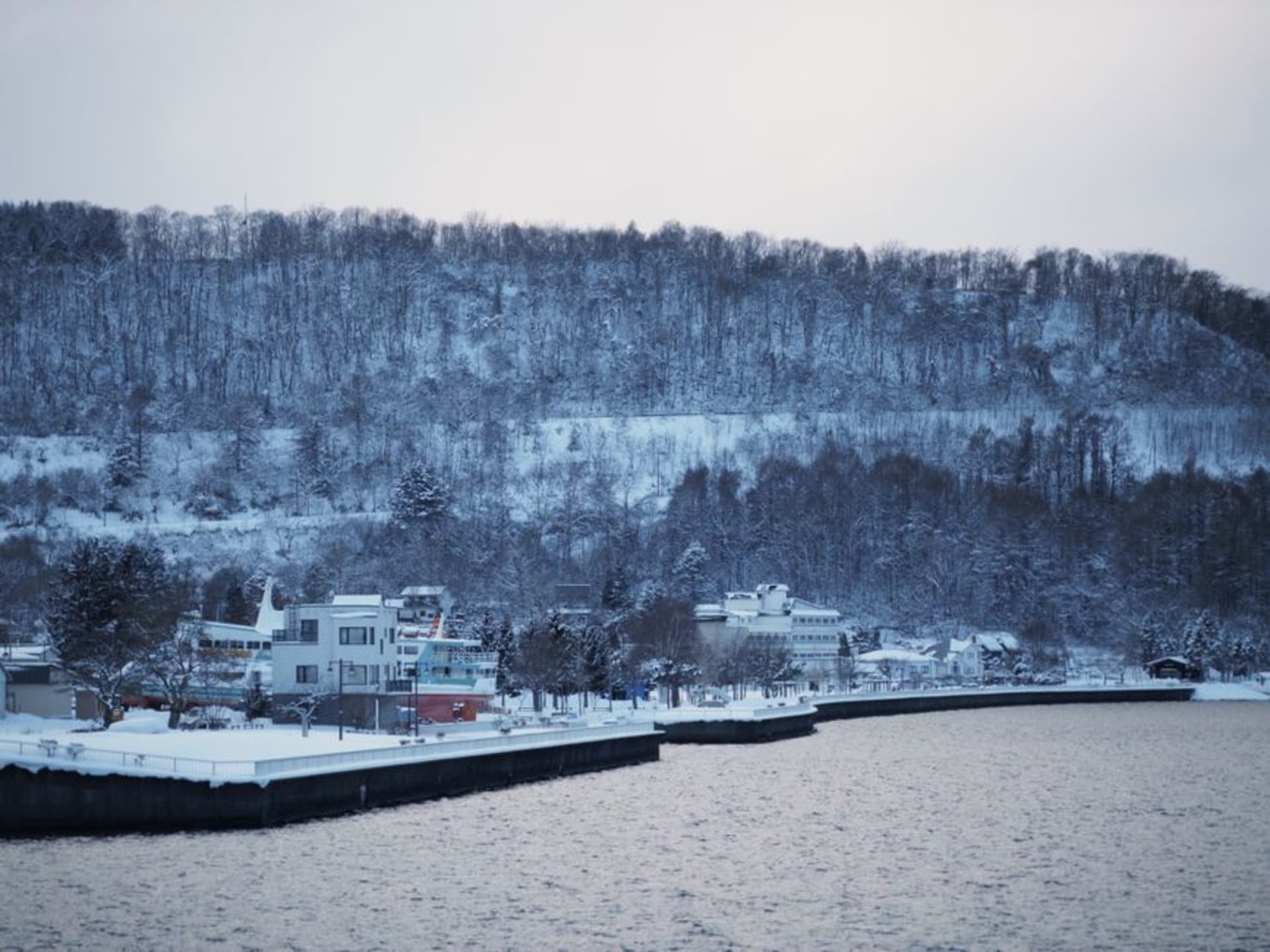
Lake Toya
"A lake shaped like a wound that healed into something beautiful — Toya doesn't let you forget it was made by violence."
A near-perfect volcanic caldera lake ringed by hot spring hotels and a still-restless volcano, where the water never freezes and the fireworks never really stop.
I came to Lake Toya expecting a pretty caldera lake and a night in an onsen hotel, the kind of stopover you plan between bigger destinations. What I hadn’t expected was Mount Usu, sitting just south of the water, still audibly working. You can walk the ropeway up to the Showa Shinzan side and look down into a landscape that erupted as recently as the year 2000 — steaming vents, cracked asphalt where a road buckled and was simply abandoned, a visitor center built to explain a disaster that reshaped the town twice in living memory. It’s strange to stand somewhere this calm and be handed a pamphlet about evacuation routes.
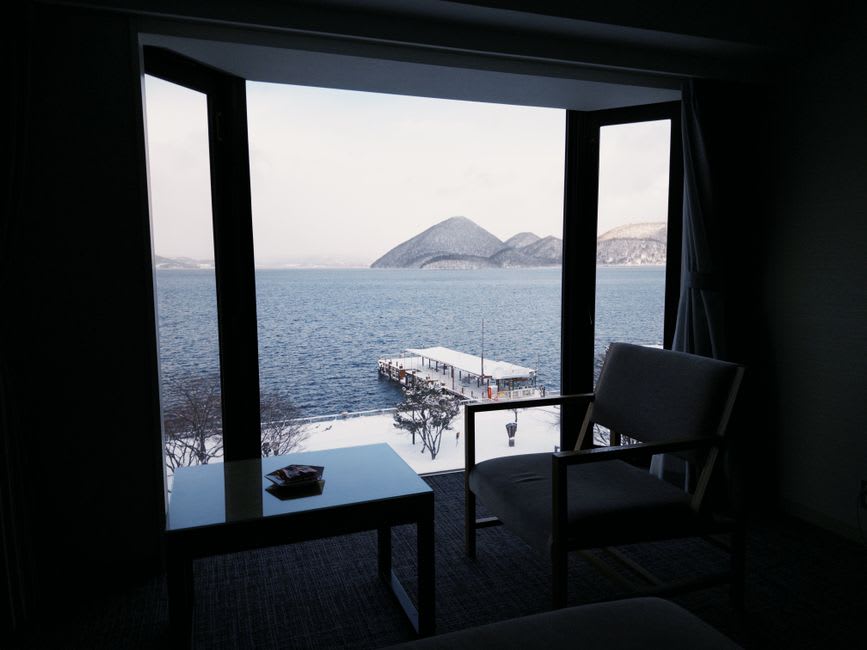
The lake itself is almost perfectly circular, the flooded remains of a caldera that collapsed roughly 110,000 years ago, with four small forested islands — the Nakajima group — sitting in the middle like the survivors of the original volcano’s summit. Because the water is deep and geothermally influenced, it doesn’t freeze even in the harshest Hokkaido winters, which gives Toyako Onsen, the resort town on the lake’s north shore, a slightly surreal quality in January: snow piled on every roof and railing, and in front of you a lake steaming faintly and refusing to ice over. I stayed at a modest hotel with an outdoor rotenburo looking straight across the water toward Mount Yotei, the conical volcano locals call “Ezo Fuji” for its resemblance to the real one, and sat in the hot water at dusk watching the color drain out of the sky in stages.
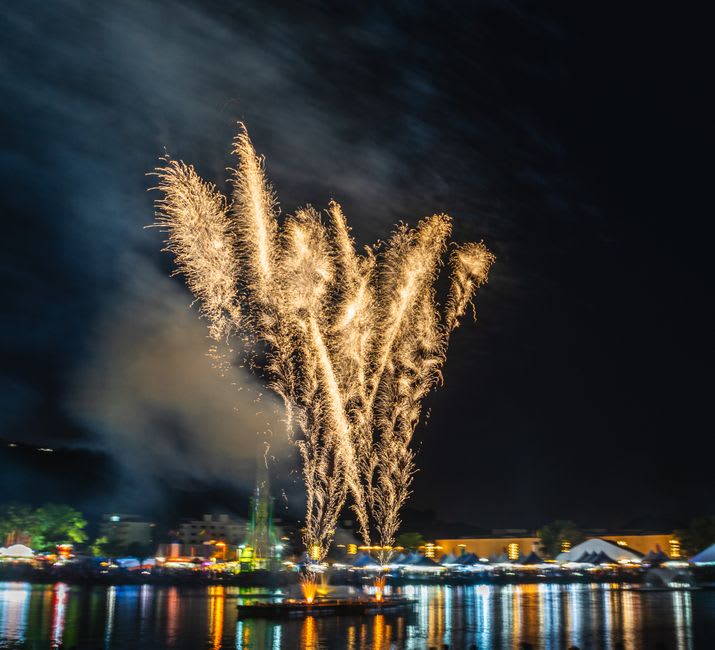
From late April through late October, the town sets off fireworks over the lake every single night, a tradition that started decades ago as a way to draw tourists and has become something closer to civic ritual. I watched from the hotel’s rooftop with a can of Sapporo Classic, the reflections doubling every burst on the flat black water, and felt the specific pleasure of a spectacle that happens whether or not you’re there to see it — no anticipation-building, no special-occasion pressure, just a town that has decided beauty on a schedule is still beauty.
When to go: Late April to October for the nightly fireworks and lake cruises; July and August for warm-weather hiking on Mount Usu’s rim. Winter has its own appeal — thermal steam over unfrozen water against heavy snow — but check that the ropeway is running, as high winds close it some days.