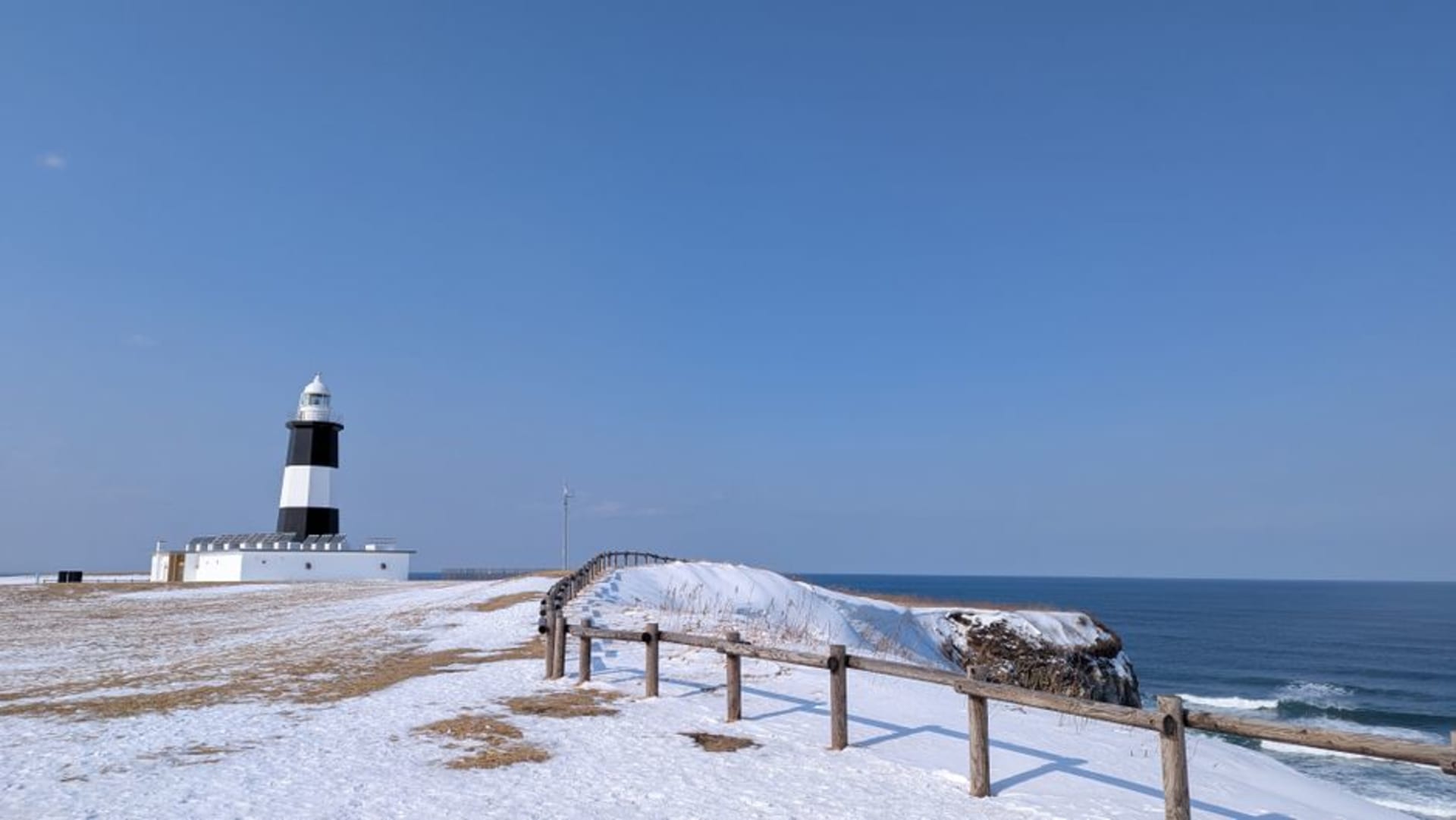
Cape Nosappu
"You can see the islands from here but not visit them — Cape Nosappu is Japan's easternmost point, and its most unresolved one."
The easternmost point of Japan proper, a low windswept cape near Nemuro where you can see the disputed Kuril Islands across the water and feel the quiet weight of a border still being argued over.
Cape Nosappu sits at the far eastern edge of Hokkaido, past the fishing city of Nemuro, and it’s a strange kind of tourist destination because most of what draws people there is a dispute rather than a view. On a clear day, standing at the cape’s lighthouse, you can see Kunashiri Island — part of the Southern Kuril chain, called the Northern Territories in Japan — sitting just a few kilometers offshore, administered by Russia and claimed by Japan in a dispute that dates back to the end of the Second World War and remains entirely unresolved. There’s a large monument here, the Northern Territories Memorial Hall, with an eternal flame and a museum laying out Japan’s position on the islands, and I walked through it feeling the specific discomfort of a conflict that isn’t mine but is clearly, locally, still raw — Nemuro’s economy was built partly on fishing grounds around those islands, and older residents I spoke with in town still referred to relatives who’d been evacuated from Kunashiri as children in 1945.
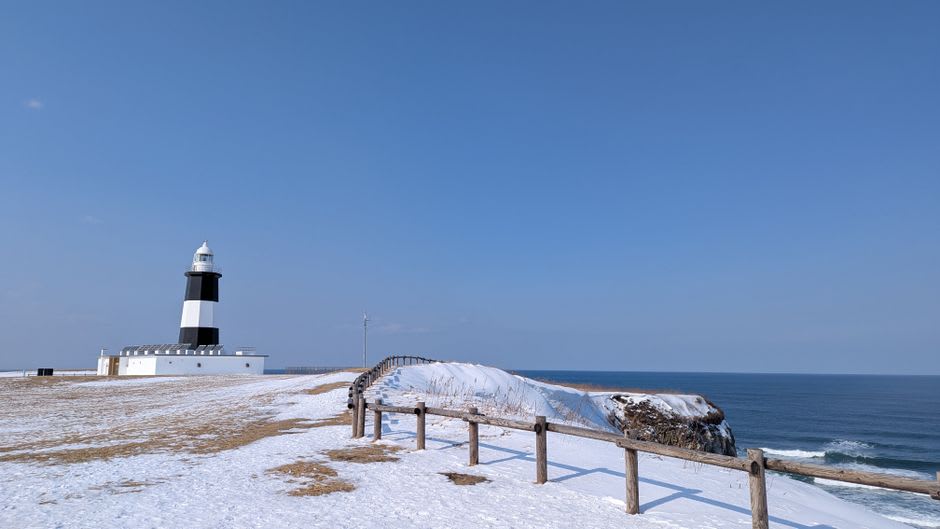
Setting the politics aside, the cape itself is a genuinely beautiful, bleak stretch of low grassland dropping to rocky shore, with none of the drama of Erimo’s wind or Soya’s monument scale — just a flat, quiet edge of the country with a red-and-white lighthouse and gulls circling low. I came in early autumn and had the place almost entirely to myself, walking the short path around the point while the wind pushed steadily off the water, cold enough that I regretted not bringing a heavier jacket despite the season.
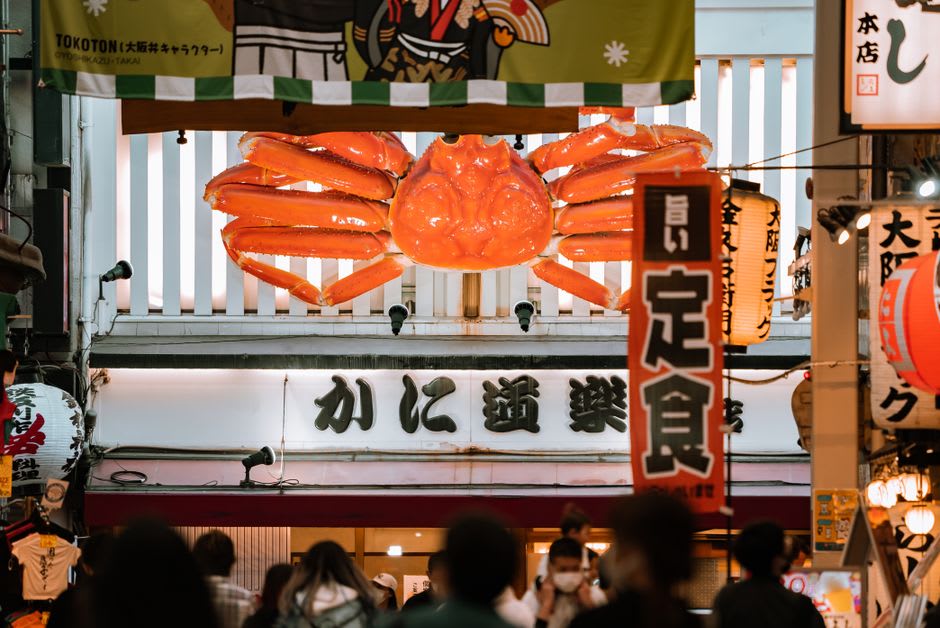
Nemuro city itself, the actual base for visiting the cape, is a working fishing port known for its saury and crab, and I ate an excellent bowl of kani-don — fresh crab meat piled loosely over rice, no filler, no sauce beyond a little soy — at a stall near the fish market, the crab so fresh and sweet it needed nothing else. The port has the particular unhurried grit of towns that exist for an industry rather than for visitors, fishing boats stacked with crab pots along the docks, and it made the political weight of the cape a few kilometers away feel even stranger by contrast — an ordinary, hardworking town sitting right up against one of Japan’s most sensitive unresolved borders.
When to go: May through October for the clearest visibility across the strait and milder coastal wind. Winter brings dramatic ice floes further along the Nemuro coast but conditions at the cape itself turn severe.
Keep exploring
More from Hokkaido
 hokkaido
 Cape Soya
The northernmost point of Japan, a windswept monument at the end of a long straight road where you can see Russia on a clear day and feel how far you've actually come.
Explore hokkaido
 Daisetsuzan National Park
Japan's largest national park and the roof of Hokkaido, where autumn arrives first in the whole country and brown bears still outnumber the hikers on some trails.
Explore hokkaido
 Furano
In late June the lavender floods these hillsides with a purple so concentrated it seems wrong until you're standing inside it breathing it in.
Explore hokkaido
 Hakodate
A port city at Hokkaido's southern tip where ikura glistens on morning rice and a colonial skyline climbs the hillside above the fog.
Explore hokkaido
 Kushiro Wetlands
Japan's largest wetland stretches under enormous skies where red-crowned cranes perform their courtship dances in the snow and the silence is the loudest thing.
Explore hokkaido
 Lake Toya
A near-perfect volcanic caldera lake ringed by hot spring hotels and a still-restless volcano, where the water never freezes and the fireworks never really stop.
Explore