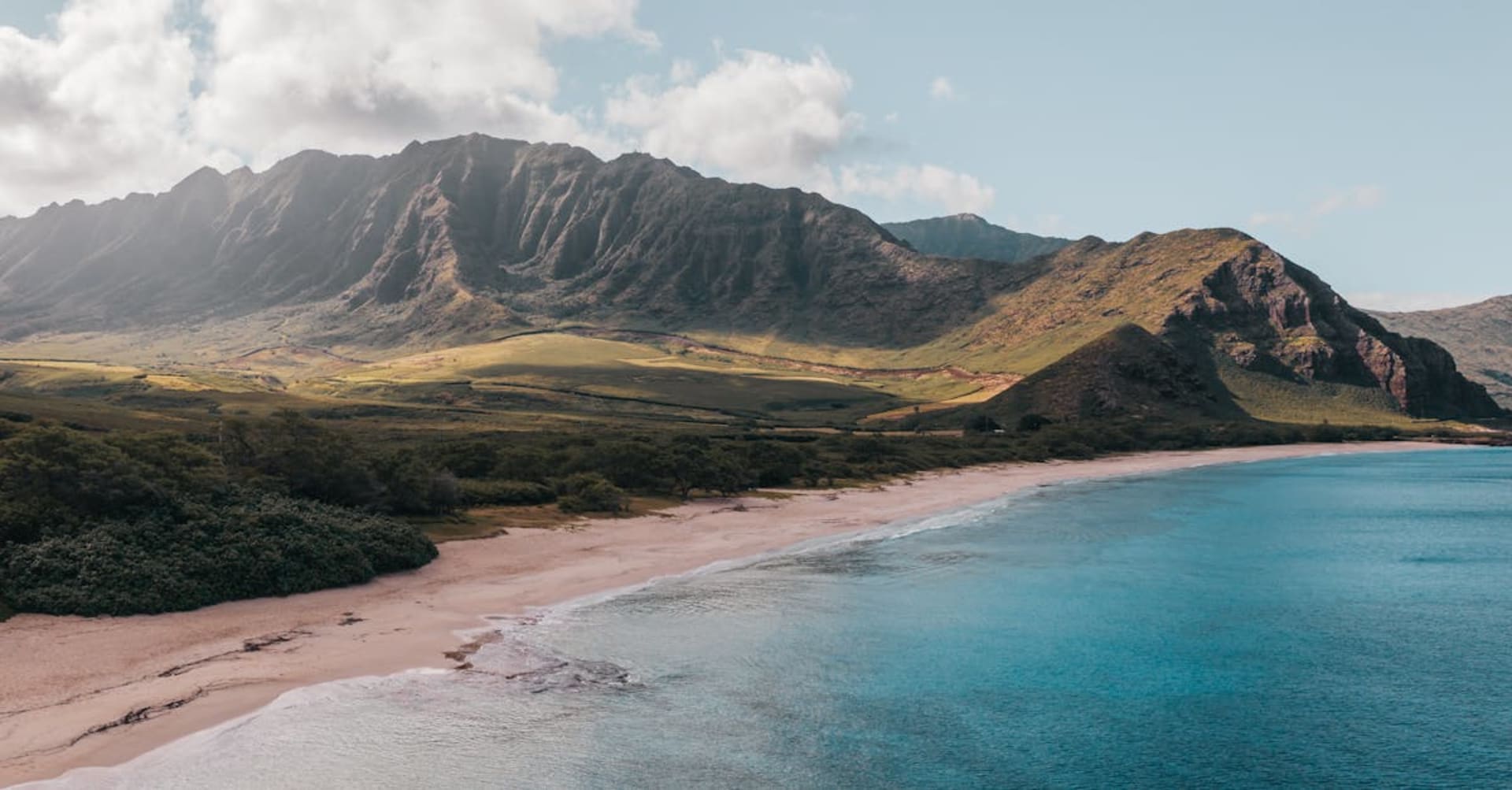
Maui occupies the middle ground of the Hawaiian chain — more developed than the Big Island, less urban than O’ahu, more accessible than Kaua’i. It is the island that works for almost everyone: world-class snorkeling, a 3,000-meter volcano, a legendary coastal drive, whale watching in season, and enough good restaurants and comfortable hotels to satisfy the traveler who wants adventure and a proper dinner.
Haleakalā at sunrise is the defining Maui experience. Drive up in the dark — the road climbs from sea level to the summit in ninety minutes through climate zones that shift from tropical to alpine. At the top, you stand above the clouds at the rim of a crater that looks like Mars. The sunrise is not just beautiful — it is spiritual in a way that transcends the word. The Hawaiians named it “House of the Sun” and the name is not poetic license.
The Road to Hana is a 100-kilometer drive along the northeast coast: 620 curves, 59 bridges, waterfalls at every turnout, black-sand beaches, bamboo forests, and tropical gardens. The destination (Hana) is secondary to the drive itself. Stop at the Wai’anapanapa black sand beach, hike to the Waimoku Falls through the Pipiwai bamboo forest, and swim in the Pools of ‘Ohe’o.
West Maui — Lahaina, Ka’anapali, Kapalua — is the resort coast. The snorkeling at Molokini crater (a partially submerged volcanic caldera offshore) is exceptional, and whale watching from December to April is among the best in the world — humpbacks migrate to the shallow waters between Maui and Lana’i to calve.
Upcountry Maui — the slopes of Haleakalā above Paia — is farm country: lavender fields, goat cheese producers, and a slow, pastoral atmosphere that feels nothing like the coast.
When to go: April to June or September to November. Winter is whale season but also peak tourist season. The Road to Hana is best in the dry months to avoid mudslides.