Huangguoshu Waterfall
"I have stood in front of famous things that disappointed. Huangguoshu did not disappoint."
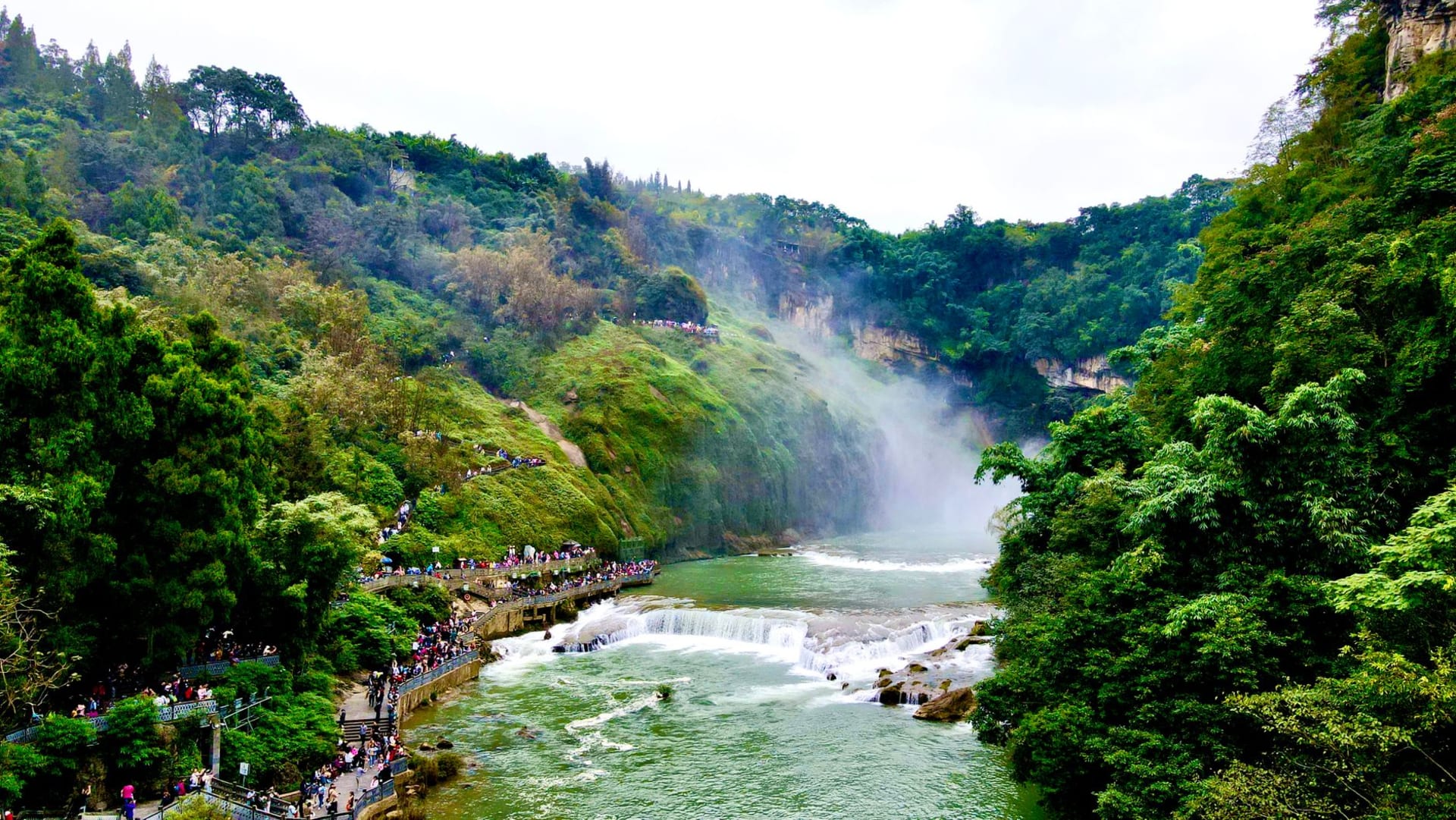
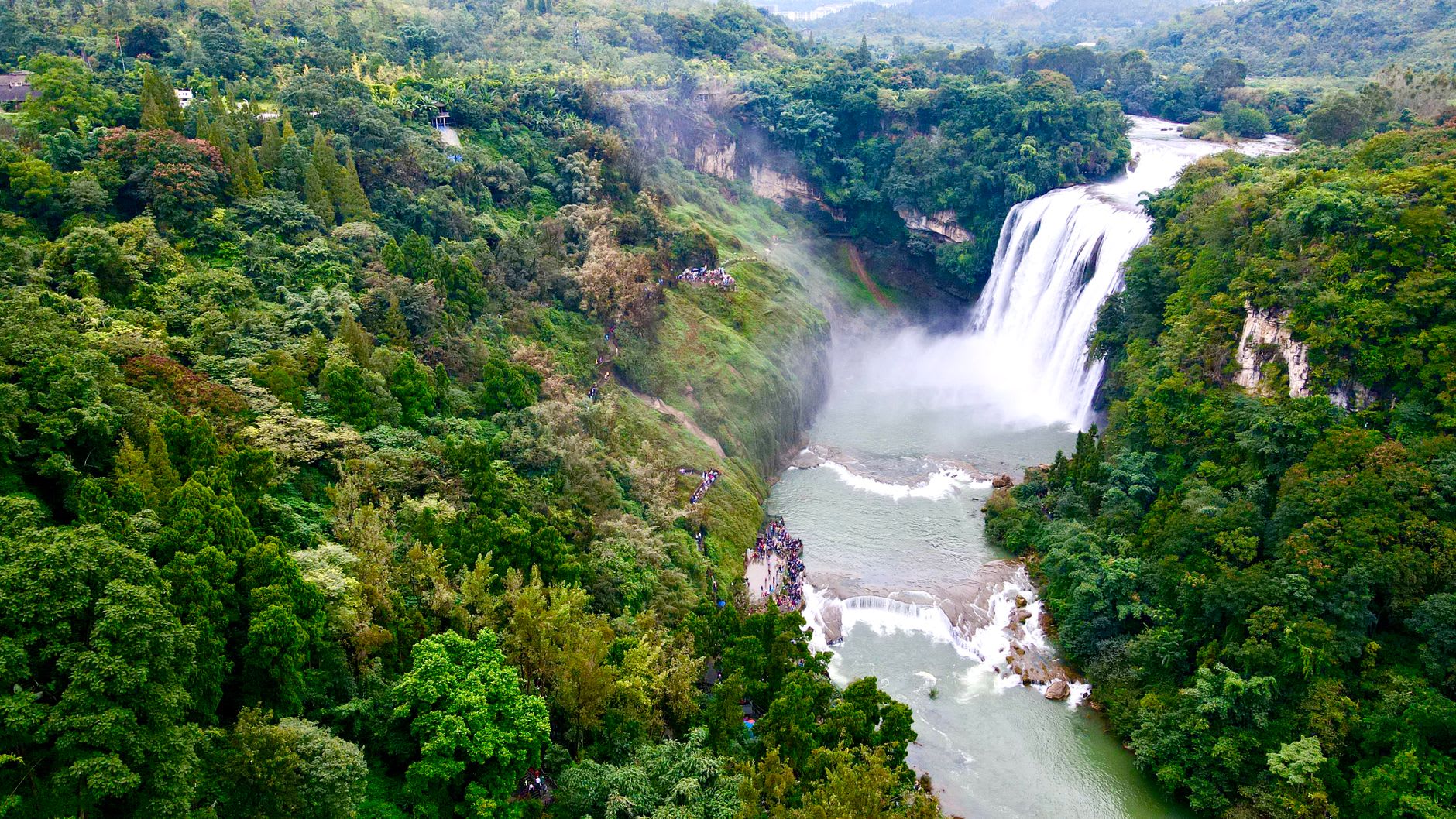
I had built up the kind of skepticism that ruins waterfalls. Too many bus trips to scenic overlooks that turned out to be merely large, too many photos that lied about scale. And then I walked around the final bend in the path at Huangguoshu and stopped moving entirely. The falls are seventy-seven meters tall and a hundred and one meters wide, and those numbers mean nothing until you are standing in their spray, your clothes damp, your voice useless against the noise, your brain simply refusing to process something that large as scenery.
The approach from the ticket gates takes about twenty minutes on a paved path through subtropical forest, and the falls announce themselves in stages. First the sound — a low, continuous thunder that you feel in your chest before you consciously register it. Then the mist, which arrives as a kind of intensification of the air, everything suddenly more humid, the light diffracting into small rainbows when the angle is right. Then the thing itself: a curtain of white water dropping off a limestone ledge so wide it seems to belong to a different scale of landscape than the one you have been walking through.
What makes Huangguoshu genuinely unusual among famous waterfalls is the cave behind it. The Shuilian Cave runs 134 meters through the rock face directly behind the falls, with six windows cut through the cliff wall that look directly into the curtain of falling water from the inside. I stood in one of those windows and watched the water pass two meters in front of my face, a solid moving wall with the gorge visible in glimpses through the white, and felt a very particular kind of vertigo — not the fear of falling but something closer to the sensation of being inside a living thing.
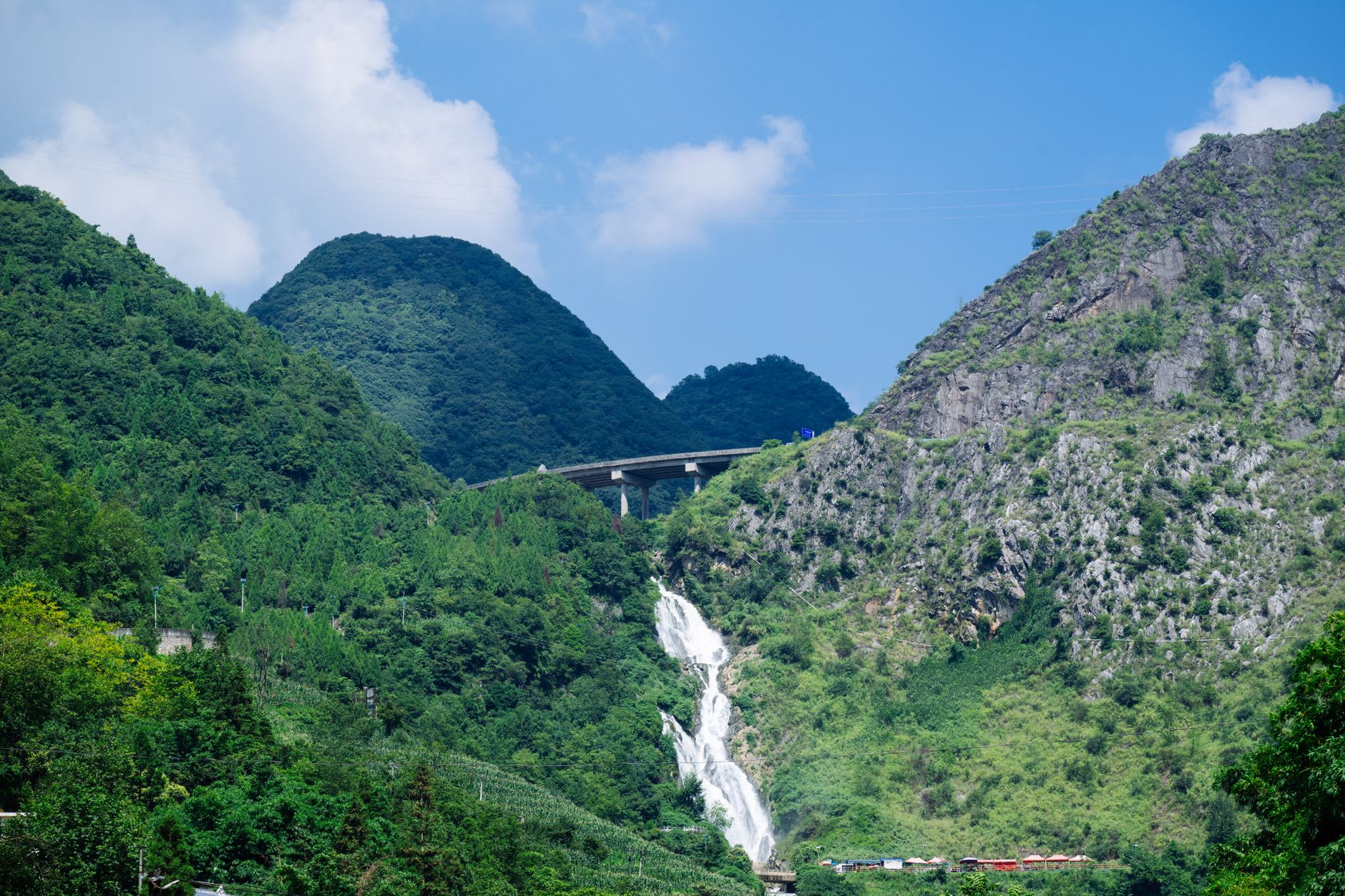
The surrounding Huangguoshu Scenic Area contains eighteen waterfalls in total, connected by trails through karst valleys that are largely empty of other visitors once you move beyond the main falls. Doupotang Falls, twenty kilometers downstream, is lower but wider and can be viewed from a path that runs directly across its lip — an extraordinary configuration where you walk across a flat stone ledge with water flowing past your feet and dropping forty meters below you into a pool the color of turquoise glass.
The crowds at the main falls are real and they are dense in summer, arriving on tour buses from Guiyang and Anshun and pouring along the main paths in a way that makes contemplation difficult. The solution is simple: arrive before eight in the morning or after four in the afternoon, when the light is better anyway and the tour groups have moved on to their lunch buffets. I walked the lower viewing platform at five in the afternoon with perhaps thirty other people, the light slanting through the gorge at an angle that made the mist glow, and had one of those moments of genuine awe that travel occasionally produces despite itself.
Anshun, the nearest city, makes a serviceable base and has its own interest — a historic market town that was once a major trade junction, with a Tunpu culture descended from Ming dynasty military settlers that is entirely distinct from the surrounding Miao and Buyi communities.
When to go: June through August sees the falls at peak flow — genuinely spectacular but also maximum crowds and intense humidity. The sweet spot is May, when the water runs high from spring rains but the tour groups have not yet peaked, or September and October, when the flow is still strong and the surrounding forest begins to turn. Avoid winter — the falls diminish significantly in the dry season and the karst landscape loses its lushness.