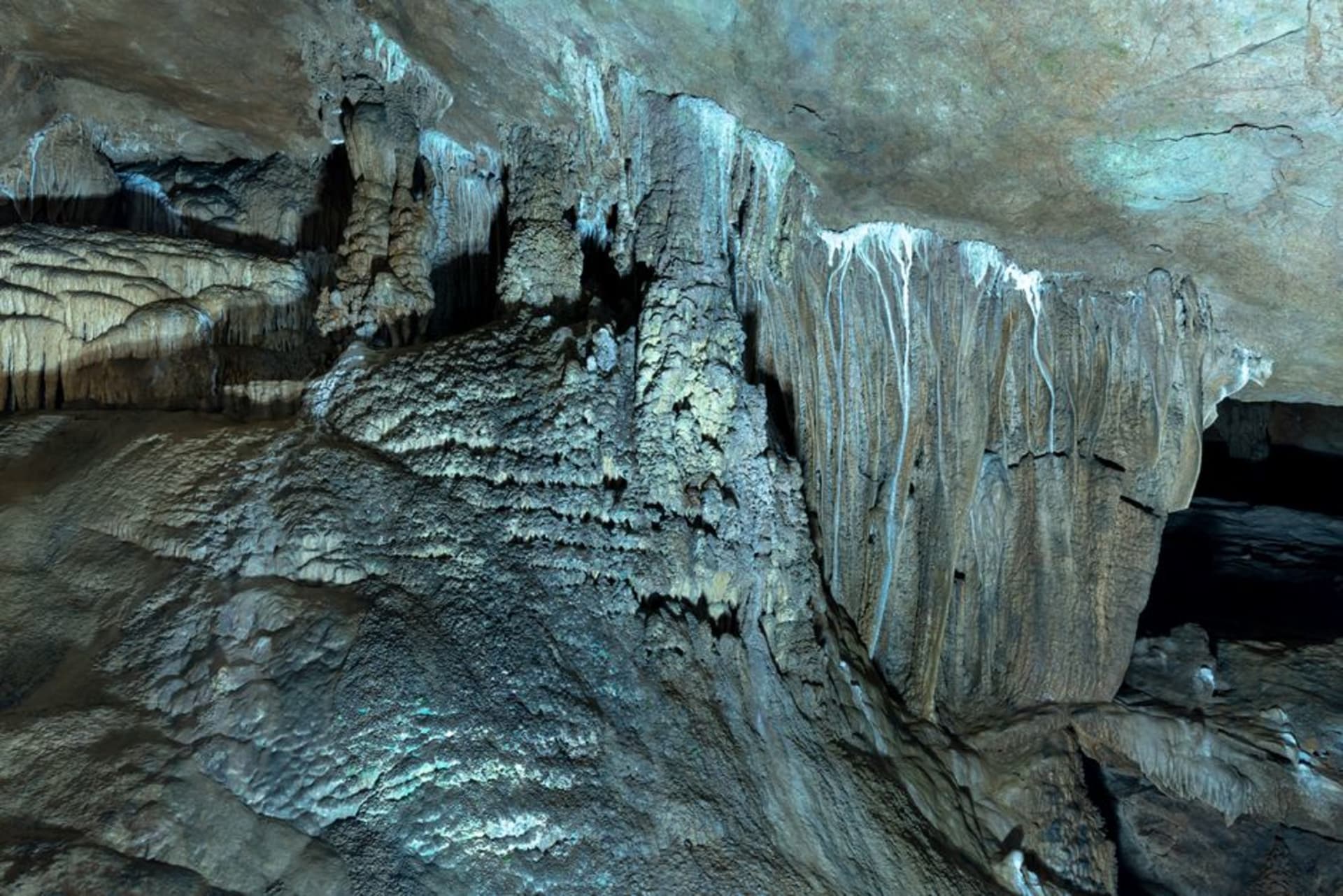
A karst cave near Lipu where calcite formations glint like metal under the lights, far from Guilin's crowded tourist circuit.
Lia found Silver Cave the way she finds most of our best detours — by scrolling past the obvious answer. Everyone who comes to Guilin gets pointed toward Reed Flute Cave, and for good reason, but we’d read that Yinzi Yan, down near Lipu south of Yangshuo, only opened to visitors in the 1990s and still barely registers on most itineraries. That was enough for us. We hired a driver for the morning, watched the karst peaks roll by out the window, and arrived to find maybe a dozen other people at the entrance instead of the busloads I’d braced for.
The name makes sense the moment you’re inside. Under the colored lighting, the calcite formations don’t look golden or amber like I expected from cave photos — they have this cool, almost metallic sheen, like someone had brushed the stalactites with mercury. I kept touching the guardrail without meaning to, just to convince myself the walls weren’t actually made of something more solid than stone. The walking route is close to a kilometer, threading through several big chambers linked by passages so narrow Lia had to duck her head, and every time we came out into an open room it felt like a reveal, like the cave was pacing itself on purpose.
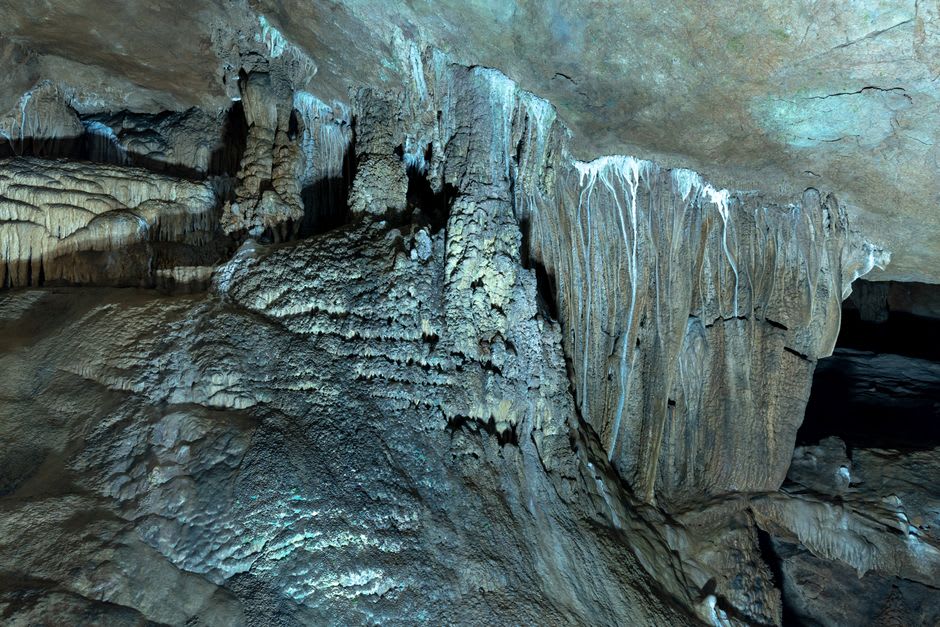
What got me most was the flowstone — those wide, rippled curtains of calcite that look like fabric caught mid-fall, built up drop by drop over what our guide said was hundreds of thousands of years. I stood in front of one formation for a good five minutes doing the math in my head and giving up, because nothing about that timescale actually fits into a human brain. Lia just took photo after photo, trying to catch the way the light moved across the ridges as we shifted position. None of them did it justice, but I don’t think any camera could.
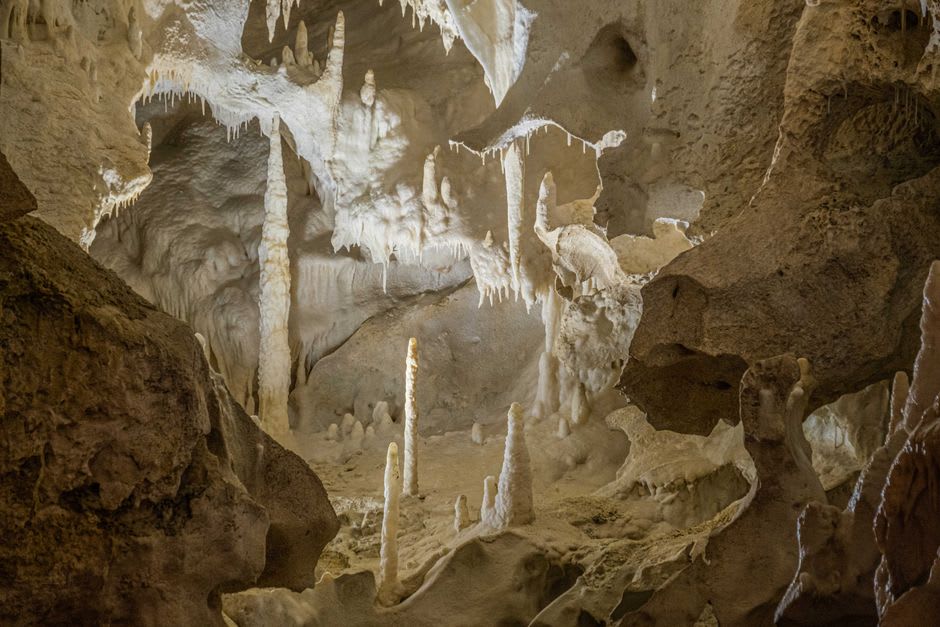
By the time we climbed back out into the daylight, my shirt was damp and my knees were grateful for flat ground again, but I remember feeling almost smug about how quiet it had all been. No shuffling lines, no waiting for a tour group to clear a chamber before we could get a clean photo — just us, the dripping water, and a thousand meters of rock that had taken longer to form than human history has existed.
When to go: We went in November and were glad of it — the cave stays humid no matter the season, but pairing it with cooler, drier air outside made the whole visit far more comfortable than a sticky summer afternoon would have been.