Tikal was once one of the largest cities in the Maya world — at its peak around 700 AD, it was home to perhaps 100,000 people, a rival to Calakmul and a centre of trade, warfare, and astronomical calculation. Today it rises from the Petén jungle in northern Guatemala, its limestone temples piercing the canopy, its plazas reclaimed by roots and moss, its silence broken only by howler monkeys and toucans.
I have visited Tikal twice — once as a day trip from Flores, once staying overnight at the Jungle Lodge inside the park. The second visit was the right one. Tikal at dawn, before the buses arrive, belongs to the animals and the ghosts. The paths through the forest are dark and full of sounds — spider monkeys crashing through the canopy, the prehistoric screech of a keel-billed toucan, the distant thunder of howler monkeys warming up for their morning performance. You walk through a city that was abandoned a thousand years ago and the jungle has never stopped trying to take it back.
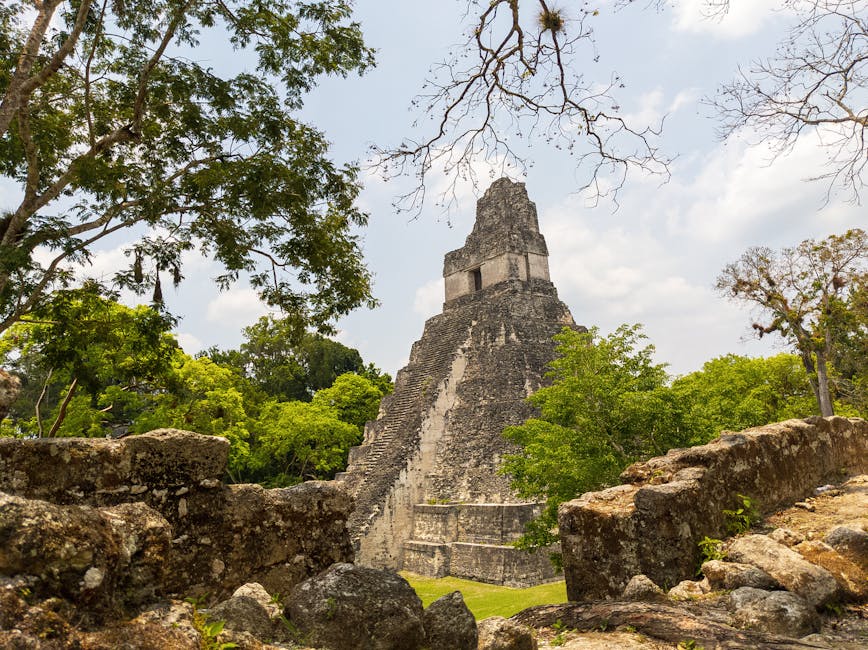
Temple IV at dawn is the essential Tikal experience. Climb the wooden stairs in the dark, sit on the platform 65 meters above the jungle floor, and wait. The sun rises over an unbroken canopy stretching to the horizon. The tops of Temples I, II, and III emerge from the trees like stone islands. Howler monkeys begin their morning call — a sound that carries for miles and is simultaneously terrifying and magnificent. You are sitting on top of a twelve-hundred-year-old structure watching the same sunrise the Maya priest-kings watched. It does not get more atmospheric than this. I sat there for ninety minutes on my second visit. I could have sat there all day.
The Gran Plaza — flanked by Temple I (Temple of the Great Jaguar) and Temple II (Temple of the Masks) — is the heart of the archaeological site. The scale is immense but human: you can still see the individual chisel marks on the carved stelae, the traces of red paint that once covered the temples, the astronomical alignments built into every angle. A good guide — and you should hire one — will decode the glyphs on the stelae and bring the dynastic rivalries to life: Tikal versus Calakmul, the great wars of the seventh century, the rulers whose names we can now read after centuries of silence.
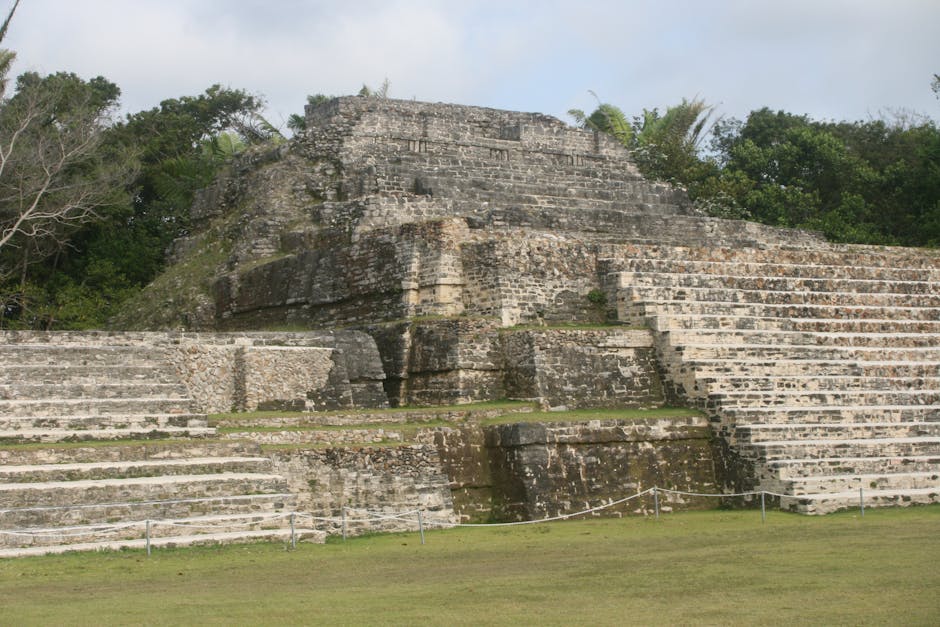
The jungle itself is as much a draw as the ruins. Tikal is set within the Maya Biosphere Reserve — the largest tropical forest north of the Amazon. Spider monkeys, coatimundis, ocellated turkeys, and if you are extraordinarily lucky, a jaguar. The Mundo Perdido (Lost World) complex, away from the main tourist circuit, is where the wildlife concentrates — I saw a family of white-nosed coatis crossing a plaza that was once the ceremonial heart of a civilization, their tails raised like question marks against the limestone.
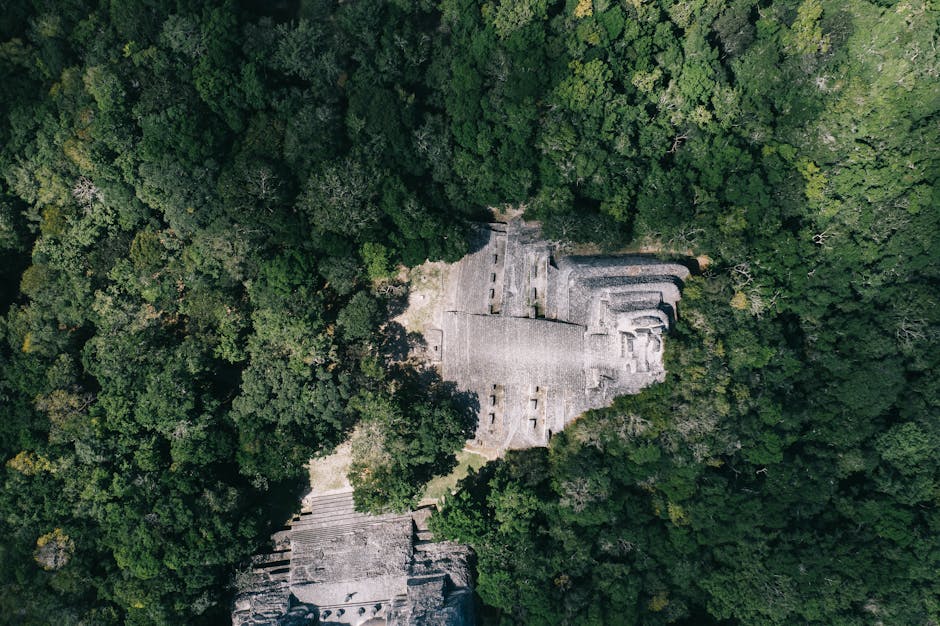
The remote temples — Temple VI (the Temple of the Inscriptions), the trail to the Complejo N — reward those who wander beyond the central zone. The paths narrow, the canopy closes overhead, and the unexcavated mounds on either side remind you that what has been cleared and restored is a fraction of what lies beneath the roots.
Flores and Lake Petén Itzá — the nearby town and lake — are worth a night or two. Flores is a small island connected by a causeway, with waterfront restaurants and a low-key charm that contrasts with the archaeological grandeur.
When to go: November to April. February and March are the driest months. Arrive at the park at 6am for the dawn experience — or better yet, stay overnight inside the park. Afternoon visitors see a different, hotter, more crowded Tikal that is not the real Tikal at all.