Quetzaltenango
"The city where Guatemala works. No performance, no postcards, just altitude and honesty."
Everyone calls it Xela. The full name — Quetzaltenango — is a mouthful even by Guatemalan standards, and the city itself has the same quality: too much to take in at first, but deeply rewarding once you settle into its rhythms. This is Guatemala’s second city, set at 2,330 meters in a valley ringed by volcanoes, and it operates at a pace and a temperature that the lowlands cannot match. The mornings are cold — genuinely cold, wool-sweater-and-coffee cold — and the city wakes slowly, with the smell of fresh bread drifting from the panaderías and the sound of marimba filtering from somewhere you cannot quite locate.
Xela is where serious travelers come to learn Spanish. The language schools here — Celas Maya, ICA, Pop Wuj — are among the best in Latin America, and the homestay programs place you with K’iche’ Maya families who feed you three meals a day, correct your subjunctive over breakfast, and teach you more about Guatemala in a week than a month of independent travel could manage. I spent two weeks here on my first trip to Guatemala, living with a family in Zona 1, and it remains one of the most formative travel experiences of my life.
The Parque Central is the heart of the city — a neoclassical plaza ringed by the cathedral, the municipal theatre (the Teatro Municipal, a stunner of early twentieth-century grandeur), and the Pasaje Enríquez, a covered arcade with cafés that have been serving espresso since before specialty coffee was a concept. The market — La Democracia — is enormous, chaotic, and authentic in a way that Antigua’s market is not. This is where Xela shops, eats, and negotiates, and the comida corrida stalls on the second floor serve some of the best cheap meals in the country.
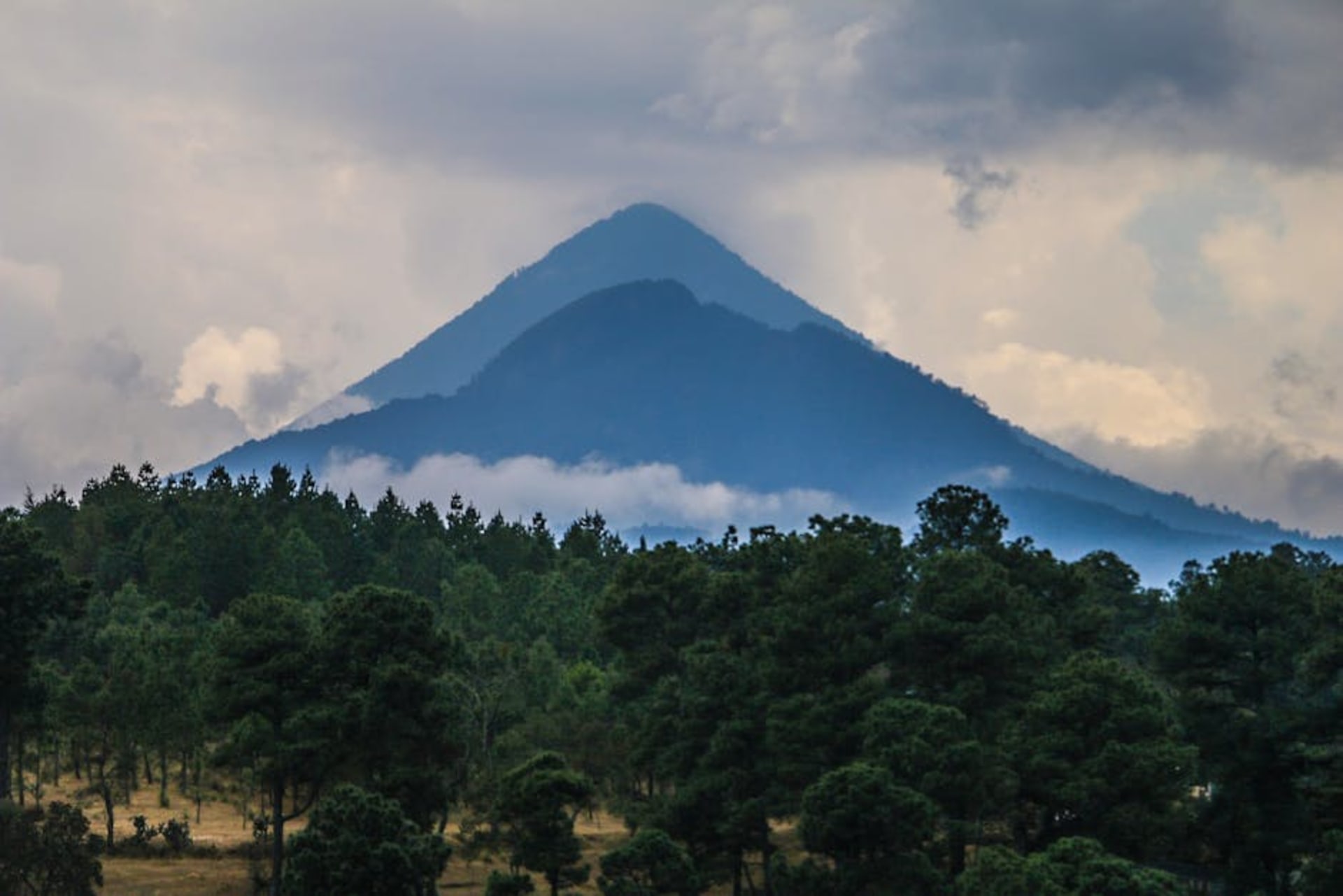
The volcanoes are the other draw. Volcán Santa María (3,772m) is a punishing but achievable day hike with views over the entire western highlands. From the summit you can look down at Santiaguito, one of the most active volcanoes in Central America, which erupts every hour or so with a plume of ash and steam that is both beautiful and deeply unsettling from a distance of two kilometers. The Fuentes Georginas — volcanic hot springs set in a cloud forest valley twenty minutes from the city — are where Xela goes to recover. The pools are steaming, the forest drips, and the admission is negligible.
What I love most about Xela is its indifference to tourism. This is a working city — students, markets, industry, politics — and it does not rearrange itself for visitors. You are welcome, but you are not the point. After the performative charm of Antigua, that honesty is refreshing.
When to go: September to November for cultural festivals (Feria Centroamericana de Independencia in September is extraordinary). January to March for hiking. Pack warm layers — nights drop below 5°C.