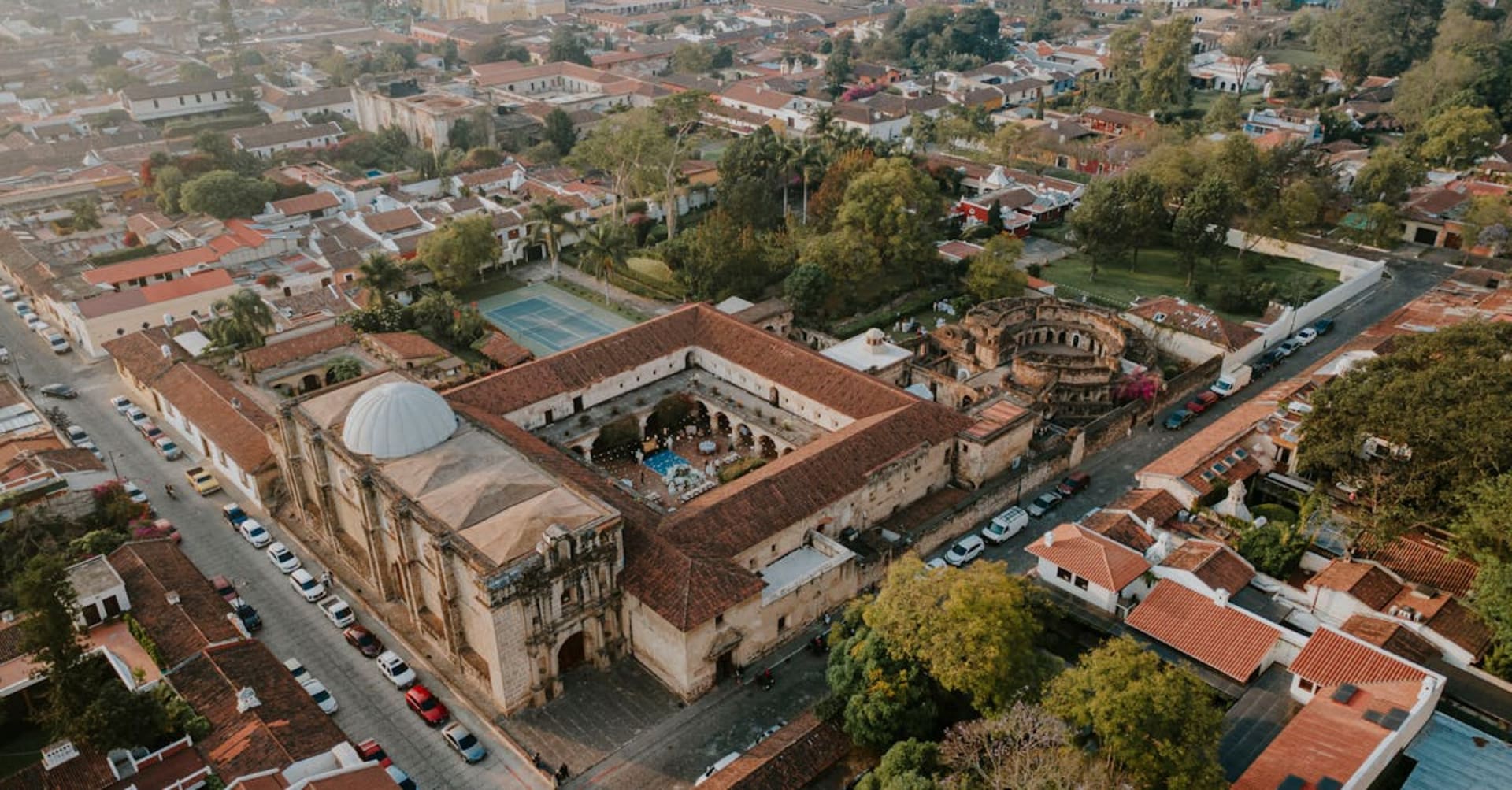
Antigua Guatemala
"In Antigua every ruin is still beautiful, and every beauty carries the weight of its ruin."
Cobblestone streets, crumbling baroque convents, and active volcanoes on the horizon — Antigua never lets you forget time.
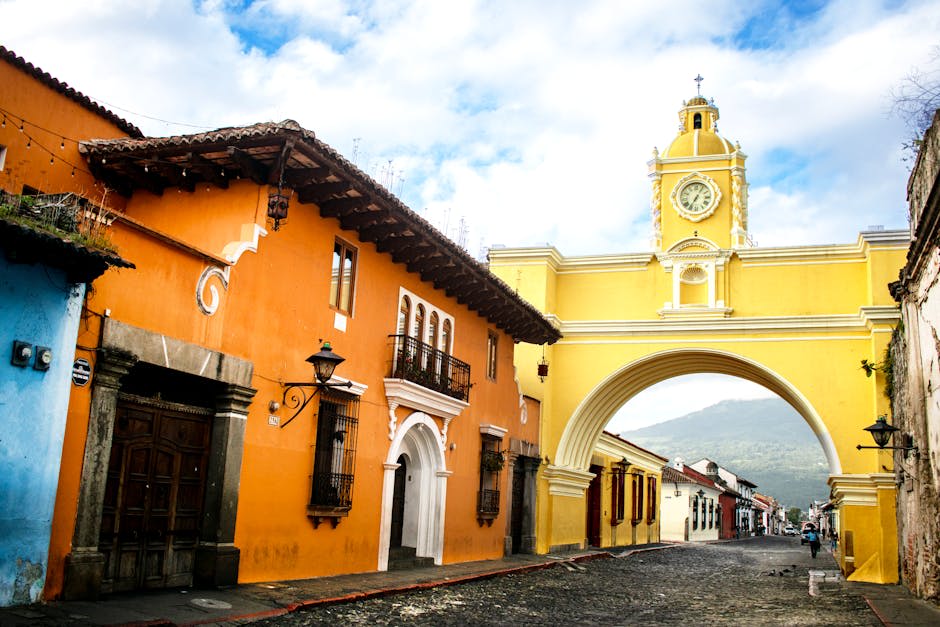
The cobblestones on 5a Avenida Norte are uneven enough that you watch your feet, which means you almost miss the moment the Santa Catalina arch lines up exactly with Volcán de Agua behind it — that green, sleeping cone so close it seems painted there, a backdrop someone decided was too theatrical and used anyway. Antigua does that constantly. It gives you a postcard and then, before you’ve finished processing it, something older and stranger slides into frame.
Ash and Incense
We arrived on a Tuesday morning when the market vendors near Calle del Arco were still laying out their textiles — corte cloth folded into bricks of indigo and crimson — and the air already carried that particular Antigua mixture: woodsmoke, copal incense drifting from a church door, and something frying in oil nearby. Probably pepián, or a pot of black beans. The city smells like ceremony and breakfast in equal measure, and I couldn’t always tell which was which.
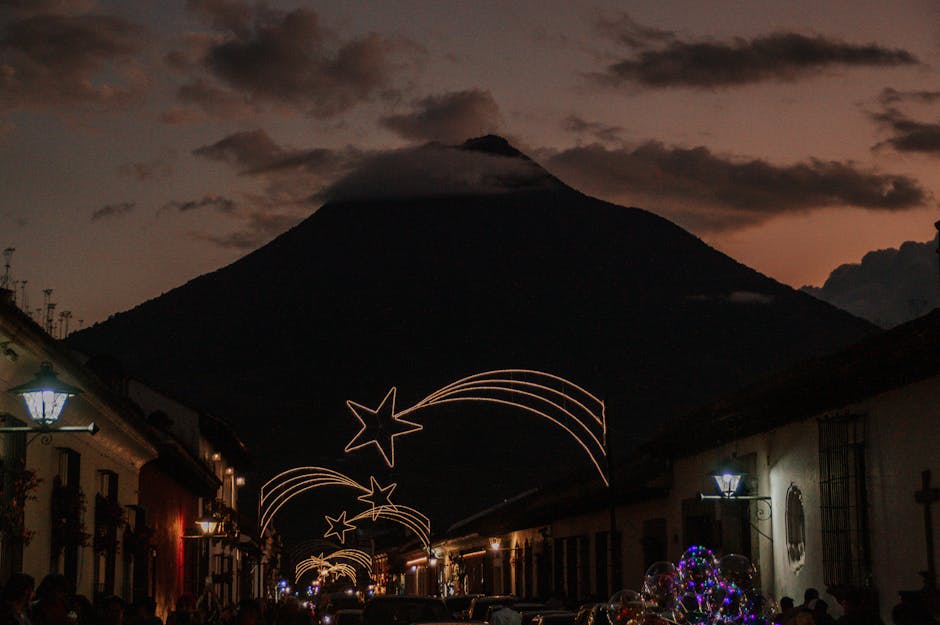
The ruins here aren’t fenced off or sanitized. The Convento de la Recolección stands in partial collapse, its nave open to the sky, and you walk through it the way you’d walk through a public garden — casually, almost guiltily — with bougainvillea climbing the broken walls and a dog asleep against a pillar that has been there since the 1717 earthquake knocked the first version of this building flat. It isn’t sad. It’s something closer to respect: for the stone, for whoever stacked it, for the forces that brought it down.
A Rehearsal on Alameda de Santa Rosa
The surprise came on our second evening, down a side street off Alameda de Santa Rosa, where we found a marimba ensemble rehearsing in someone’s open courtyard. Not a tourist performance — a working rehearsal, with a man stopping the group every few bars to correct the rhythm on a difficult passage. Lia grabbed my arm and we stood at the gate for ten minutes without anyone asking us to leave or pay. The marimba has a resonance that sits low in the chest, more wooden and warmer than I expected, and it seemed exactly right for a city where everything beautiful is also slightly unfinished.
Eating at Altitude
At 1,500 meters the evenings cool fast. We found a small comedor on 6a Calle Poniente — no sign outside, plastic chairs, a handwritten menu — and ordered pepián verde with chicken and a stack of blue corn tortillas pressed to order. The sauce was thick with toasted pumpkin seeds and tomatillo, earthy in a way that greenhouse produce never manages. It cost less than a coffee in Mexico City. Walking back through the Plaza Mayor afterward, the cathedral lit up yellow against the dark and the volcano reduced to a silhouette, I felt the particular satisfaction of having eaten exactly the right thing in exactly the right place.
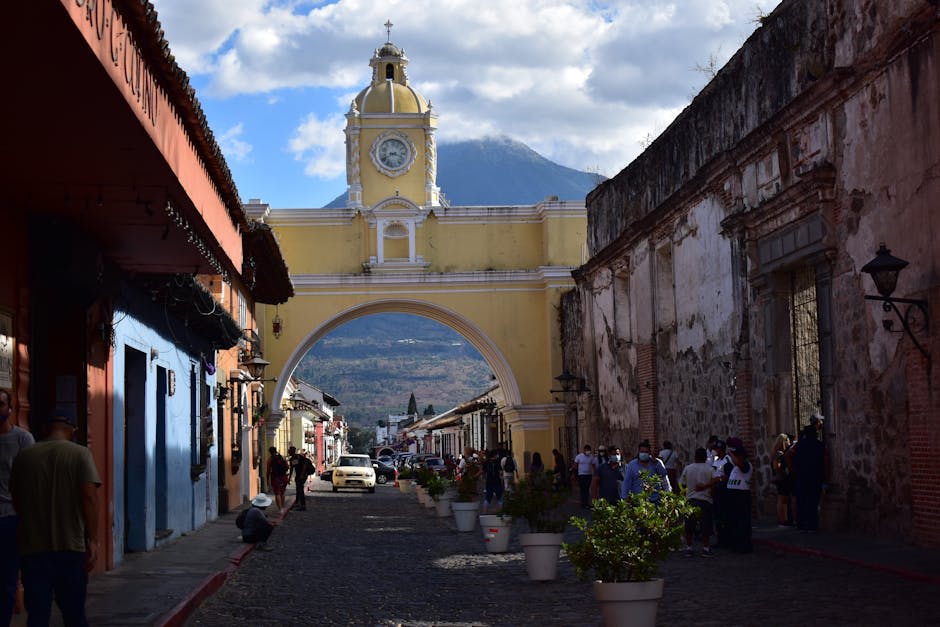
When to go: The dry season runs November through April and offers the clearest views of the surrounding volcanoes; Semana Santa fills every street with intricate sawdust carpets and candlelit processions, and is worth the crowds if you book lodging several months in advance.