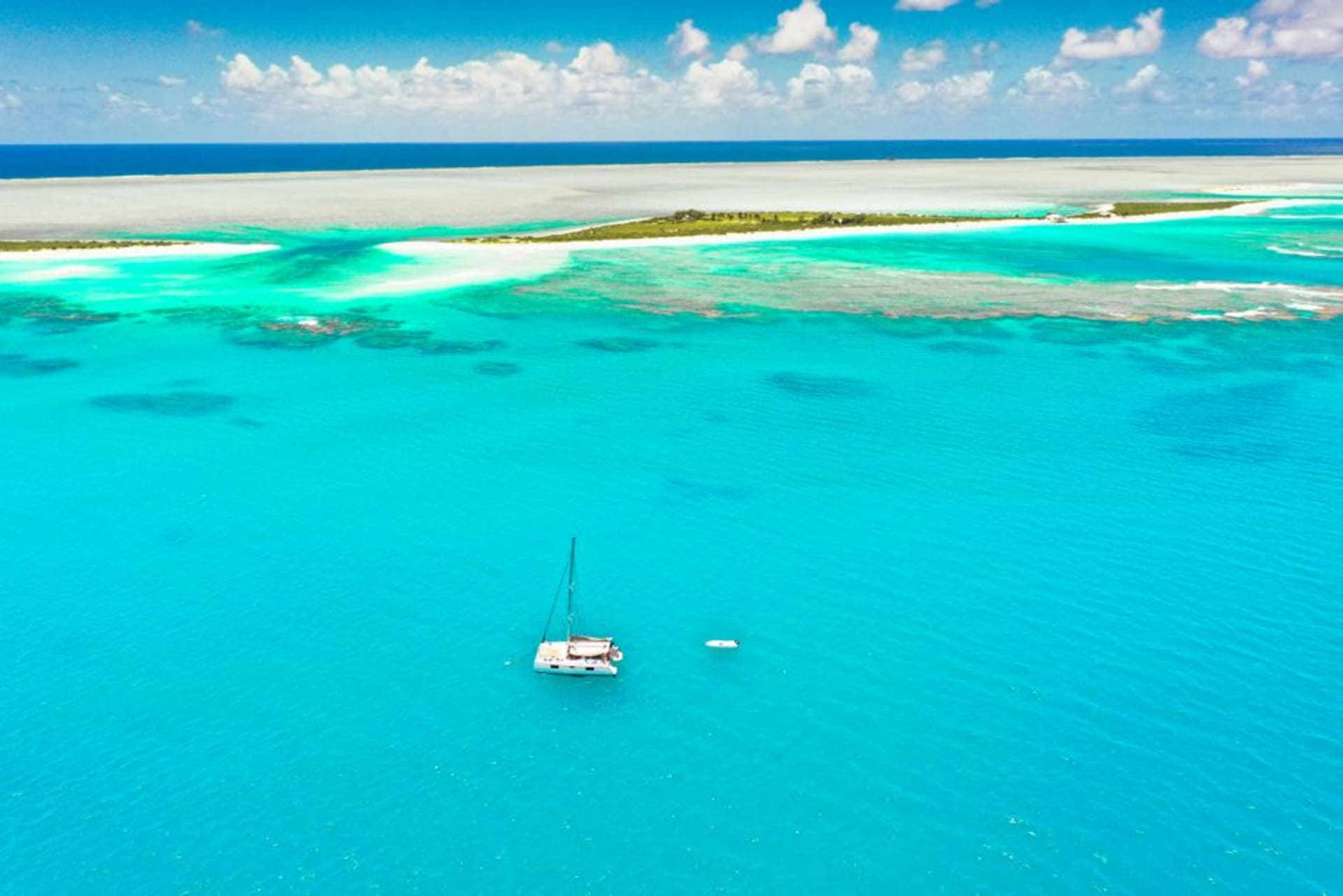
Grand Cul-de-Sac Marin
"The lagoon that taught me to stop looking for the horizon and start looking down."
A vast mangrove-fringed lagoon between Guadeloupe's two wings, where wooden fishing cabins stand on stilts and manatees still hide.
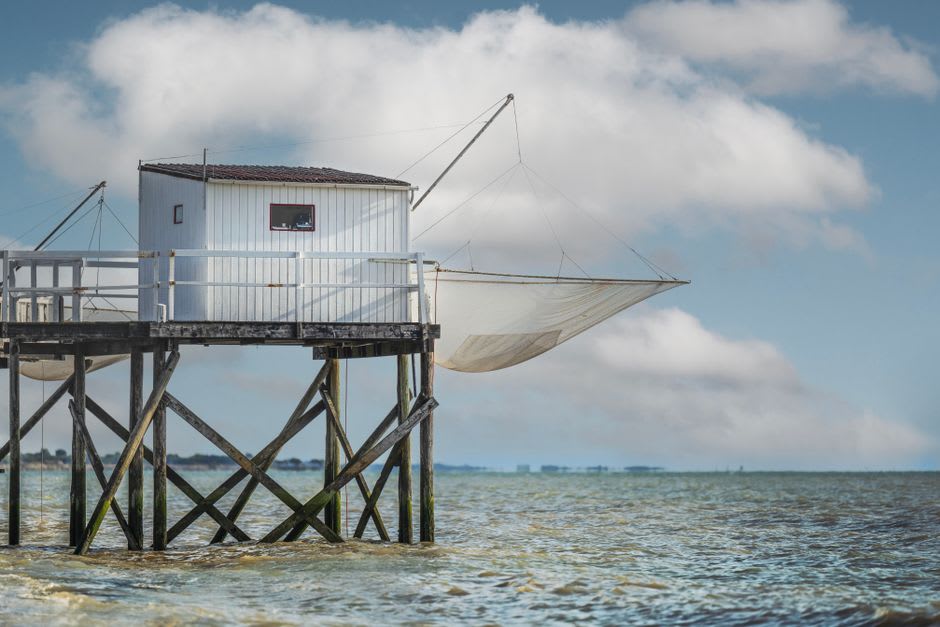
I’d been told Guadeloupe was shaped like a butterfly, but it wasn’t until Lia and I hired a boat out of Le Moule that the shape actually meant something to me. Grand Cul-de-Sac Marin is the water trapped between the two wings, Basse-Terre and Grande-Terre, sealed off from the open Atlantic by one of the biggest barrier reefs in the Lesser Antilles. Our guide cut the engine well before we reached it, and the sound that replaced it wasn’t waves, it was almost nothing. Flat, green-gold water, a reef line breaking white in the distance, and these strange little wooden huts standing on stilts in the middle of it all like nobody had told them the tide comes in twice a day.
Those are the ajoupas, cabins local fishermen have been building in the shallows for generations, and we passed close enough to one to see laundry drying on a line strung between two posts. I asked our guide if anyone still slept out there and he laughed and said his uncle did, most weekends, when the grouper were running. It struck me how unglamorous and completely functional the whole lagoon still is — this isn’t a postcard built for us, it’s somebody’s fishing ground that happens to also be one of the most protected pieces of water in the Caribbean.
We snorkeled the reef flat that afternoon rather than going out to open water, and I understood quickly why every tour here is built around the mangroves and the shallows instead. The lagoon and its mangrove forests were named a UNESCO Biosphere Reserve back in 1992, folded into Guadeloupe National Park’s marine zone, and swimming through the mangrove channels felt like drifting through a nursery — which is more or less what it is. Juvenile reef fish everywhere, sea turtles cruising past unhurried, and our guide kept scanning the water for a manatee, the last known population that was ever recorded in Guadeloupe, though we didn’t get lucky that day. Lia spotted a barracuda hanging motionless under one of the prop roots and grabbed my arm so hard I swallowed a mouthful of seawater.
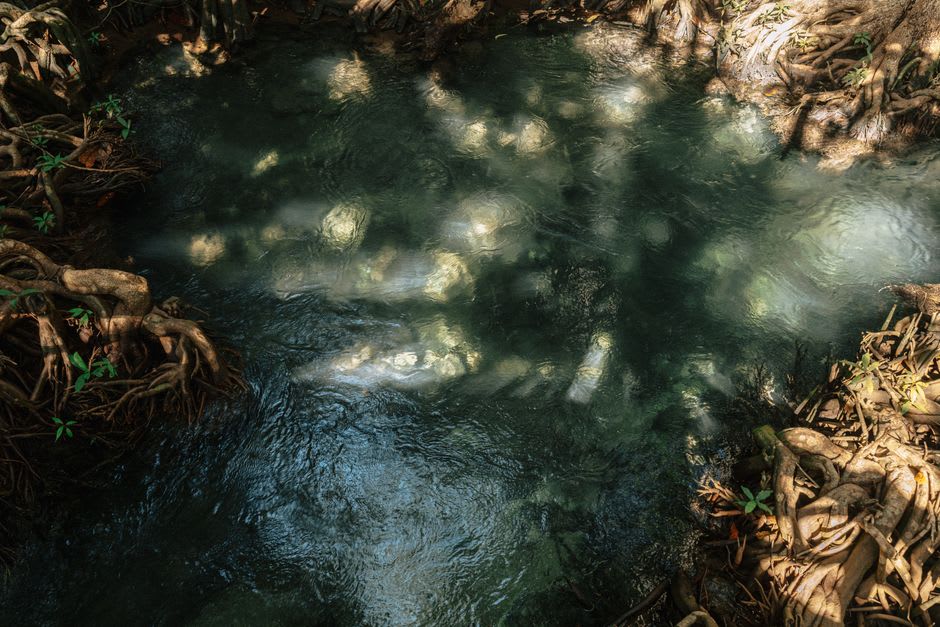
What stayed with me afterward wasn’t a single dramatic sighting but the quiet scale of the place — you’re floating inside a nursery for an entire reef system, bounded by a wall of coral you can’t even see from most of the lagoon. We ate lunch back on Grande-Terre with sand still in our shoes, and I kept thinking about how different this felt from every other stretch of Caribbean coast we’d seen: less about the view, more about what was living underneath it.
When to go: We went in April and the lagoon was glassy and clear the whole time — the dry season, roughly December through May, is when the water calms down and visibility for snorkeling is at its best.