
Greece's most isolated inhabited island, one kilometre from Turkey, with 500 residents and a Lycian rock-cut tomb on the waterfront.

The ferry from Rhodes takes four hours and arrives at what feels like the end of the known world — which, in a sense, it is. Kastellorizo sits alone in the southeastern Aegean, one kilometre of flat blue water separating it from the Turkish port of Kaş. When I stepped onto the quay and turned around, I could read the signs in the marina across the channel. Not squint at them. Read them.
A Harbour That Faces the Wrong Direction
The waterfront of Kastellorizo — officially Megisti, though no one calls it that — curves around a protected cove in a single, unbroken arc of mansions. Venetian, Ottoman, neoclassical: every architectural era that passed through left a painted facade in ochre, rose, or turquoise, most of them half-restored, some of them open to the sky. The effect is of a film set that forgot to finish. Lia stood at the edge of the quay photographing the reflections in the harbour water and said it looked like the Mediterranean had been folded in half.
The tavernas begin right here — Lazarakis, Akropolis, the nameless place run by a woman who brings out whatever she felt like cooking that morning. I ate grilled lavraki with wild capers and a side of stamnagathi, a bitter chicory that grows in the cracks of the island’s limestone interior. The olive oil was from the mainland and probably travelled further to reach this plate than I had.
The Lycian Tomb Nobody Mentions
Twenty metres from the waterfront, cut directly into the cliff face above the sea road, there is a rock tomb in the Lycian style — the funerary architecture of an ancient civilization that flourished on the Turkish coast across the water. I had read about it before coming, but I still stopped short when I saw it: a rectangular doorway carved into the living rock, with a shallow vestibule and a chamber behind. No fence, no interpretive sign, no entrance fee. A cat was sleeping inside.
This was my genuine moment of surprise — not that the tomb existed, but that Kastellorizo had simply absorbed it. Two and a half millennia of history, sitting between a taverna and a fishing boat, entirely unannounced.
What 500 People Build
The island’s population empties out each winter to Athens, Australia, and the United States. What remains — the donkey path up to the Crusader kastro, the blue-domed Agios Konstantinos church, the single paved road that ends at a beach of white pebbles — feels curated by absence. There are no motor scooters for hire. There is no ATM that reliably works. There is a bakery that opens at seven, sells out by nine, and this is enough.
When to go: May and early October offer the clearest light and the calmest crossings from Rhodes. July and August the harbour fills with yachts and the population briefly triples — still quiet by any Mediterranean standard, but less so.
Keep exploring
More from Greece
 greece
 Meteora
Monasteries balanced on impossible sandstone pillars, where monks chose the most dramatic real estate in Christendom.
Explore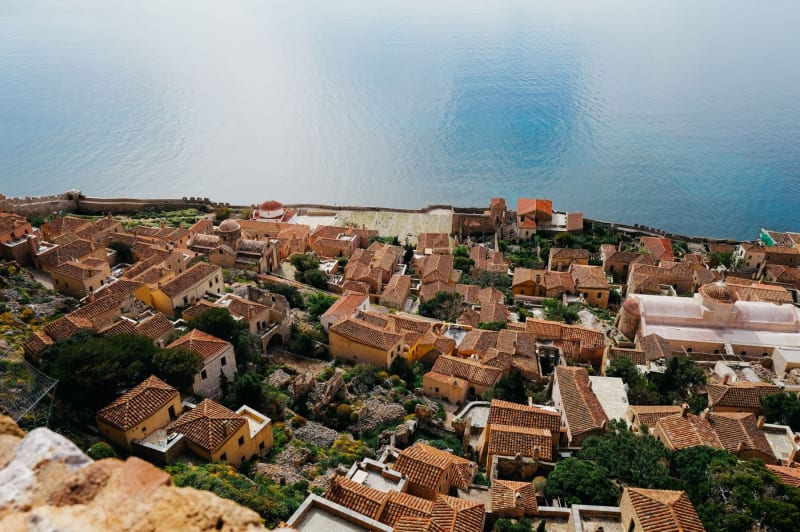 greece
 Monemvasia
The Gibraltar of Greece: a medieval Byzantine town clinging to a massive sea rock, accessible only by a single causeway and worth every step.
Explore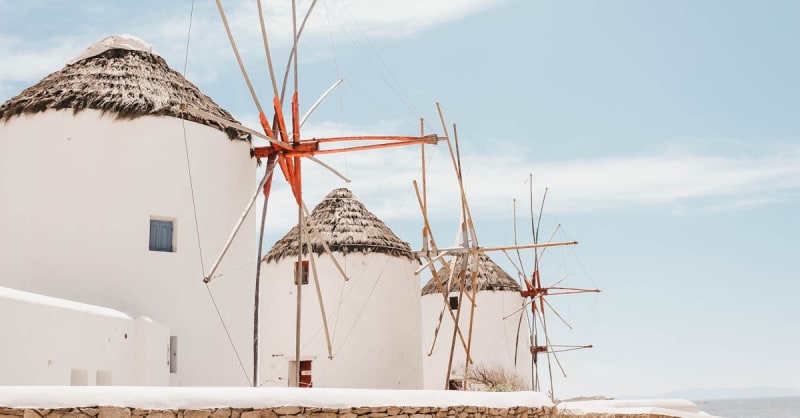 greece
 Mykonos
A windswept Cycladic jewel where whitewashed lanes lead to beach clubs, ancient ruins, and sunsets that demand celebration.
Explore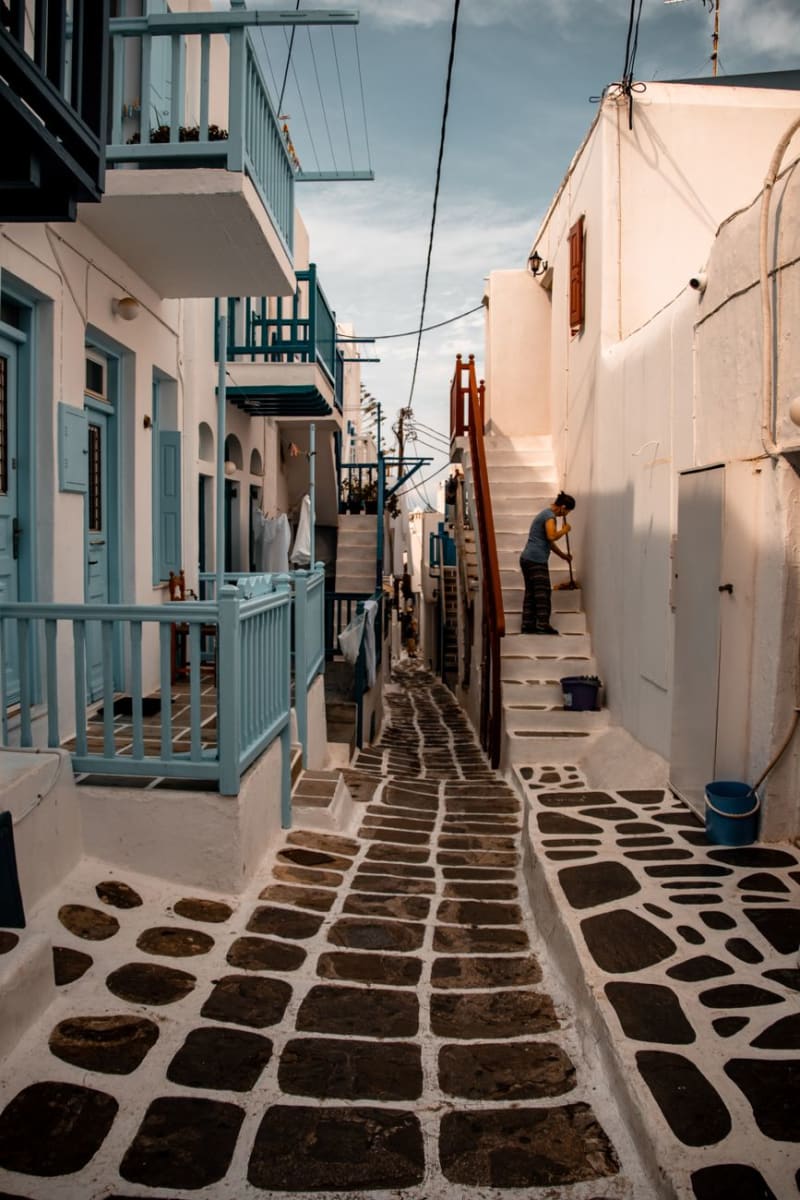 greece
 Mykonos Town
The labyrinthine whitewashed lanes of Chora were designed to confuse pirates — today they confuse visitors just as delightfully.
Explore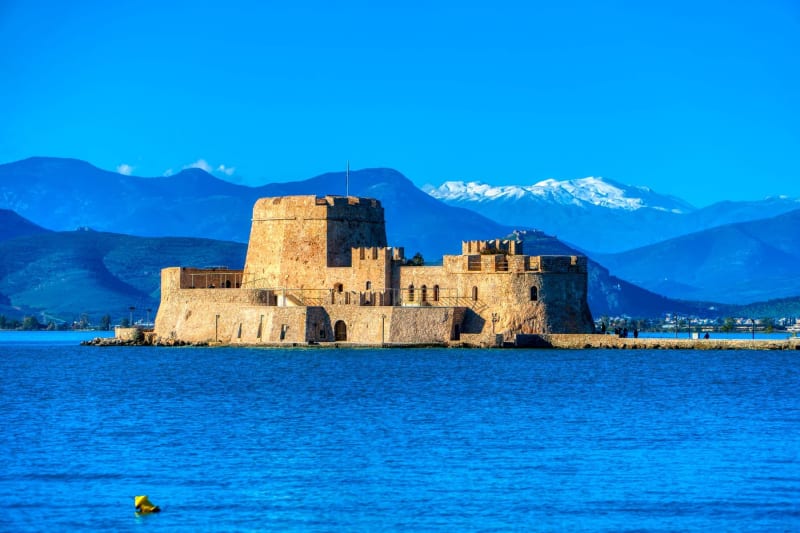 greece
 Nafplio
Greece's first modern capital retains its aristocratic charm — neoclassical mansions, a formidable fortress, and a harbor that glows at sunset.
Explore greece
 Naxos
The largest Cycladic island, where marble villages hide in green valleys and the beaches stretch longer than your ambition.
Explore