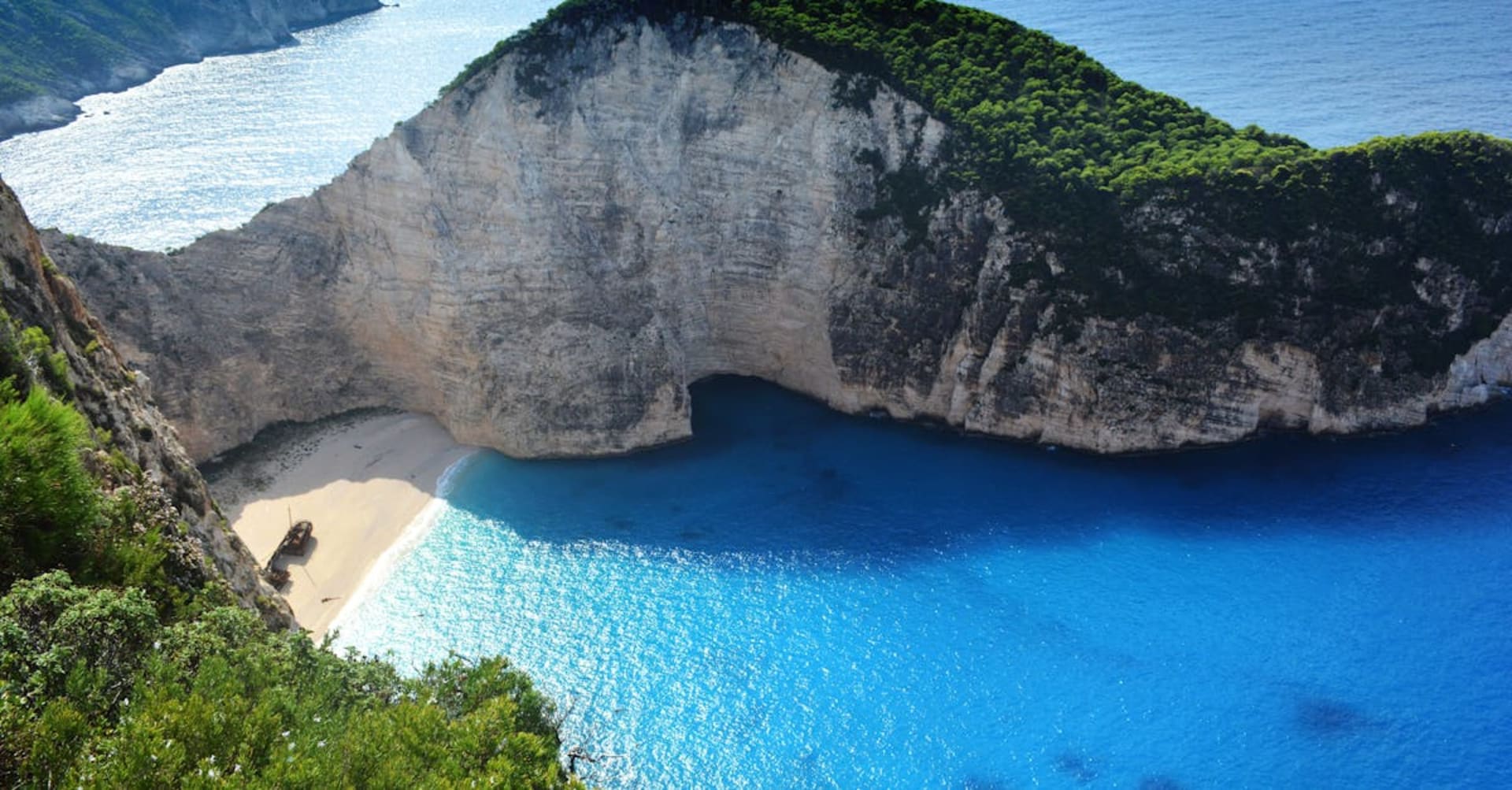
Zakynthos — Zante to the Venetians who shaped its culture — is an island of dramatic contrasts. The west coast is a wall of white limestone cliffs dropping into water so blue it looks digitally enhanced. Navagio Beach, accessible only by boat, is the most famous cove in Greece: a rusting shipwreck beached on white sand, enclosed by cliffs on three sides, with water that shifts between turquoise and cobalt depending on the hour. I took a small boat from Porto Vromi — avoiding the larger tourist vessels that arrive by the dozen from Zakynthos Town — and when we rounded the headland and the cove opened up, the collective silence on the boat was the most honest review the place will ever receive. Seen from the clifftop viewpoint above, it is genuinely breathtaking. Seen from the beach, with the hull of the MV Panagiotis rusting in the sun and the water pulling at the pebbles, it is something more — a place where the beautiful and the melancholy share the same frame.
The island’s gentler side lies in the south, where Laganas Bay hosts one of the Mediterranean’s last major nesting sites for loggerhead sea turtles. The bay is protected — boats move slowly, beaches close at dusk during nesting season, and the volunteers who patrol the sand at night to protect the eggs do so with a quiet dedication that shames the partying reputation of Laganas town nearby. I went on a morning boat trip into the bay and saw two adult caretta caretta surfacing for air, their shells dark and barnacled, their movements unhurried in a way that suggested they had been doing this since the Pleistocene and saw no reason to change tempo for a boatful of tourists with cameras.

The Keri Caves along the southwestern tip offer kayaking through arched grottos where the water glows electric blue from refracted sunlight. I paddled through the largest cave — the Blue Grotto is the local name, shared with a hundred other sea caves across the Mediterranean, though this one earns it — and the light coming through the underwater entrance turned the water into something luminous, a blue so intense it seemed to have its own power source. The kayaking is best in the morning, when the sun is low and the light penetrates the caves at the right angle to produce the effect. By afternoon, it is merely beautiful. In the morning, it is otherworldly.
Inland, Zakynthos is hillier and greener than most visitors realize. The hill village of Bochali above Zakynthos Town has a ruined Venetian fortress and a terrace restaurant with views across the harbor that justify ordering slowly — very slowly, as the sunset from here lasts an hour and the town below turns from white to gold to pink in a sequence that Monet would have painted if he had ever come here, which he should have. The interior roads wind through olive groves and vineyards that produce a local wine called Verdea — an oxidized white that tastes like sherry’s Mediterranean cousin and divides opinion exactly in half.

The northern tip of the island, around Skinari, is where the quietest beaches hide. The water here is colder — the currents from the open Ionian keep it bracing — but the swimming is superb, the rocks provide natural platforms, and the taverna at Makris Gialos serves grilled fish and horta greens with a view of the Cephalonian mountains across the strait. The Blue Caves at Cape Skinari, carved by the sea into a series of arches in the white limestone cliff, can be visited by small boat, and the effect of the reflected light on the water — blue on blue on blue — is something I have seen photographs of many times but that photographs cannot reproduce. Some blues, it turns out, require being present.

When to go: Late May to June for turtle nesting season and uncrowded beaches. September for warm seas and golden afternoon light on the cliffs. Avoid the peak weeks of July and August if you want Navagio Beach without thirty boats in the frame.