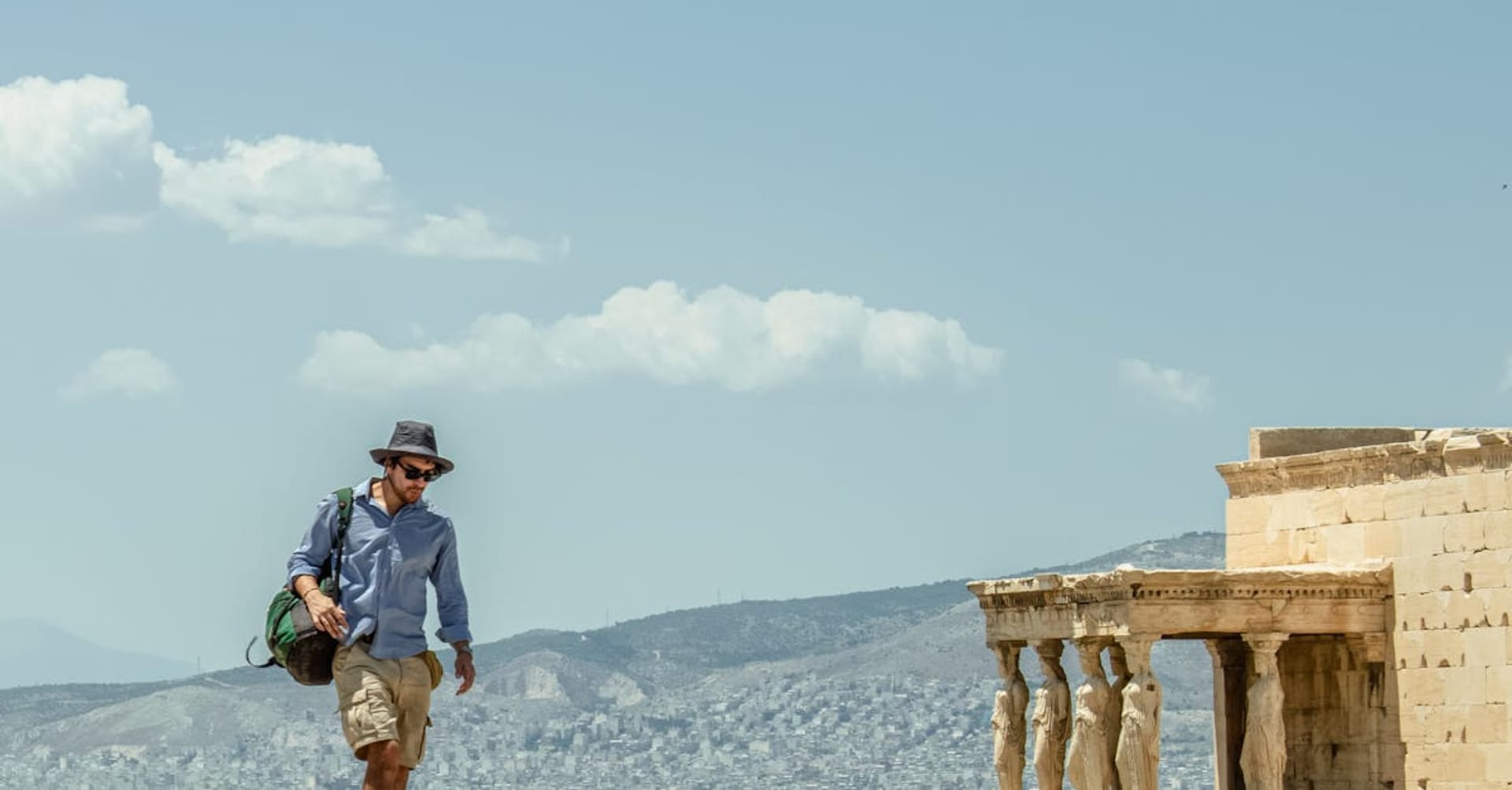
Rhodes is where the medieval and the Mediterranean collide. The Old Town is the best-preserved medieval city in Europe — a UNESCO-listed maze of cobblestone streets, Gothic arches, and Ottoman fountains enclosed within massive fortified walls built by the Knights of St. John. I entered through the Gate of Amboise at dusk, when the tour groups had left and the stone glowed amber in the fading light, and for a disorienting moment I could not place the century I was in. The Street of the Knights is so perfectly preserved it feels like a film set, except the stone is real and the silence at dawn is genuine. Each langue — the national divisions of the Knights Hospitaller — had its own inn along this street, and the heraldic devices carved above the doors still identify who slept where seven centuries ago.
The Palace of the Grand Master, rebuilt by the Italians in the 1930s with a grandiosity that the original knights might have found excessive, sits at the top of the street and houses a museum that traces the island from its Hellenistic heyday through the crusader period to the Ottoman conquest. The mosaic floors — transplanted from Kos — are Roman and magnificent. But it is the smaller Ottoman-era structures that give the Old Town its particular texture: the Süleymaniye Mosque with its rose-coloured minaret, the Turkish baths on Plateia Arionos, the fountains tucked into corners where you least expect them. Rhodes Old Town is not a museum. People live here — laundry hangs between medieval walls, cats sleep on Byzantine foundations, and the bakery on Socratous Street has been selling sesame bread since before anyone can remember.

Outside the walls, Rhodes opens up. The east coast town of Lindos stacks white cubic houses beneath an ancient acropolis perched on a cliff above a perfect bay. The climb to the top — past donkey drivers offering rides that seem both charming and ethically complicated — rewards you with a temple of Athena Lindia dating to the fourth century BCE and a view that encompasses the entire eastern coastline and, on clear days, the Turkish coast across the strait. I sat on the temple steps and ate an orange I had bought from a cart at the bottom, and the juice dripped onto stones that Alexander the Great may have walked on. This is the kind of casual collision of the ancient and the mundane that Rhodes does better than almost anywhere.
The interior of the island is surprisingly green — pine-forested hills with hiking trails leading to Byzantine chapels and villages where elderly women still make pasta by hand. The wine from the interior — particularly from the vineyards around Embonas on the slopes of Mount Attavyros — is rough and honest and served in plastic bottles at tavernas where the menu is whatever the cook decided to make that morning. The west coast catches more wind and fewer tourists, with long pebble beaches and the ruins of Kamiros, an ancient city abandoned so completely that its street plan is still visible — a grid of foundations and drainage channels that makes you realize urban planning is not a modern invention.

The modern town of Rhodes, outside the medieval walls, has a waterfront promenade where families walk in the evenings and the Italian colonial architecture — left over from the period when Mussolini decided the Dodecanese were his — gives the place a strangely Mediterranean-but-not-Greek atmosphere. The Mandraki Harbor, where the Colossus of Rhodes once stood (or did not — nobody knows exactly where, which is part of the charm), is lined with windmills and a fortress and cafes that serve freddo espresso with the efficiency of a culture that has perfected iced coffee as a lifestyle.

When to go: May to June or September to October. Rhodes gets more sun than almost anywhere in Greece, making shoulder seasons genuinely warm. The medieval Old Town is best explored early morning or late evening, when the light and the silence conspire to make you feel like you have slipped through time.