The Peloponnese is mainland Greece’s secret weapon — a peninsula so packed with ancient sites, mountain villages, and hidden coastline that you could spend a month here and still miss entire civilizations. Epidaurus has the most acoustically perfect theatre ever built: a coin dropped on the stage can be heard in the back row, fourteen thousand seats up. I tested this — not with a coin, but by standing at the centre of the orchestra and whispering, while a friend sat at the highest tier and confirmed, with slightly irritated precision, that she could hear every word. The theatre is twenty-three centuries old. The acoustics have not degraded. Modern concert-hall engineers study this place and leave humbled.
Mycenae, the fortress city of Agamemnon, broods on its hilltop behind the Lion Gate, as imposing now as when Homer wrote about it. The tholos tombs — the so-called Treasury of Atreus — are engineering marvels that predate the Parthenon by a millennium: a corbelled dome of perfectly fitted stones that has stood without mortar for thirty-three centuries. I ducked through the narrow entrance passage, and the temperature dropped ten degrees, and the silence inside the dome had a quality that felt less like absence and more like presence. Mycenae was destroyed around 1100 BCE, and nobody knows exactly why. The mystery suits the place.

The Mani Peninsula at the southern tip is Greece at its most stark and beautiful — stone tower houses, Byzantine chapels the size of garden sheds, and a coastline of sea caves and empty pebble beaches. The tower houses were built by feuding clans who shot at each other from the upper floors, and the villages still have a fortress-like quality — stone walls, narrow windows, an atmosphere of defensive pride that has outlasted the feuds by centuries. I drove the west coast road from Areopoli to Gerolimenas, which clings to the edge of a landscape so austere it borders on the hostile, and stopped at the Diros Caves — an underground lake system accessible by flat-bottomed boat, the stalactites reflected in water so still it doubled the cave into a symmetry that made my sense of direction completely useless.
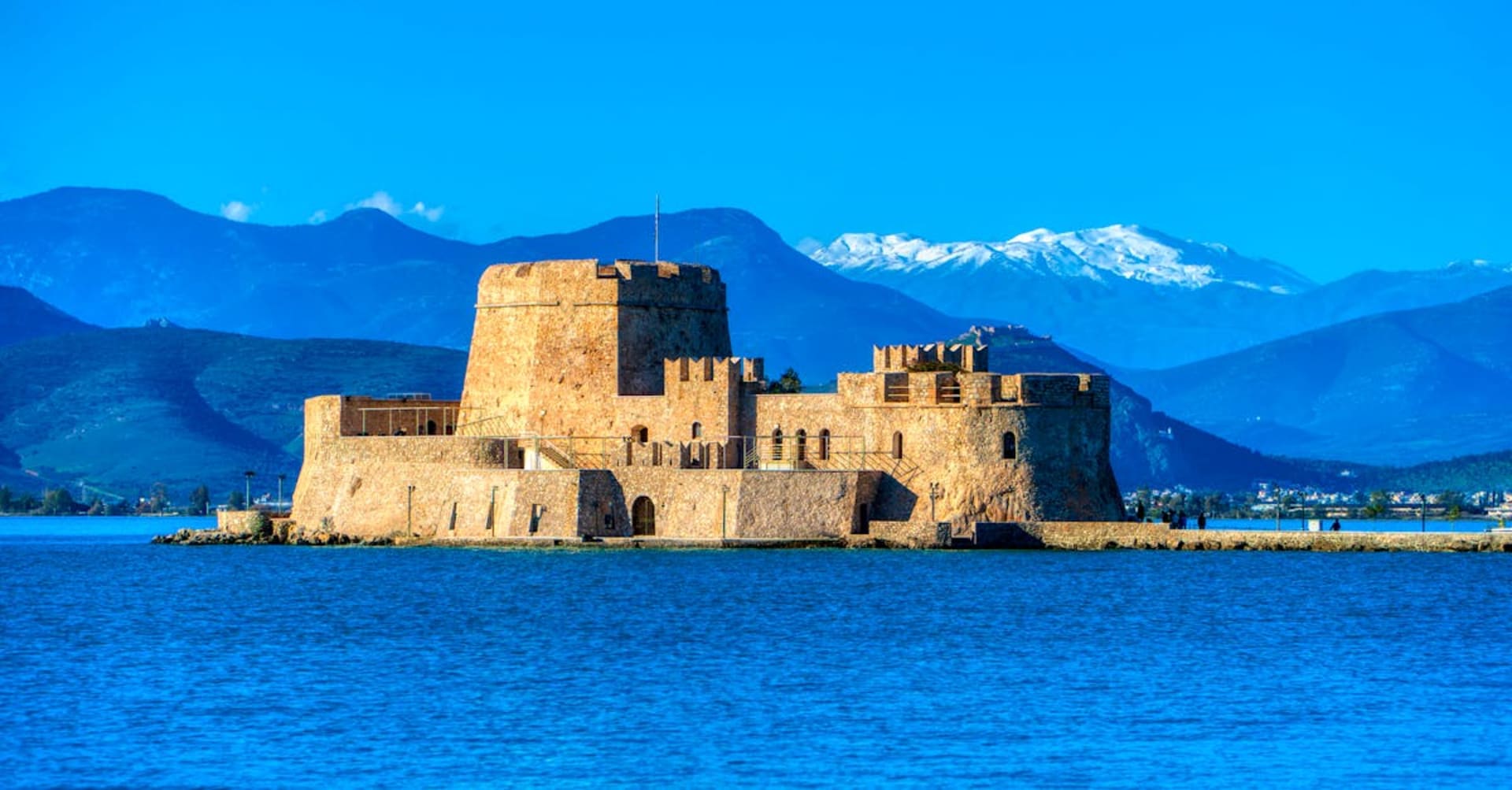
Nafplio, the first capital of modern Greece, is the Peloponnese’s most charming town, with a Venetian fortress, a tiny island castle called Bourtzi floating in the harbor, and gelato shops that betray its Italian heritage. The old town is a grid of neoclassical houses with wrought-iron balconies and flower boxes, and the Palamidi Fortress above it — reached by 999 steps that I counted out of stubbornness — offers a panorama that encompasses the town, the bay, the mountains, and enough of the Peloponnese to make you realize how much you have left to see. I ate dinner at the harbor, where the restaurants set tables on the cobblestones and the Bourtzi sits lit in the water like a stage prop that someone forgot to take down after the final act.

Ancient Olympia, in the western Peloponnese, is where the Olympic Games began in 776 BCE and continued every four years for over a thousand years. The site is spread through a pine grove — the Temple of Zeus, the gymnasium, the stadium where the original races were run on a dirt track two hundred metres long. I stood at the starting blocks — marble slabs with grooves cut for the runners’ toes — and tried to imagine the atmosphere: forty thousand spectators, naked athletes, olive-wreath prizes, and a truce that stopped wars across the Greek world for the duration of the games. The museum next door houses the Hermes of Praxiteles, one of the few original Greek sculptures to survive antiquity, and it is worth the trip to Olympia alone.
The interior mountains around Arcadia are wild, forested, and threaded with gorges that few visitors ever see. The Lousios Gorge is walkable along a path that passes medieval monasteries built into the cliff face — monks’ cells hanging over the void like the spiritual ancestors of Meteora — and the village of Dimitsana, at the top of the gorge, has a gunpowder museum (the town supplied the revolution against the Ottomans) and the kind of mountain taverna where the lamb has been turning on a spit since before you arrived and the wine is poured from a jug that has no label because nobody here sees the point.

When to go: Spring for wildflowers and mild hiking weather. Late September for the olive and grape harvests, when the peninsula smells like wine and wood smoke. The Peloponnese is less crowded than the islands year-round — the Greeks know this, which is why they keep it to themselves.