Mykonos earned its reputation as a party island, but reduce it to that and you miss the point. Mykonos Town is a labyrinth of whitewashed alleys designed to confuse pirates — and it still works on tourists, which is half the charm. Around every wrong turn there is a bougainvillea-draped chapel, a boutique selling linen you do not need, or a bakery pulling cheese pies from the oven. I got lost for the better part of an afternoon, which is the correct way to experience the town. Every dead end opens onto a courtyard with a painted door and a sleeping cat, and every time you think you have found the harbor you end up in a square you have never seen before, with a church the size of a garden shed and an old woman selling embroidery from a plastic chair.
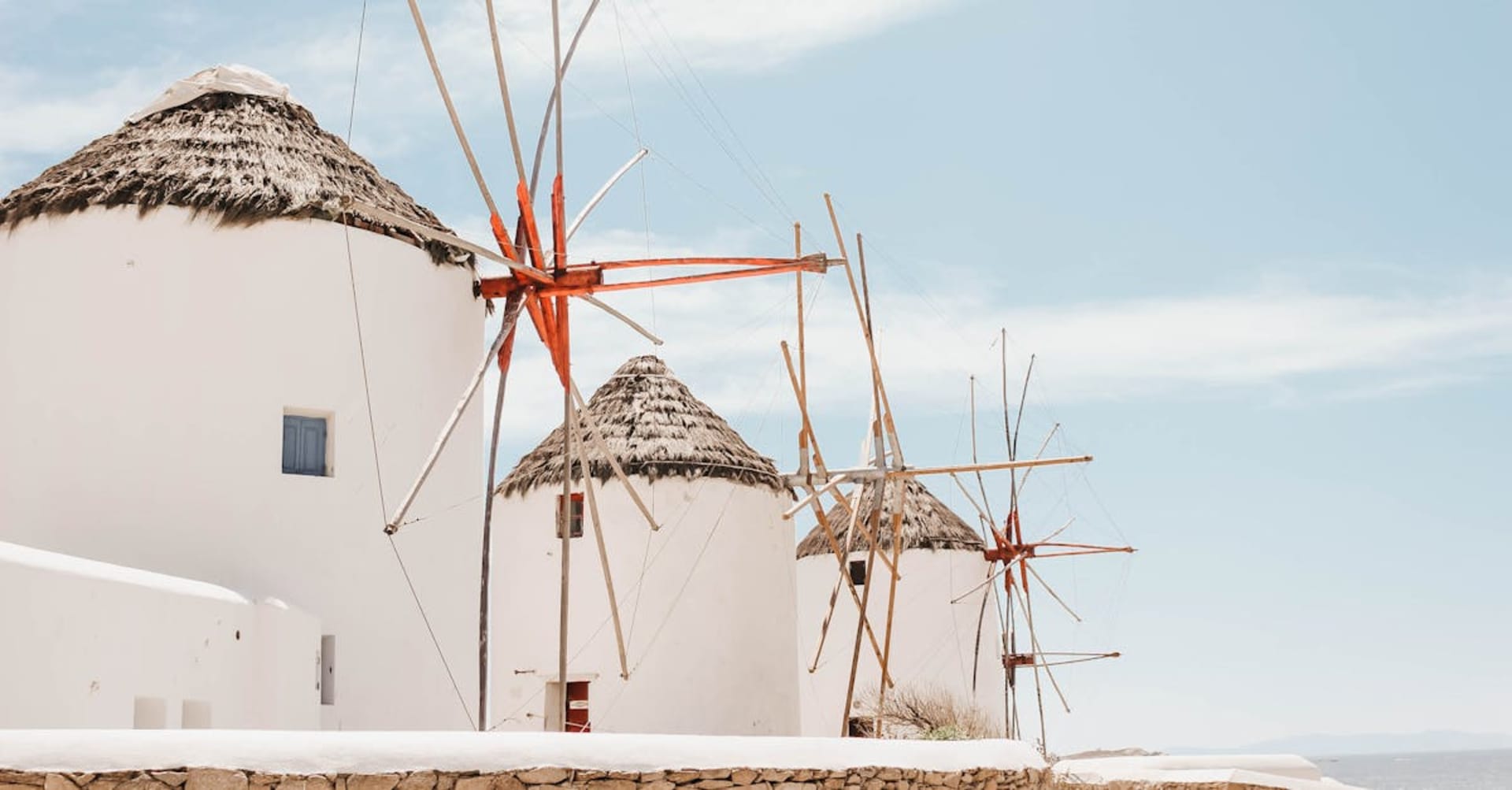
The iconic windmills above Little Venice catch the Aegean gusts that keep the island from ever feeling too hot, even in July. Little Venice itself — a row of medieval houses with balconies hanging directly over the waves — is the place to drink at sunset. The cocktails are overpriced and the seats are fought over, but the view of the sun dropping into the sea while the spray hits the lower tables is genuinely worth the markup. I ordered tsipouro instead of a cocktail and the bartender gave me a look that I chose to interpret as respect.

Beyond the nightlife, the island rewards those who wander. Take the boat to Delos, the sacred island where Apollo was said to be born — an open-air archaeological museum floating in the middle of the Cyclades, uninhabited and hauntingly silent. The Terrace of the Lions, the mosaic floors of ancient houses, the theatre that once seated five thousand — all of it sitting on a rocky island that the ancient Greeks considered the most sacred place in the world. The boat from Mykonos takes thirty minutes, and the contrast between the two islands — one dedicated to pleasure, the other to the gods — is a metaphor so obvious that even the ferry captains must be tired of hearing it.
Back on Mykonos, the northern beaches like Fokos and Merchia are rocky, wind-battered, and empty, offering a counterpoint to the manicured south-coast scene. I spent a morning at Fokos, where the only structure is a single taverna built from stone and driftwood, the beach is scattered with granite boulders, and the wind comes off the open Aegean with enough force to make reading a book a physical challenge. It was glorious. The south-coast beaches — Ornos, Psarou, Paradise — are beautiful in a more produced way: sunbeds arranged with military precision, music drifting from beach clubs, beautiful people doing beautiful-people things. Both versions of Mykonos are real. The island contains both without contradiction.

The food scene has matured well beyond the tourist-trap gyros joints. In the backstreets of the old town, I found a place the size of a closet serving louza — air-dried pork seasoned with pepper and clove, a Mykonian specialty that tastes like the love child of bresaola and jamón — alongside kopanisti, the fiery local cheese spread that goes on everything and improves everything it touches. The fishing boats still come in at dawn, and the better restaurants serve whatever was on them by noon.

When to go: June or September for the full experience without peak-season intensity. July and August bring the biggest crowds and the highest prices. May is underrated — the water is cool but swimmable, the wildflowers are out, and you can get a table at Little Venice without a reservation.