Crete is not a Greek island in the usual sense — it is practically a country, with its own cuisine, its own dialect, and a fierce independence that has survived Minoans, Venetians, Ottomans, and package tourism. The Palace of Knossos outside Heraklion is where Europe’s oldest civilization built a labyrinth so complex it spawned the myth of the Minotaur. The ruins are part reconstruction, part imagination, and entirely compelling. Sir Arthur Evans’s concrete restorations are controversial among archaeologists, but standing in the Throne Room — the oldest throne room in Europe, with a gypsum seat still in place after thirty-five centuries — the debate feels academic. The place works on you regardless.
The south coast is where Crete reveals its wilder character. The Samaria Gorge is a sixteen-kilometer hike through towering limestone walls that narrow to barely four meters wide before spilling you out at a beach accessible only on foot or by boat. I did it in May, when the gorge had just opened for the season and the wildflowers were still thick along the upper trail. By the time you reach the Portes — the Iron Gates, where the walls close in to three meters apart and the light above narrows to a slit — you understand why the Cretans who hid from invaders in these mountains were never found. The landscape itself is a fortress.

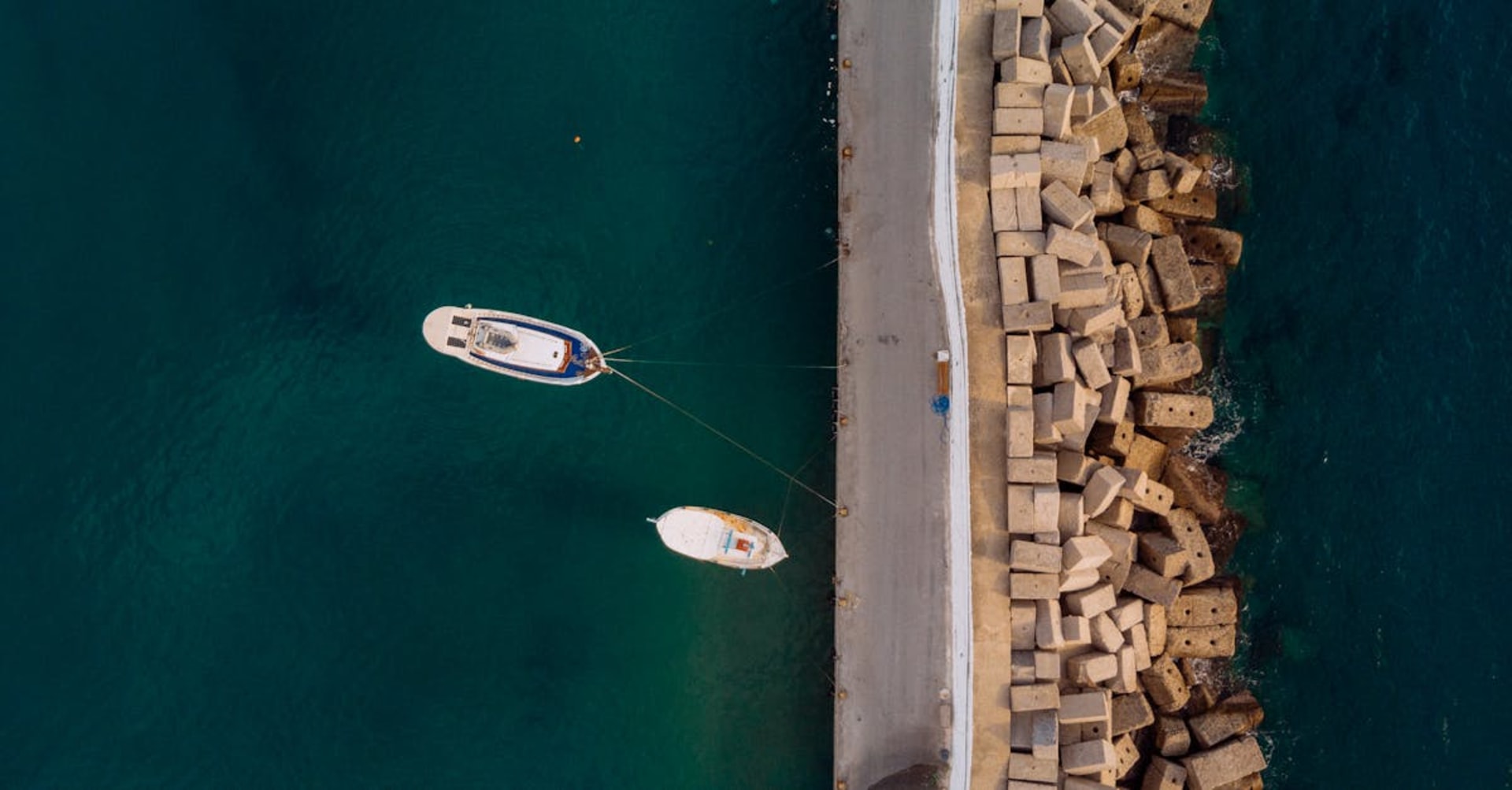
The town of Chania on the northwest coast has a Venetian harbor that I could describe in architectural terms — the lighthouse, the arsenals, the mosque converted into a gallery — but what I remember most is sitting on the harbor wall at dusk, eating grilled sardines from a paper tray, watching the fishing boats come in and the light turn the old facades from ochre to pink to violet in a sequence so predictable and so beautiful that the locals barely glance at it. The covered Agora market sells mountain herbs and sheep’s-milk cheese and the kind of raki that Cretans produce in homemade stills and offer to strangers as casually as the French offer opinions.
The interior mountains — the White Mountains and Psiloritis — are Crete’s secret. Villages like Anogia and Zoniana cling to slopes at eight hundred metres, where the air smells of thyme and the old men sit outside kafeneia drinking raki at ten in the morning with a composure that suggests they have been doing this since the Ottoman occupation and see no reason to stop. The food in these mountain villages is the best on the island: slow-cooked lamb with stamnagathi greens, hand-rolled pasta called xynochondros, honey from bees that feed on wild herbs. Cretan cuisine is sometimes called the original Mediterranean diet, and after a week of eating my way through the interior, I believe it.

The east of the island is quieter still. The Lasithi Plateau, a high-altitude basin ringed by mountains, was once thick with white-sailed windmills pumping water to the fields — most are ruined now, but a few still turn, and the plateau grows potatoes and apples in a climate that feels more alpine than Aegean. Below it, Spinalonga, the island fortress in the Gulf of Elounda, served as a leper colony until 1957 and now sits empty and hauntingly intact, its Venetian walls and narrow streets the stage for a history that is both recent enough to be uncomfortable and distant enough to be fascinating.

When to go: May for wildflowers and empty trails. September for warm seas and the olive harvest beginning in the hillside groves. October is Crete’s secret month — still warm enough to swim, the tourists have gone, and the raki flows freely at the harvest festivals in every village.